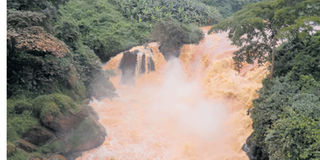
Construction of Rusumo Falls Hydropower Station along Rwanda-Tanzania Border is expected to start in January next year after contracts were signed in Kigali on November 9. PHOTO | STAFF PHOTOGRAPHER
What you need to know:
The three countries will jointly construct a power station.
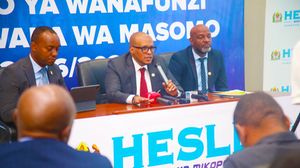
Contracts for civil and electro-mechanical works were signed in Kigali on November 9. The first contract (CP1) covers civil works, supply and installation of hydro-mechanical equipment.
Kigali. The Nile Equatorial Lakes Subsidiary Action Programme (NELSAP) has given contractors for the 80MW Rusumo Falls Hydroelectric Power Station 36 months within which to deliver on a $122 million project that will supply power to Rwanda, Burundi and Tanzania.
The three countries will jointly construct a power station.
Contracts for civil and electro-mechanical works were signed in Kigali on November 9. The first contract (CP1) covers civil works, supply and installation of hydro-mechanical equipment.
The second package (CP2) involves the supply and installation of the electro-mechanical equipment such as generators and transformers.
The contracts were signed between Rusumo Power Company Limited (RPCL) and a consortium of CGCOC Group Ltd and Jiangxi Water & Hydropower Construction Company Ltd for civil works, which include the construction of a dam, waterways, a power station and civil engineering works for $75 million.
The package also covers design, supply & installation of hydro-mechanical equipment, according to NELSAP.
The second contract package that was awarded to a consortium of Rusumo Falls Andritz Hydro of Germany and Andritz Hydro PVT Ltd of India covers an electro-mechanical component of the works and is valued at $47 million, said Elicad Nyabeya, the NELSAP regional coordinator based in Kigali. He said civil works were expected to begin in the last week of January 2017.
The project is expected to help the concerned countries to offset some of the electric power coming from thermal sources that besides a large environmental footprint, come at high feed in and end user tariffs.
An additional two million people in the three countries are expected to get access to electricity once the projected is completed.