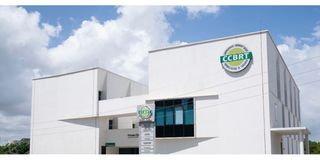
Dar es Salaam. Signs of disruption in some services have begun to emerge at CCBRT Hospital, known for specialised care for people with disabilities and maternal health, due to financial challenges.
The difficulties facing the hospital, located in Msasani, are evident in the provision of free services for patients with eye conditions, clubfoot, physiotherapy and orthopaedic care, which were previously funded by donors.
So far, only specialised obstetric fistula treatment continues to be offered free of charge, including surgery, transport, food and accommodation for those in need, despite reduced funding.
The situation comes nearly a year after US President Donald Trump announced the suspension of development aid to various countries, a move that affected many organisations reliant on assistance from the United States, particularly in agriculture and health projects.
When contacted, CCBRT Hospital chief executive officer, Ms Brenda Msangi, said the decline in donor funding is not unique to the hospital, but other services are still being provided.
“If you are a good journalist you will understand that many institutions have closed due to funding challenges,” said Ms Msangi.
“That impact has affected many institutions and CCBRT is one of them; we have been receiving foreign funding since 1994, so we continue providing services,” added the CEO.
When asked about claims that services are suspended on Saturdays and Sundays, Ms Msangi said they are provided as usual, although on Sundays they end at 2pm.
“As for the removal of free services, this is due to a decline among some of our donors. For those who were not contributing at all, we have encountered that challenge because the funding we were receiving has been affected,” she explained.
On Thursday, March 5, from 7am to 2pm, The Citizen’s sister newspaper Mwananchi observed a small number of patients arriving and receiving treatment, unlike several months earlier.
An investigation on subsequent days confirmed low attendance in various departments, including physiotherapy, where some patients said they had reduced hospital visits due to inability to afford the fees.
A resident of Kibaha in Coast Region, Ms Enesta Daudi, 22, is among mothers facing challenges, visiting the hospital for physiotherapy for her child, Daylan, 3.
She said there has been an increase in treatment costs compared to the past, forcing many to attend once a week due to financial constraints.
“Previously physiotherapy was free, then it became Sh2,000 and now Sh20,000. At one point last year the cost rose to Sh50,000; many failed to pay, a donor stepped in and covered Sh30,000, so we continued contributing Sh20,000,” she said.
“My child would have improved. But I stopped treatment after costs increased. I resumed late last year; I come once a week, but if I could, I would come every day,” explained Ms Daudi.
Some mothers attending said they continue with clinics due to service quality, while others follow specialists despite the high cost.
The increase in costs has also affected the clubfoot unit. When the reporter sought clarification, an attendant said, “For now, all services are offered at a fee starting from consultation.”
“If you come with a child with that condition, you should be prepared to meet all treatment costs,” added the attendant.
Staff in difficult situation
Alongside these challenges, some staff said salary delays have been a concern, with some workers leaving.
However, these claims were strongly dismissed by CEO Ms Msangi.
“We were paid our December salary on January 15; some colleagues have left due to the situation being difficult,” said one staff member.
Another worker, who requested anonymity, said the hospital’s financial situation has changed as donors shift priorities.
The worker said eye and orthopaedic services previously supported by donors have been affected, leading to shortages of some specialists.
According to the worker, donor priorities have shifted while the number of institutions relying on such funding has increased, creating competition for support.
“On Saturdays and Sundays services used to run until 2pm, and emergencies were attended to, but now on those days there are no services. Outpatients who pay are still received,” he said.
Eye services affected
Due to donor withdrawal, even the eye unit, which once offered affordable services, has seen costs rise, including consultation, surgery and eyeglasses.
One patient, Mr Geofrey Lyimo, 48, said the increase is significant.
“I have been changing glasses once a year with a budget of Sh200,000. I would see a doctor, undergo tests, and get frames and lenses. But this time glasses alone, frames and lenses, cost Sh400,000, excluding consultation and test fees,” he said.
Ms Pili Athuman, 35, said she only paid for consultation and tests and planned to obtain glasses elsewhere.
“For my glasses, it is over Sh500,000, so I took tests here and will go to Mnazi Mmoja Hospital where it might be cheaper,” she said.
Mr Jumanne Said said his 0.75-lens glasses, bought in 2018 for Sh330,000 including tests, now cost Sh450,000.
“This increase is beyond my financial ability. These charges are for tests and glasses, so I am waiting for my children to give me money to access this service,” he said.
Mr Juma Madodi recounted waiting over a month for eyeglass services for a vision problem that remains unresolved, linking the delay to the situation.
Government speaks
When contacted, the director of policy and planning in the Ministry of Health, Mr Amour Amour, said the hospital is not government-owned, and cooperation is based on formal agreements.
“To work together we must enter agreements. We are in discussions, and once concluded we will proceed,” he said.