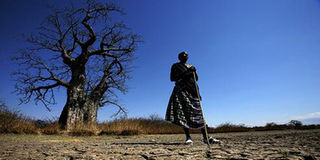
The indigenous people of Tanzania depend on the hunting and gathering and livestock farming, their livelihoods are now at risk due to the negative effects of climate change.
What you need to know:
Tanzania boasts having at least six groups of indigenous people, who eke out a living by gathering fruits, roots and nuts; hunting small animals; livestock grazing; or co-existing with wildlife.
Arusha. Hunters and gatherers, pastoralists, district council executives, non-governmental organisations, and civil societies defending interests of indigenous people have converged to chart out a common agenda ahead of this year’s Climate Change Conference scheduled for December in Paris, France.
Tanzania boasts having at least six groups of indigenous people, who eke out a living by gathering fruits, roots and nuts; hunting small animals; livestock grazing; or co-existing with wildlife.
However, investors in farming, mining, hunting tourism, and real estate have of late become a threat to the marginalised ethnic groups mostly found in the central and northern parts of the country.
Opening the Indigenous People- Government Dialogue at the weekend, Environment director Julius Ningu said unlike farmers, the marginalised groups had no alternative means of grappling with challenges arising from climate change.
“Farmers change the type of crops or seeds in case of drought, but pastoralists and hunters and gatherers often succumb to the calamity,” Mr Ningu said.
Mr Maurus Msuha, an expert with Tanzania Wildlife Research Institute (Tawiri) said the dialogue funded by the UN Development Programs (UNDP) aimed at amplifying voices of the marginalised communities to the Paris meeting and other international fora for the international community to realise their fate and support them.
One of participants representing indigenous people, Mr Gideon Sanago, said during the meeting that reports on their lifestyles destroying the environment were unfounded, arguing that the marginalised communities were actually avid conservationists.