Dar es Salaam. Governments have been urged to move beyond policy commitments and take concrete action to ensure women—who form the backbone of food production, processing and distribution—are fully empowered and fairly rewarded within food systems.
Despite their central role, women continue to face systemic barriers that limit access to land, finance, technology and decision-making spaces, undermining productivity and food security.
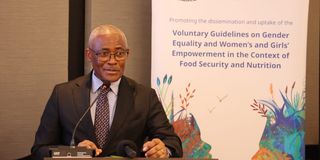
This was highlighted at the sub-regional launch of the Voluntary Guidelines on Gender Equality and Women’s and Girls’ Empowerment (VG-GEWGE) held in Dar es Salaam, which brought together participants from seven Eastern and Southern African countries, signalling growing regional cooperation on gender equality in agriculture.
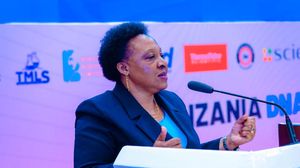
Food scientist Dr Agnes Mwangwela said policy commitments must be matched with practical implementation involving multiple stakeholders.
“Governments can endorse guidelines at policy level, but it takes collaboration with academia, civil society and the private sector to ensure women are truly represented and protected,” she said.
She stressed that research institutions have a critical role in tracking progress.
“As academia, we must build capacity, conduct research and generate data to assess whether these guidelines are improving women’s participation,” she said.
At global level, the Food and Agriculture Organization (FAO) says the guidelines, endorsed by more than 130 member states, were developed in response to persistent inequalities affecting women and girls, particularly in rural and indigenous communities.
FAO Programme Officer for Inclusive Rural Transformation and Gender Equality, Alejandra Baraza, said the guidelines offer practical entry points to address inequalities across food systems.
“They aim to enhance women’s leadership, improve access to resources such as land, credit and education, and ensure their voices are reflected in policy decisions,” she said.
Baraza emphasised that awareness is essential for impact.
“We need to ensure women know these policy instruments exist so they can use them to claim their rights and strengthen their participation,” she said.
She also underscored the importance of accountability mechanisms.
“It is essential to accompany implementation with monitoring and evaluation systems that allow us to measure progress in empowering women while improving food security and nutrition,” she added.
Deputy Permanent Secretary in the Ministry of Agriculture, Peter Msoffe, said closing the gender gap is critical for transforming food systems.
“When women have equal access to productive resources and decision-making power, farm yields can increase by 20 to 30 per cent, significantly improving livelihoods and reducing hunger,” he said.
He noted that although women make up nearly 40 per cent of the global agricultural workforce and a significant proportion in Tanzania, they still face unequal access to key resources.
“These inequalities constrain productivity, reduce household incomes and negatively affect food security and nutrition outcomes,” he said.
Msoffe also pointed to a contradiction in Tanzania’s food systems, where food availability does not always translate into improved nutrition.
“Monotonous diets with limited fruits, vegetables and protein sources fail to meet children’s micronutrient needs,” he said.
He reaffirmed Tanzania’s commitment through national and global frameworks, including the National Gender and Women Development Policy (2023), Tanzania Development Vision 2050, the Agricultural Policy (2013), the Sustainable Development Goals and Africa’s Agenda 2063.
However, he cautioned that progress depends on implementation.
“Despite strong policies, gaps persist due to limited resources, weak enforcement mechanisms and socio-cultural norms,” he said, calling for stronger partnerships and sustained investment.