Explaining the issue, the government – communicating through the deputy minister for Education, Mr William Ole Nasha – stated that the move is intended to aid the Higher Education Students Loans Board (HESLB) in establishing the income of students’ parents or guardians in determining whether or not a particular student deserves a loan.
Dodoma. Education stakeholders are up in arms over the government’s decision to use the business licences of parents or guardians of students in higher learning institutions as a condition for granting them loans.
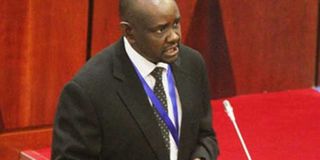
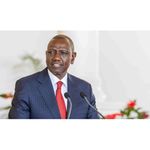
Explaining the issue, the government – communicating through the deputy minister for Education, Mr William Ole Nasha – stated that the move is intended to aid the Higher Education Students Loans Board (HESLB) in establishing the income of students’ parents or guardians in determining whether or not a particular student deserves a loan. He was forced to convene a press conference in Dodoma after some MPs sought clarification through the speaker as to why the government has been tightening the conditions for students to access loans every year.
“We want to assure the public that we only use business licences to determine the actual income of students parents and not otherwise,” the deputy minister told journalists.
He also called upon the public to ignore reports that a student whose parents or guardians have no business licence wouldn’t qualify for a loan.
Earlier yesterday, some MPs had expressed dismay at the new requirement that was announced recently by HESLB, believing that it would bar students whose parents do not hold a business licence from applying for loans from the board. Three MPs sought the Speaker’s guidance on the matter – which, they said, was discriminatory.
The MP for Ulanga, Mr Goodluck Mlinga (Chadema), said the loans board was setting overly difficult conditions, which may result in isolating students from what is their constitutional right. “This all started with disqualifying sons and daughters of government ministers, top executive officials– and we remained quiet. This time, the board is isolating students from small traders. And, as we all know, ‘machingas’ (petty traders) have no business licences,” he said, adding that, “as we go along, it looks like everyone will be disqualified.”
His concern was echoed by Mr Julius Kalanga (Monduli MP--Chadema) who stressed that the Speaker should intervene. “Every year the loans board comes up with new, tougher conditions. I don’t know if they are based on the laws that govern the board’s operations. It is a constitutional right for Tanzanian students to benefit from the loans scheme,” Mr Kalanga stated.
For his part, Buyungu MP Bilago Kasuku (Chadema) reasoned that the new HESLB loans requirement will isolate low-income earners who cannot afford paying higher learning fees from their pockets. “Recently, the board isolated leaders who sign ‘Ethics Code’ forms, including ward councillors who do not earn that much –and it is quite clear that they cannot afford to pay for university education. This new requirement will go farther, isolating small traders,” the MP lamented.
In response to the complaints, Parlament chairman Andrew Chenge said that the MPs had used the wrong Parliamentary standing order. That notwithstanding, though, he assured them that the government had ‘heard’ their concerns. Tanzania business community secretary Abdallah Mwinyi hammered another nail in the coffin by saying that the newest condition introduced by HESLB was discriminatory – and might lead to businessmen evading taxes.
Additional report by Louis Kolumbia
“Not all the people who hold business licences can afford to fund their children’s education, and I think that the government should intervene because the decision is indisputably discriminatory,” Mr Mwinyi stressed.