Dar es Salaam. Tanzania has used this year’s May Day celebrations to link labour reforms, job creation initiatives and its long-term economic transformation agenda under Vision 2050, as workers and unions welcomed progress but pressed for full implementation of outstanding commitments.
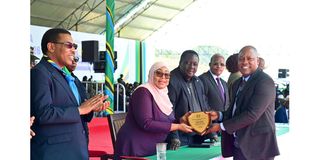
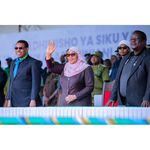
Speaking during the national Workers’ Day celebrations on May 1, 2026 held in Njombe Region, President Samia Suluhu Hassan said the government was anchoring labour reforms within the broader goal of transforming Tanzania into a $1 trillion economy by 2050, stressing that workers remain central to that ambition.
She said the country’s development path must be built on “decent work”, which she defined as employment that guarantees fair wages, safety, social protection and respect for human dignity.
“Work is more than income; work is dignity, work is respect, and work is the lifeblood of the nation,” she said, adding that decent work was a cornerstone of inclusive growth.
The President said Tanzania was aligning its labour framework with international standards, including those of the International Labour Organization (ILO), and Sustainable Development Goal 8 on decent work and economic growth.
She outlined four pillars of decent work as employment creation, protection of workers’ rights, social security, and social dialogue between government, employers and workers.
President Hassan said the government was entering the 2026/27 fiscal year with renewed focus on job creation, skills development and industrial productivity, noting that workers would play a central role in achieving long-term economic transformation.
“This is a very ambitious journey, but workers are the engine of our economy,” she said.
She urged both public and private sector stakeholders to invest in education, technical skills and innovation to prepare the workforce for a rapidly changing global labour market driven by technology.
On employment creation, she said the government had continued to expand public sector recruitment, with thousands of vacancies already advertised and recruitment processes ongoing.
She also said 7,593 Tanzanian youths had secured jobs abroad through government-coordinated labour migration programmes, describing it as part of efforts to expand employment opportunities beyond national borders.
On wages, she said the government had worked with private sector employers to implement revised minimum wage structures, noting that about 80 per cent of employers had complied.
“We are continuing discussions with the remaining employers to ensure full compliance so that decent work is not just a principle but a reality,” she said.
She added that government was also addressing arrears related to social security contributions, leave allowances and other worker-related obligations.
However, even as the government highlighted gains, workers’ representatives used the platform to push for full implementation of reforms and resolution of longstanding concerns.
Delivering the workers’ statement, the Secretary General of Tanzania Trade Unions Congress (Tucta), Heri Mkunda, said while progress had been made in wages, promotions and social protection, several structural challenges remained unresolved.
He cited delayed promotions for workers who pursue further education, unpaid arrears in some institutions, and inconsistencies in enforcement of labour regulations, particularly in the private sector.
“We call for stronger enforcement of labour laws so that workers are treated fairly and consistently across all sectors,” he said.
Mkunda said this year’s May Day theme aligned with Tanzania’s Vision 2050, which aims to raise incomes and expand formal employment, but stressed that implementation would determine success.
He also acknowledged government interventions such as salary adjustments, expanded health insurance coverage, improved pension benefits and reforms in social security systems.
He noted that more than 6,000 Tanzanians had secured jobs abroad since last year, describing labour migration as both an opportunity and an area requiring stronger protection mechanisms.
Prime Minister Mwigulu Nchemba, representing the government in parts of the celebrations, reaffirmed the administration’s commitment to strengthening labour institutions and improving social dialogue between government, employers and workers.
He said the government was implementing a National Decent Work Programme aimed at expanding formal employment, strengthening labour rights and widening social protection coverage by 2030.
He also announced the establishment of a labour migration resource centre in collaboration with international partners to protect Tanzanians working abroad and improve pre-departure preparation.
“The goal is to ensure Tanzanians working outside the country are safe, well-informed and protected,” he said.
The government also pointed to ongoing reforms in social security systems, including expansion of coverage to informal sector workers and improved pension benefits.
Closing the celebrations, President Hassan urged Tanzanians to maintain unity, peace and productivity, warning that global economic and technological shifts required a more skilled and adaptable workforce.
She said government would continue improving working conditions in line with economic capacity, while emphasising shared responsibility among workers, employers and the state.
“Let us continue to work with discipline and patriotism. Only then can we grow our economy and share the fruits of our national efforts fairly,” she said.