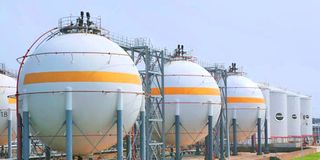
Dar es Salaam. Tanzania’s plan to host a Canadian-backed plant that would convert natural gas into diesel and jet fuel is now waiting for assurance of gas supply before moving ahead to construction, after the investors completed some key stages.
Canadian company Rocky Mountain GTL, in collaboration with its African partner, Memnon Africa, and local associate, Rithi Tanzania Group Limited, completed a feasibility study with the Tanzanian government for constructing a gas-to-liquid (GTL) plant.
The firm was waiting to sign gas supply agreement with the Tanzania Petroleum Development Corporation (TPDC) “anytime soon” before moving ahead with the construction of the proposed plant worth $420 million which is poised to advance Tanzania energy sector by converting natural gas into diesel and jet fuel.
However, TPDC managing director Mussa Makame said the signing will not happen soon as the state-run agency had other priority projects for accelerating electricity generation.
“We will sign the agreement only when we are satisfied that we have sufficient gas to support the project. At the moment, we are experiencing a significant increase in electricity demand, and our priority is to use natural gas for generating power,” he told The Citizen.
TPDC is the national oil company of Tanzania through which the Ministry of Energy and Minerals implements its petroleum exploration and development policies.
Memnon Tanzania chief executive officer Jackson Pemba said the gas-to-liquid technology could help Tanzania and many African countries during fuel crisis such as the current one caused by the war in Iran.
He said after completing the feasibility study, discussions were continuing regarding the structure and construction of a plant in Mtwara.
The technology is a Canadian patented gas to liquid system that will be able to turn Tanzanian natural gas resources into sulphur free jet fuel, diesel, and petrol.
“Some three giant financial institutions are ready to support our project in Tanzania as soon as we are ready to move ahead,” he said, without disclosing the banks.
The technology is also able to produce hydrogen that can be converted into ammonia and then fertilizer, which is essentially needed by Tanzanian farmers.
The facility is designed to transform natural gas into synthetic diesel and jet fuel. Additionally, it aims to produce naphtha—a key component for diluting heavy oil in pipelines—and hydrogen fuel, which is increasingly sought after in developed nations.
According to him, the technology is able to be developed in a shorter time to produce diesel, fertilizer and jet fuel than any refinery in Africa and the world.
The company that is in the process of building the first modular gas to liquid plant in Africa has been in discussions to build a 5,000 barrel per day, within the next few months, according to Mr Pemba. That would amount to approximately 800,000 liters per day.
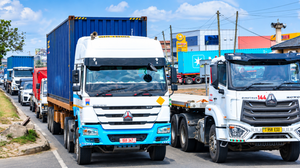
Tanzania currently consumes just slightly over eight million liters per day. This proposed plant, capable of producing 5,000 barrels per day, could meet Tanzania’s daily diesel consumption needs, in addition to the byproducts it is able to produce.
Tanzania’s natural gas reserves, estimated at 57.54 trillion cubic feet, have primarily been utilised for electricity generation and industrial applications.
The introduction of a GTL plant aligns with the nation’s strategy to diversify energy production and reduce reliance on imported fuels.
Through the gas-to-liquid project, Tanzania would be the first country in Africa to sell jet fuel and diesel to neighboring countries.
This is a significant step that will also lower the price of the energy in the country.
According to the company, the synthetic diesel is environmentally safe for using it directly with diesel engines or binding it with other diesel and is biodegradable in water.
Recently, Mtwara Rural MP Arif Premji said in Parliament that investing in such technology would help Tanzania to avoid fuel crisis caused by global and other circumstances.
“What have we learned from the fuel crises Tanzania experienced since independence? Tanzania has enough natural gas that can be converted into diesel and already there are investors who have shown interest,” he said, asking the government to consider such technology.
Register to begin your journey to our premium contentSubscribe for full access to premium content