Tanzania still has a limited number of specialists in immunology and vaccine manufacturing despite the sector’s growing demand for skilled experts
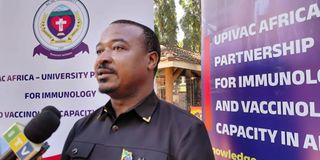
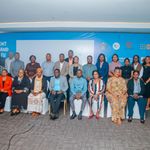
Moshi. The Kilimanjaro Christian Medical University (KCMC) University, in collaboration with the University of Copenhagen in Denmark, has launched a programme to build capacity among specialists in immunology and vaccine manufacturing, strengthening Tanzania’s ability to tackle infectious diseases.
The five-year programme, running from 2026 to 2031, will train at least 16 specialists in immunology research and vaccine production. The initiative is expected to create a pool of trained professionals who can contribute to research, disease surveillance and vaccine development.
Speaking at the programme’s launch yesterday, the lead researcher and senior lecturer at KCMC University, Dr Godfrey Temba, said Tanzania still has a limited number of specialists in immunology and vaccine manufacturing despite the sector’s growing demand for skilled experts.
He said building local expertise was important because the country needed more specialists capable of identifying and detecting diseases while advancing vaccine manufacturing.
Detailing, he said participants would gain specialised knowledge that could later be shared with researchers and health professionals in Tanzania, helping to expand the country’s capacity in immunology and vaccine production.
“The KCMC University, in collaboration with the University of Ghana and the University of Copenhagen in Denmark, will train Tanzanian specialists every year because our countries have a great need to build capacity to identify and detect diseases and learn how to manufacture vaccines,” he said.
Dr Temba said the first cohort of three specialists would leave for Denmark next week and spend two years studying immunology and vaccine manufacturing to help combat various infectious diseases.
He said three to four Tanzanian specialists would be sent to Denmark each year during the five-year programme.
“Once they complete their training, they will return home to collaborate with other experts and strengthen research and vaccine manufacturing,” he said. Dr Temba said KCMC University also planned to establish a master’s degree programme to train specialists in immunology and vaccines.
“The demand for vaccine specialists in the country is very high, particularly in immunology, which provides a foundation for advancing into vaccine production. So we need to increase their numbers,” he said.
KCMC University Deputy Vice-Chancellor, Prof Kajiru Kilonzo, said the training would help transform society by strengthening experts’ capacity for innovation and encouraging new ideas.
“This training will help transform society through innovation and alternative thinking. Those selected will be taught more about discovering new things,” he said.
University of Copenhagen specialist, Prof Lea Barford, said the partnership would strengthen Tanzania’s expertise in immunology and vaccines.
“We have collaborated with KCMC for more than 20 years on various research projects, so we believe this partnership will achieve great success in this sector,” she said.
Programme beneficiary, Dr Immaculate Gabriel, said technological advances could enable Tanzania to reach a stage where it manufactures vaccines for domestic use and export.
“Currently, we face many diseases without vaccines, both infectious and non-communicable. Through this training, we expect to build and strengthen our capacity to manufacture vaccines ourselves,” she said.