Dar/Upcountry. Nationwide Law Day celebrations carried a message of justice and wisdom, with the President of the Tanganyika Law Society (TLS), Boniface Mwabukusi, urging public leaders to stop revisiting the events of October 29, last year.
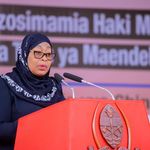
Mr Mwabukusi spoke on Monday, February 2, 2026, at the Law Day celebrations and launch of the 2026 judicial year in Dodoma, where Vice President Dr Emmanuel Nchimbi represented President Samia Suluhu Hassan.
He said repeatedly referring to those events intensifies pain and affects citizens’ emotions, stressing that efforts should focus on reconciliation and sustainable solutions in the national interest.
“During this period, we should ask leaders, when they have nothing urgent to discuss, not to speak on matters that hurt citizens’ hearts; let us seek wisdom from God to restore the nation together.
“Where we are, if we are not careful, in other places we are absent. We may reach a point where we cannot return to where we came from. Our appeal is to adopt the best participatory approaches with credibility, based on truth, justice, transparency, and accountability,” said Mr Mwabukusi.
Supporting Mr Mwabukusi, Dr Nchimbi emphasised that the call for silence on the October 29 events applies beyond government leaders.
“I thank TLS President, Mr Mwabukusi, for advising that leaders should not speak on October 29, 2025, as it opens old wounds and may not aid justice. I agree 100 percent,” said the vice president.
“Additionally, this applies not only to government leaders but also to political party leaders, civil society institutions, and activists,” he added.
Furthermore, Mr Mwabukusi added that, in light of what happened before, during, and after the general election, TLS recommends that all accountable parties be held responsible in the national interest.
“As a Nation, it is important to speak truthfully. We must seek a way forward guided by truth, justice, transparency, and accountability,” he said.
He noted the Judiciary has a duty to protect citizens’ fundamental rights by issuing independent, impartial decisions and guiding dispute resolution across society, the economy, governance, and politics.
The Judiciary must also ensure accountability of other authorities, a pillar of national democracy.
Mr Mwabukusi said TLS has social responsibilities, and prosecuting the Attorney General is a duty, not enmity.
“With good laws but no access to legal services, it is like lighting a lamp in darkness; the message does not reach,” he said.
He highlighted differences in justice systems between Zanzibar and mainland Tanzania, noting that in Zanzibar, cases without bail are granted if six months pass without a hearing.
In mainland Tanzania, cases without bail are sometimes delayed indefinitely.
“It is better to detain a known criminal than risk harming innocent citizens. Bail should be under judicial authority to decide release,” he said.
Mr Mwabukusi called for improvements at the Law School of Tanzania (LST), including a proper system to screen and identify competent lawyers.
“Let us establish a system to verify competence. A stringent screening process is needed so LST can review thoroughly,” he said, citing cases of lawyers abandoning clients or misappropriating funds.
Speaker Zungu
Speaker of the National Assembly, Mussa Azzan Zungu, invited Mr Mwabukusi to collaborate with Parliament to improve justice services.
“I respect TLS and all lawyers. Parliament works for the people and cannot function without citizens. I invite TLS to my office to consult and cooperate on improving services. Justice development is people’s happiness,” said Mr Zungu.
On Justice
Representing President Hassan, Vice President Dr Nchimbi urged judges to avoid misusing judicial independence to hide negligence or bias.
“Judicial independence is a mandate to deliver justice with integrity and in accordance with the Constitution. Judges must perform their duty considering Articles 107A2, A–E and 107B,” he said.
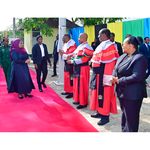
Chief Justice George Masaju said courts have enacted new rules allowing complex legal, evidentiary, and constitutional cases to be heard by a three-judge panel to improve efficiency, transparency, and justice.
He noted that bail decisions, including in lower courts, must now be made on the same day to reduce corruption gaps and ensure early access to justice.
Regions
Resident Judge of Musoma High Court, Fahamu Mtulya, urged judges to act justly, saying they work on behalf of God and will be accountable for their judgments.
Musoma District Commissioner Juma Chikoka called on courts to continue being a refuge for citizens.
In Tanga, Resident Judge Katalina Mteule said court services had expanded from two to 69 for citizens.
In Dar es Salaam, Resident Judge Salma Magjimbi said religious leaders prayed for judges to act justly according to their oaths and ethics.
“Under Articles 4, 107A, and 107B, the Judiciary is the final arbiter of justice. Society’s welfare and development depend on timely justice. When the Judiciary fulfils its constitutional duties, citizens trust that the country is safe and governed by justice,” said Judge Magjimbi.