Long treks to school and their profound impact on students
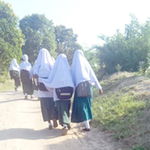
Research findings published last year in the International Journal of Teaching, Learning and Education identifies inadequate public transport infrastructure—particularly in rural areas—as a key contributor to long distances students have to walk to and from school. PHOTO | FILE
Bagamoyo. The long distances students walk to and from school remain one of the most persistent challenges facing Tanzania’s education sector, raising concerns over access, performance and student welfare.
Education stakeholders say the problem is driven by a complex mix of factors, including geographical barriers, scattered settlement patterns among farming and pastoralist communities and the tendency by some parents to enrol children in high-performing schools regardless of distance. In many cases, schools are located far from residential areas, leaving pupils with little option but to walk for extended periods each day.
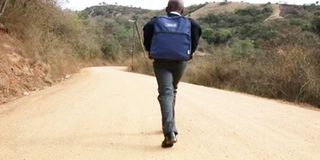
Economic constraints further compound the situation. Limited household incomes, the absence of boarding facilities in many schools, high hostel fees where they exist and inadequate transport infrastructure continue to make access to education difficult for many families.
Recent studies underscore the scale of the challenge. Research conducted in Mwanza City in 2024 and published on June 14, 2025 in the International Journal of Teaching, Learning and Education (IJTLE) identifies inadequate public transport infrastructure—particularly in rural areas—as a key contributor to long travel distances for students.
The study also found that the combination of long distances between home and school and poor household economic conditions leads to irregular attendance, with some students missing classes altogether.
A separate study by the Global Road Safety Facility, in collaboration with the World Bank Group, published on June 30, 2023, found that some rural students in Mkuranga District spend up to an hour walking to and from school each day.
National data paints an equally stark picture. The National Panel Survey (NPS) 2020/21, released by the National Bureau of Statistics (NBS), shows that 92.6 per cent of primary school pupils in Tanzania walk to school. This not only increases travel time but also reduces the time available for study and rest.
According to the survey, rural pupils spend an average of 31.5 minutes walking to school, up from 29.4 minutes recorded in 2014/15. In urban areas, the average commuting time has also increased slightly, from 22.5 minutes to 25.5 minutes. The survey covered 3,352 households nationwide, including Zanzibar through the Office of the Chief Government Statistician (OCGS).
Poor road infrastructure
Residents in rural areas point to the lack of transport services as a major driver of the problem.
A Mkenge village resident, who identified himself only as Juma, said the absence of public transport in some areas forces students to walk long distances.
He cited Mkenge village, located about 11 kilometres from the main road, where no public transport services are available.
“To reach the nearest bus stop, one has to pay Sh5,000. This is too expensive for many families,” he said.
He noted that improved road infrastructure and the introduction of shared transport options such as daladalas or bajajis could significantly reduce both the distance students walk and the financial burden on parents.
“After walking long distances or using costly motorcycle taxis, students could rely on affordable shared transport. That would ease the challenge,” he added.
Mkenge Village chairman Said Bwanga attributed the problem partly to the vast geographical size of some wards.
He cited Fukayosi Ward, where a secondary school already exists, but many villages remain far from it, forcing students to travel long distances.
“That is why, through community efforts and support from stakeholders, we have started constructing another secondary school to increase access and reduce the distance students have to travel,” he said.
He added that dormitories at Fukayosi Secondary School have helped to ease the burden, although access remains limited.
Responding to concerns over the cost of boarding, Fukayosi Ward Councillor Mrisho Some and Bagamoyo District Executive Director Shauri Selenda said they had not received formal complaints from residents.
They maintained that the fees were agreed upon through consultative meetings involving parents and school authorities.
Consequences of long journeys
The impact of long-distance travel to school extends beyond physical fatigue, affecting attendance, academic performance and even decision-making at household level.
Mkenge Village executive officer Xavery Mtunze said his office has handled several cases of students dropping out of school due to distance-related challenges.
In some instances, he revealed, parents have encouraged their children to deliberately underperform in Standard Seven examinations to avoid the costs associated with secondary education.
“Parents fear legal consequences for failing to send their children to school, so some agree with their children to perform poorly in exams so they do not qualify to proceed,” Mr Mtunze said.
According to the National Examination Council of Tanzania (Necta) online records, Fukayosi Secondary School registered 227 students for Form Two National Assessment but 202 sat for the paper, with the possibility that the remaining 25 dropped out.
On the 2025 Form Four National Examinations results, the number of registered students from the same class had dropped from 202 to 151 and 148 of them sat for the final exams.
Out of that, three scored Division One, 11 scored Division Two while 32 scored Division Three. According to the results, 92 students scored Division Four and 10 had Division Zero.
Education researcher Muhanyi Nkoronko said studies consistently show that students who travel long distances to school are more likely to drop out than those living nearby.
He explained that fatigue from long walks affects concentration and learning outcomes.
“A student who walks a long distance arrives at school already exhausted, making it difficult to focus in class. This affects both academic performance and the ability to grasp new concepts,” Dr Nkoronko said.
Psychologist Hussein Omary added that long journeys can disrupt a child’s mental readiness for learning.
“The human mind requires stability to function effectively. A child who walks long distances encounters many distractions along the way, which can occupy their thoughts more than classroom lessons,” he said.
He also noted that fear of punishment for arriving late can create anxiety, further affecting a student’s ability to concentrate.
Education stakeholder Catherine Sekwao said some parents attempt to address the challenge by renting rooms near schools for their children.
While this may reduce travel distances, she warned that lack of supervision can expose students—particularly girls—to risks, including exploitation.
“Transport challenges may also push students to seek lifts from strangers, exposing them to risks such as teenage pregnancy and sexually transmitted infections,” Ms Sekwao said.
She recommended the construction of affordable boarding facilities in schools located in remote areas to ensure students from distant communities can study in a safe and supportive environment.
Learning disruptions
Research findings further highlight the academic consequences of long commutes.
A 2021 study by the Gitoya Centre for Academic Research (G-CARD), in collaboration with St Augustine University of Tanzania (Saut), examined the impact of distance on student performance in Rorya District.
The study found that long distances often cause students to arrive late, missing introductory parts of lessons or entire periods.
“Many students arrive after lessons have already started, missing key introductory segments that frame the subject,” the report states, adding that fatigue from long journeys contributes to poor concentration and ultimately lower academic performance.
“Some students arrive tired and sweating after long walks. This fatigue leads to reduced attention and poor performance,” the report notes.
Register to begin your journey to our premium contentSubscribe for full access to premium content