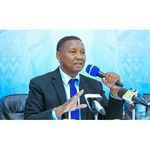
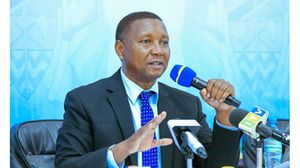
From left is CCM presidential candidate John Magufuli and right is Chadema presidential candidate Edward Lowassa.
What you need to know:
While the historic polls that will usher in the country’s fifth administration since independence appears distant in interest for Rwandans, Ugandans and Burundians, the picture is quite different in Nairobi.
Nairobi. Tanzania will hold its General Election in a fortnight and nowhere in Africa has the impending elections drawn unprecedented interest than in neighbouring Kenya.
While the historic polls that will usher in the country’s fifth administration since independence appears distant in interest for Rwandans, Ugandans and Burundians, the picture is quite different in Nairobi.
The fact that Rwanda is busy in a referendum to extend President Paul Kagame’s tenure in office to a third seven-year term, Uganda is planning for its own General Election in 2016 and Burundi is yet to settle from the controversial election with President Pierre Nkurunziza clinging on for a third term, may explain why Tanzania’s polls sound far off.
But in the streets of Nairobi, the names of Mr Edward Lowassa and Dr John Magufuli or Ukawa and CCM have become everyday fodder for the politically conscious Kenyan population.
Kenya and Tanzania account for nearly 80 per cent of the share in regional trade and the two neighbours have been like sibling rivals over the years, to explain why such a monumental exercise as transitional elections could not go unnoticed.
But there is more to this year’s Tanzania elections than just the casual interest of an important neighbour. Kenyans, according to interviews by The Citizen on Sunday, feel Tanzania’s democracy was coming of age and fast catching up on the often competitive multi-party campaigns Kenyans have been used to since the country’s independence party, Kenya African National Union (Kanu) was removed from power in 2002.
The close family friendship between Kenya’s opposition leader Raila Odinga and Dr Magufuli who is President Jakaya Kikwete’s preferred successor in CCM, and the strong showing in the campaigns by former PM-turned oppositionist, Mr Lowassa, has fuelled speculations on parallels with which Kenyans are familiar with.
Kenya’s current President Uhuru Kenyatta defeated Mr Odinga in a hotly contested election in 2013 and the two are likely to face each other again in 2017 when the country is due for another election. Mr Raila thwarted Kenyatta’s first bid for the presidency in 2002 when he led senior Kanu politicians to defect to the opposition and supported Mr Mwai Kibaki who went on to become the first opposition president.
In the subsequent 2007 elections that led to post-election violence, Mr Kibaki shared the executive powers with Mr Odinga in a Government of National Unity before supporting Mr Kenyatta in 2013 to defeat the latter.
With Dr Magufuli running on the incumbent party’s ticket amid a bolstered opposition following the high profile defection of Mr Lowassa and other key CCM lieutenants, the Kenyan politicians are seeing a familiar pattern and would want to align themselves with the right horse, so to speak.
The debate in Nairobi therefore has gone a notch higher as the Tanzanian elections draws closer, with local TV and radio stations here feeding them with daily Tanzanian political fodder. It is now common for the stations to break in their normal afternoon programmes to relay news filtering in on the on-going election campaigns while newspapers have made considerable coverage to satisfy their readers’ demand for Tanzania election campaign news.
With reporters from some of its media houses already stationed in Tanzania to follow up the campaigns, Kenyans appear more anxious than ever on who would succeed President Kikwete.
“This man has only two weeks to be called president. We are interested to know whom he will hand over power to after October 25,” said Michael Murigi, a newspaper vendor along Kenyatta Avenue yesterday, as he showed a front page news and photo by a weekly on the recent trip by Kikwete to Kenya.
For weeks, TV viewers in particular, have been treated to images of the now common multitudes of supporters of the two leading presidential candidates aspiring for the Ikulu ticket under the ruling CCM and Chadema, the latter being backed by the lose coalition of four opposition parties.
Apparently, lavish coverage was on this week’s forays of Ukawa’s Lowassa and Magufuli in Arusha and Kilimanjaro regions, the traditional stronghold of the opposition and key trading zones with Kenya.
It is instructive that both Dr Magufuli and Mr Lowassa reached out to the neighbours in their messages, promising to maintain good relations and hastening trade between them. In Namanga, a critical link town, Mr Lowassa vowed to remove all bottlenecks hindering cross-border trade in the EAC bloc.
The anxiety shown by Kenyans on the change of guard in Tanzania could be equated to months before the Nation’s Founding Father Mwalimu Julius Nyerere stepped down in 1985, something not familiar in Africa then.
Mwalimu’s exit was to change the geopolitics of the region and put a new dimension to the relations between the two neighbours.
“Tanzania in Transition” is the catchword for one of the leading Kenyan TV station beaming stories of the elections from Dar es Salaam while for another the polls coverage goes under the heading “Tanzania Decides 2015.”
Political and business analysts as well as the ordinary people hope there would be no drastic change in Tanzania’s policy towards regional integration and the EAC, in particular, regardless of who wins.
“Tanzania will continue to be cautious the extent to which it opens up various sectors to its surrounding countries,” said media consultant Isaac Mwangi. This, according to him, was because Tanzania’s overall policy direction was dictated not by an individual leader “but by the overall national psyche or attitude about its resources and its neighbours.”
Mr Reuben Kyama, the founder and president of One World Public Relations, a Nairobi-based strategic communications firm, said President Kikwete has played a key role in strengthening the EAC, a commitment he reiterated during his last week’s state visit.
“Tanzania has remained one of Africa’s relatively stable nations politically in the often-chaotic region,” he told The Citizen on Sunday.
A Nairobi resident familiar with Tanzania, Mr Henry Herman, said Kenyans had become interested in the Tanzania polls because of the strong challenge posed by the opposition to the independence party (CCM).
“That alone has for the first time made the Tanzanian election very competitive and caught the eye of Kenyans,” said Mr Herman. He said, however, he was not sure about their preference between Dr Magufuli and Mr Lowassa.
He said he does not expect a very radical shift in the regional integration matrix “since both Lowassa and Magufuli are CCM veterans who may have been at the centre of the existing state of affairs within the EAC.”
“I would say, Dr Magufuli’s win will sustain the obvious reluctance while Lowassa is unknown...he (Lowassa) may, however, surprise us if he adopts radical shifts in outlook and approach to governance,” he added.
Mr Magaga Alot, a retired Kenyan who served as a senior official of the EAC in Arusha, described this year’s polls in Tanzania as an epic contest but warned that Tanzanians should not allow the already tense situation in the campaigns to threaten “the fragile fabric of Tanzania’s unique tradition and heritage of peace and tranquillity.”
He affirmed: “Tanzanians face their severest test to demonstrate their commitment to the ideals of the founding father of their nation, Mwalimu Nyerere which embodied the hopes of good governance, unity, peaceful development and prosperity of the African countries and continent.”
Mr Magaga said Kenyans, like other Africans, expected the October 25 polls to be free, fair and peaceful, remarking that on the EAC cooperation, he does not expect an immediate ground shift on Tanzanians commitment to the union whichever side--CCM or Ukawa-- wins the elections.
“Tanzanians, perhaps by measure more than any of her partners, has traditionally pursued a policy of enlightened self interest in the East African Community and will most certainly pursue that policy by any successive governments in the foreseeable future”.