Mbeya charts a new path for integrated early childhood development
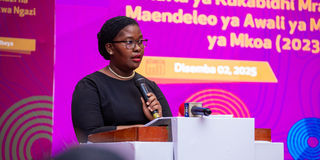
Ms. Esther Ndyetabira, Technical Director for the ECD Project, addressing participants during the Mbeya event on behalf of the Country Director of Pact Tanzania.
The event highlighted significant progress achieved between 2023/24 and 2025/26, as the project transitions from donor-funded implementation to deeper integration within existing government and community structures.
Mbeya. The Pact-led Early Childhood Development (ECD) project, funded by the Conrad N. Hilton Foundation, yesterday convened a regional learning event in Mbeya, marking a major milestone in the region’s three-year journey to strengthen systems that support children aged 0 to 3.
The event highlighted significant progress achieved between 2023/24 and 2025/26, as the project transitions from donor-funded implementation to deeper integration within existing government and community structures.
According to project data, the initiative reached 7,017 children against a target of 4,433, an achievement of 158 percent. It also supported 6,327 caregivers, surpassing the target of 4,066 by 155 percent. Children benefitted from holistic nurturing care services, including health, nutrition, responsive caregiving, early learning opportunities, safety, and protection.
Implementation covered seven councils and 167 of the region’s 172 wards, reflecting near-complete regional coverage.
A key component of the project involved building community-based delivery systems. A total of 752 Community Case Workers (CCWs) were trained and equipped with tools and ongoing technical support.
This strengthening of frontline capacity has improved referral pathways, increased caregiver knowledge, and enhanced councils’ ability to align social welfare services with early childhood needs.
Speaking at the learning event, Amina Mfaki, Principal Social Welfare Officer from the Prime Minister’s Office, Regional Administration and Local Government, described the results as “meaningful, substantive, and a testament to what coordinated leadership and structured community engagement can accomplish in a short period.”
She cited the development of the National Comprehensive ECD Service Job Aid for Community Health Workers and CCWs, as well as continuous mentorship provided to government officials and frontline workers.
Mfaki emphasized that child development “cannot wait for ideal conditions or convenient timelines; it must remain continuous, responsive, and rooted in the everyday realities of families if our communities and nation are to thrive.”
This perspective was echoed by Esther Ndeytabura, the project’s Technical Director, representing Pact Tanzania Country Director Dr Levina Kikoyo.
She noted that the tools, trained personnel, and strengthened coordination systems established over the past three years now form “foundational assets” for the region. Sustaining momentum, she said, will require ongoing investment, consistent follow-up, and long-term system strengthening.
At household level, the impact has been visible. Caregiver Wito Mwangomo shared how her understanding of parenting changed through interactions with CCWs.
She said she now knows how to prepare nutritious meals using available foods, when to take children for vaccinations, and how to make simple play and learning materials at home.
“The difference is clear when I look at my children today,” she said. “These changes are real, practical, and visible in everyday life.”
In her closing remarks, Regional Social Welfare Officer Aika Temu affirmed that Mbeya has built a strong platform for future ECD programming.
She urged councils to continue using the Comprehensive Council Social Welfare Operational Planning and Reporting Guideline (CCSWOPG) to strengthen planning, budgeting, and prioritization, especially through council and local revenue allocations.
“When councils use their own data to analyse needs and guide priorities, the plans become realistic, actionable, and rooted in the lived realities of children and families,” Temu said.
She reaffirmed her office’s commitment to advocating for stronger investment, better coordination, and sustained visibility of ECD within council systems.
The efforts in Mbeya align with Tanzania’s Development Vision 2050, the UN Sustainable Development Goals (SDGs), and the African Union’s Agenda 2063, all of which place early childhood development at the heart of human capital development and long-term socioeconomic growth.
Mbeya’s experience demonstrates that prioritizing early childhood development strengthens families, enhances service delivery systems, and lays the groundwork for a more resilient and prosperous future.