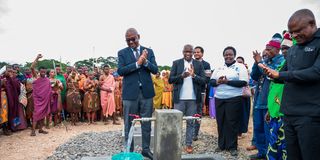
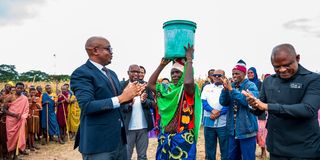
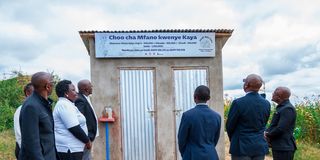
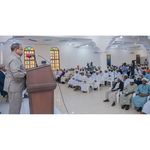
Manyara. WaterAid Tanzania yesterday marked World Menstrual Hygiene Day 2026 with a landmark event that culminated in the handover of a Sh648.8 million Water, Sanitation and Hygiene (WASH) project at Gidamula Primary School, Hanang District.
The celebration, attended by Manyara Regional Commissioner Queen Sendiga, underscored the organisation’s message that access to clean water underpins dignity, health, and education. The Operakällaren Foundation and the Swedish Radio Appeal Board are the organisations that funded the initiative.
Speaking during the event, WaterAid Country Director, Ms Anna Mzinga, said the organisation’s guiding belief is that “Change Begins with Water”.
She said the project delivers long-term benefits to more than 2,440 residents of Gidamula Village through nine integrated components.
She named the components as a climate-resilient water system comprising an underground storage tank, solar-powered pumps, and rainwater harvesting infrastructure designed to last at least 15 years.
“The second component is delivering 17 gender-sensitive and inclusive toilet stances for pupils and teachers, supported by handwashing facilities.
The third ensures continuous access to safe drinking water within the school environment,” she said. Focusing on menstrual hygiene, she said the fourth component provides private pad-changing rooms and menstrual waste disposal facilities within girls’ toilets to improve dignity and hygiene.
“These facilities are not just structures of brick and cement, but are a practical manifestation of the global theme: Together for a #PeriodFriendlyWorld,” she said.
According to her, the fifth component introduces model household toilets that have already inspired 20 families to improve sanitation at home.
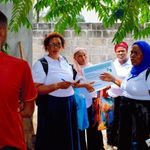
She said the remaining elements focus on sustainability and community education, reaching 2,004 residents with hygiene awareness.
She added that Community Health Workers have been trained as health ambassadors, while a gender-balanced SWASH Club of 36 students has been formed to champion behavioural change.
In addition, 19 school staff and education officers have received specialised training in WASH management to ensure long-term sustainability. In an emotional appeal, Ms Mzinga said: “The girls of this school have the right to learn with respect”.,manage their health with dignity, and grow without the burden of shame.”
She added that educating girls ensures stronger families and a stronger nation.
Manyara Regional Commissioner, Ms Queen Sendiga, underscored government commitment to community health, stating, "We need clean and safe water in our households and our institutions... to ensure our health.”
She said while Manyara Region has reached 66 percent improved toilet coverage, 5.4 percent of households still lack latrines, though Hanang District performs better at 83 percent.
“Although 95 percent of primary schools have improved toilets, only 30 percent regionally, and 15 percent in Hanang, have dedicated rooms for menstrual hygiene,” said RC Sendiga.
Ms Sendiga insisted facilities must be comprehensive: "Apart from having a specific cubicle for menstrual use, that room must include areas for changing pads, menstrual waste disposal, and hand-washing, it is not just structures of bricks and cement.”
Regarding water, 90 percent of Hanang healthcare facilities are connected, yet Commissioner Sendiga called for strengthening water storage capacity at these sites, setting a target of 100 percent clean water access for all schools by December 2026.
To achieve these goals, RC Sendiga issued several key directives, including requiring health experts and the District Medical Officers (DMOs) to ensure all bus stands, auctions and public gathering areas have improved toilets and permanent hand-washing infrastructure.
“Council executives are directed to allocate specific funds for WASH infrastructure in public spaces and prioritise operational maintenance to ensure project sustainability,” she directed.
“District planners must utilise the WASH Costed Plan to address identified gaps,” she added, asserting that having a vision makes implementation very easy.
She commended WaterAid Tanzania for setting a high standard, noting that "gender-responsive sanitation must be a standard, not a matter of discrimination.”
The initiative forms part of broader efforts to improve water sanitation and hygiene services across Manyara Region aimed at strengthening public health, reducing waterborne diseases, and enhancing dignity in schools, and healthcare facilities overall.