October 29: Quest to establish the truth gathers momentum

Dar es Salaam. Tanzania is witnessing an intensifying push—both domestically and internationally—to establish what exactly transpired during the October 29, 2025 General Election, as investigators widen their scope and political actors signal readiness for dialogue in a process many see as critical to national healing.

From the ongoing work of a presidential commission of inquiry to the arrival of high-level international envoys, the country appears to be entering a decisive phase in addressing post-election tensions, amid growing public expectation for transparency, accountability and closure.

At the centre of the domestic process is the commission chaired by retired Chief Justice Mohamed Chande Othman, which is investigating the circumstances surrounding the election-related unrest. Initially given 90 days, the commission’s mandate has now been extended following an overwhelming response from citizens and stakeholders.

Speaking in Dar es Salaam on Wednesday, Justice Chande said the extension reflects the scale and complexity of the task, noting that the commission continues to receive testimonies, documents and digital evidence from across the country.

“Our work is guided by evidence. We cannot ignore submissions once they are presented,” he said, underscoring the commission’s commitment to credibility and inclusiveness.

The inquiry has since expanded its geographical coverage from six to 11 regions, reaching 22 districts in an effort to capture both affected and relatively calm areas. Analysts say this broadened scope is a reflection of the country’s determination to produce a report that is not only factual but also representative of diverse experiences.

A political scientist at the University of Dodoma, Dr Paul Loisulie, said the growing volume of evidence and participation indicates strong public interest in uncovering the truth.

“The demand for answers shows that citizens are not indifferent. They want clarity on what happened and reassurance that such events will not recur,” he said.

Parallel to the domestic inquiry, international engagement has gathered pace, with Tanzania opening its doors to external actors seeking to support reconciliation and democratic consolidation.

On Wednesday, former Malawian president Lazarus Chakwera arrived in the country as Special Envoy of the Commonwealth Secretariat, a role he was appointed to by Secretary-General Shirley Ayorkor Botchwey in November 2025.

Dr Chakwera’s mission, conducted under the Commonwealth’s ‘Good Offices’ framework, is aimed at facilitating dialogue among key stakeholders, including government leaders, opposition parties, civil society and religious figures.

He was received at Julius Nyerere International Airport by Deputy Minister for Foreign Affairs Mr Ngwaru Maghembe, marking the beginning of what officials describe as a critical diplomatic effort to ease tensions and promote national reconciliation.

According to the Commonwealth, the envoy’s consultations are intended to lay the groundwork for an inclusive dialogue process focusing on governance reforms, political stability and long-term peace.

Analysts say the envoy’s presence reflects growing international interest in Tanzania’s post-election environment, but also signals confidence in the country’s willingness to engage.

A political analyst, Prof Makame Ali Ussi of the State University of Zanzibar said the government’s decision to allow such engagements is significant.

“In many cases, governments tend to resist external involvement, but here we are seeing openness. That creates confidence both domestically and internationally,” he said.

In addition to the Commonwealth initiative, the United Nations has also stepped in, with Parfait Onanga-Anyanga holding consultations with political leaders and state officials in recent weeks.

The envoy, representing UN Secretary-General António Guterres, has engaged leaders from both the ruling party and opposition, as well as key state institutions, in discussions centred on governance, democracy and national cohesion.

A State House statement following his meeting with President Samia Suluhu Hassan indicated that the UN had commended steps already taken by the government, including the establishment of the investigation commission and commitment to dialogue.

Political analyst Salbinus David of the University of Dar es Salaam said the convergence of domestic and international processes underscores the seriousness of the moment.

“When you see both internal mechanisms and international actors working simultaneously, it shows that the issue is being treated with the weight it deserves,” he said.

He added that such a multi-layered approach increases the likelihood of credible outcomes.

“It is not just about finding facts, but ensuring those findings are accepted across different audiences,” he noted.

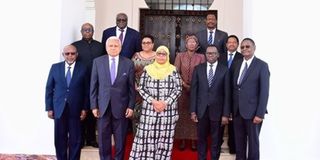
The political atmosphere has also been shaped by recent engagements initiated by President Hassan, including a meeting with presidential candidates from 16 political parties who contested in the election.

The meeting, held at State House in Dar es Salaam, has been widely interpreted as part of broader efforts to rebuild trust and reopen channels of communication after a highly contested electoral period.

According to analysts, such gestures complement ongoing investigations by reinforcing dialogue as a central pillar of reconciliation.