Ticts wants a 31 per cent increase in loading and unloading a 20 and 40-foot container and 32 per cent increase of the same at the terminal
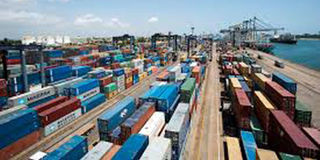
Dar es Salaam. Port user charges at the Dar es Salaam Port would increase by over 30 per cent should a new tariff proposal be approved by authorities.
The Citizen can reveal today that the International Container Terminal Services (Ticts) has filed an application for higher charge on port users, raising concern that the new tariff could undermine competitiveness of the port.
Ticts is applying for a 31 per cent increase in loading and unloading a 20 and 40-foot container in a ship (stevedoring) and 32 per cent increase in handling the same containers at the terminal.
But some stakeholders say if accepted, shipping lines will pass the cost on to the end users. The decision however whether to grant the application now lies with the Surface and Marine Transport Regulatory Authority (Sumatra) that has the power to determine the tariff.
Currently, stevedoring charges for a 20 and 40-foot full container load (FCL) intended for domestic use stands at $71 and $107 respectively and Ticts are proposing to increase the rate to $93 and $140.
The rate for handling the 20 and 40-foot domestic container now stands at $79 and $119 respectively but Ticts are proposing an increment to $104 for a 20 feet container and $157 for handling a 40-foot container.
Ticts was reluctant to share more information on the new tariff plan, with the firm’s marketing manager, Mr John Masasi, referring all the queries to Sumatra.
Sumatra officials were not immediately ready to comment on the matter, with its senior public relations officer, Mr David Mziray, asking The Citizen to speak to a junior officer who was not available. Recently, railway stakeholders accused Sumatra of treating tariff proposals as secret and allegedly siding with applicants.
On the Ticts plan, Tanzania Shipping Agents Association (Tasaa) said that it was unwarranted and if accepted will increase the cost of doing business and make traders opt to use other ports.
“It is true that tariff has remained unchanged for many years, but the shipping lines have been suffering heavy losses due to poor productivity and longer waiting time,” said Tasaa chairman Peter Kirigini.
He said that Ticts argument to increase fees because they want to purchase new and modern equipment cannot be accepted. “We were not allowed to charge congestion surcharges by Sumatra, making lines absorb the cost,” he told The Citizen.
The oficial said Ticts has benefitted too substantially from an increase in trade volume over the years to warrant a new port user fees. Currently, Ticts handle 80 per cent of all containers passing through the Dar es Salaam Port. Figures show the volumes have been growing by 10 per cent each year.
“Ticts should re-invest part of their profit rather than increasing tariff,” he said.
On the other hand Container Freight Stations, Inland Container Depots and Dry Ports Association of Tanzania (Cidat) chairman Ashraf Khan rejecting the move to increase tariff saying it will make the port more expensive and uncompetitive. “I am surprised to see the Tanzania Ports Authority and the government entertaining applications like this. It would kill the port.”
He said for example that Ticts is seeking to charge $500 as fee to transfer a 40 feet container from his terminal to its Ubungo ICD. “I am worried to see the government accepting such a request while other ICDs across the country are transporting containers from the port free of charge.”
He said that there is a need to implement harmonized tariff.
According to Mr Kirigini, Ticts should focus on increasing performance which in turn will bring more volumes to raise profits.
He said that while neighboring ports are coming with high performance, Tanzania is busy looking on ways to make business uncompetitive, this may send wrong signal to importers who may opt for other ports.
“Whatever the conclusion is, the most important aspect that shipping line will find a way of passing this cost on to the end users – rather than having to absorb it. There is no way that shipping lines can recover this in transparent manner without adding it as a surcharge. If any increase is granted then shipping line will move for a surcharge to cover the difference between current/future rates.”
“Sumatra has been inviting us to stakeholders’ meetings whenever there is any tariff increase proposal or new application but to our surprise it never gives us in advance the applications so that we can view them and make informed decisions,” the chairman of the Association for the Defence of Passengers (Chakua), Mr Hassan Mchanjama, told The Citizen.
He said although Sumatra has been sending them official invitation letters describing the subject matter and the aim of the meetings “it is crucial that we know every detail of the application proposal prior to the meetings.”
“Unlike the Energy and Water Utilities Regulatory Authority which publishes every application on its website, Sumatra has been making them secretive, something which worries us that the regulator might be siding with the applicants,” said Mr Mchanjama.