Plastic waste recycling opens doors to jobs for 120 students
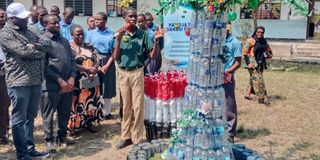
A student from Kibasila Secondary School explains to Vingunguti Ward Councillor Omary Kumbilamoto how plastic waste is being transformed into valuable products through innovation, showcasing how recycling can promote environmental conservation, entrepreneurship and sustainable community development.
A recycling initiative involving 120 students from eight schools is demonstrating that plastic waste can become a source of jobs, entrepreneurship and environmental protection, as stakeholders push to equip young people with green skills.
Dar es Salaam. Plastic waste that would otherwise end up polluting rivers and the ocean is being transformed into economic opportunities for young Tanzanians, following an initiative that has seen 120 students convert discarded materials into marketable products through innovation and recycling.
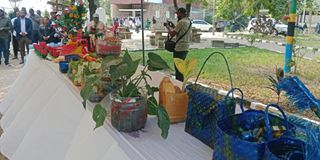
The students, drawn from eight primary and secondary schools in Dar es Salaam and Lindi regions, displayed chairs, decorative items and other practical products made from recycled plastic waste, illustrating how environmental conservation can go hand in hand with youth employment and entrepreneurship.
The Tanzania Civil Society Forum on Climate Change (FORUMCC) says the initiative demonstrates that addressing plastic pollution can simultaneously create sustainable livelihoods for young people.
Speaking during an awards ceremony held in Dar es Salaam on July 17, 2026, FORUMCC Executive Director Sarah Ngoy said the programme was intended to inspire students to view recycling not only as an environmental solution but also as a viable economic opportunity.
“Our objective was not only to teach young people about environmental conservation. We want them to see recycling as a viable livelihood and a pathway to self-employment after completing their studies. Schools can also develop income-generating projects from these innovations,” she said.
Ms Ngoy said participants first received training on the impact of plastic pollution on rivers, coastal areas and marine ecosystems before developing innovative ideas that were later converted into products with commercial value.
She noted that the initiative had shown how materials commonly regarded as waste could instead become valuable economic resources.
“We want young people to understand that environmental innovation is not just about protecting nature. It can also create jobs, generate income and support community development,” she said.
The competition was organised under the Bahari Yetu (Our Ocean) project, funded by the European Union and coordinated by the International Union for Conservation of Nature (IUCN) in collaboration with WWF, The Nature Conservancy (TNC) and the Wildlife Conservation Society (WCS).
According to Ms Ngoy, the project aims to strengthen the conservation of Tanzania’s coastal and marine ecosystems by improving marine resource management, encouraging community participation in conservation efforts and reducing plastic pollution.
She added that FORUMCC has also been implementing public awareness campaigns and supporting the development of plastic waste management strategies in Kinondoni, Ilala, Temeke and Mafia districts.
Former Ilala Mayor and Vingunguti Ward Councillor Omary Kumbilamoto commended the students for demonstrating that waste can be transformed into a valuable resource.
“You have shown that plastic waste is not merely rubbish. It can be transformed into valuable products and become a source of income. This is how we build a generation that protects the environment while creating its own economic opportunities,” he said.
He urged the students to continue promoting recycling within their schools and communities, stressing that wider public participation would be essential in reducing indiscriminate plastic disposal.
“Do not let this initiative end with the competition. Continue educating your peers and communities that protecting the environment is everyone's responsibility,” he said.
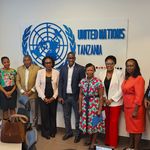
Meanwhile, United Nations Development Programme (UNDP) Tanzania National Partnership Manager for Action Against Plastic Pollution, Flavian Mgeni, announced that Kilindoni Primary School in Mafia District emerged as the overall winner among the eight participating schools.
Kitomondo Secondary School finished second, followed by Ilala Primary School in third place and Mtongani Secondary School in fourth.
The remaining positions were taken by Juhudi Secondary School, Kibasila Secondary School, Mbweni Teta Secondary School and Kitomondo Secondary School.
The participating students exhibited a wide range of products made from recycled plastic waste and used cardboard, including chairs, decorative items and household products, showcasing the potential of recycling to reduce pollution while creating economic opportunities for young people.