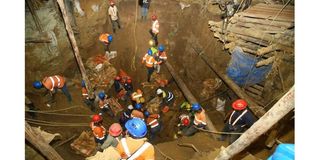
Dar es Salaam. Small-scale miners could gain easier access to financing, modern technology, geological data and reliable markets under sweeping reforms proposed in a government-commissioned report that also recommends the establishment of a $100 million mining development fund.
The report, presented to the government on Friday, outlines measures aimed at boosting productivity, accelerating formalisation and strengthening the contribution of small-scale mining to Tanzania’s economic growth.
The recommendations include the creation of a dedicated miners’ bank, improved access to affordable credit, expanded geological information services, wider adoption of modern mining technologies and stronger occupational health and safety standards.
Presenting the findings, committee chairman Victor Tesha said the proposals seek to address longstanding challenges that continue to limit the growth of small-scale mining despite its significant contribution to the sector.
“Small-scale miners contribute about 40 percent of the mining sector’s revenues, but many still face major obstacles, including limited access to finance, inadequate geological data, outdated equipment and weak institutional support,” he said.
According to the report, about 72 percent of small-scale miners still rely on basic mineral recovery methods, resulting in low productivity, high operating costs and increased environmental and safety risks.
While acknowledging progress made through reforms such as the Mining Act and the Mineral Policy of 2009, the report argues that more targeted interventions are needed to unlock the sector’s full potential.
It notes that although the number of small-scale mining licences has increased significantly in recent years, many licence holders lack the capital, technical expertise, equipment and market access required to build sustainable mining businesses.
To bridge those gaps, the committee recommends the establishment of the Tanzania Mining Development Fund with initial government capital of $100 million.
The proposed fund would support geological surveys, improve access to financing, reduce investment risks and help miners develop bankable projects capable of attracting investors.
The report estimates that nearly $97 million would be needed to support 20 advanced mining projects.
Other recommendations include strengthening miner registration systems, expanding geological information services, improving access to modern mining technologies, classifying miners according to their investment capacity and enhancing coordination among institutions supporting the sector.
The committee argues that stronger support for small-scale miners would increase mineral production, create jobs, raise government revenues and deepen Tanzanian participation across the mining value chain.
“The recommendations we are presenting mark the beginning of a new phase in the development of small-scale mining in Tanzania,” Mr Tesha said.
“With the right support systems in place, the country’s vast mineral resources can play an even greater role in driving national development.”
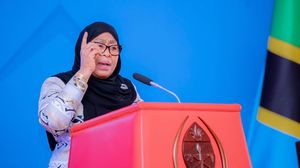
Speaking at the event, Minerals Minister Antony Mavunde said the government is intensifying efforts to empower small-scale miners, who account for about 40 percent of the country’s mineral production.
He said reforms introduced since 2017 have strengthened oversight of mineral trading and boosted revenue collection through the establishment of mineral markets and buying centres across the country.
“The mining sector has undergone major transformation over the past several years, with revenues increasing substantially and more benefits being retained within the country,” Mr Mavunde said.
According to the minister, mining sector revenues rose from Sh160 billion in the 2015/16 financial year to Sh1.3 trillion by June 2025, surpassing annual revenue targets.
He said part of that growth was driven by the increasing contribution of small-scale miners.
Among the initiatives already underway is the Credit Guarantee Corporation, which will provide guarantees covering up to 50 percent of eligible loans, making it easier for miners to secure financing from commercial banks.
“We want our miners to have greater access to capital without depending heavily on foreign financiers,” Mr Mavunde said.
“Through these reforms, we are creating opportunities for Tanzanians to participate more effectively in mining and mineral trading.”
The minister also announced plans to allocate idle mining areas to active miners, expand geological research and encourage investment in mineral processing facilities to add value before minerals are exported.
He said the government is strengthening domestic gold trading systems and expanding access to local financing to enable miners to sell through local channels while enhancing Tanzania’s position in the global gold market.
Mr Mavunde expressed confidence that implementing the recommendations would unlock the full potential of small-scale mining and further increase the sector’s contribution to economic growth and industrialisation.
The president of FEMATA, John Bina, said empowering small-scale miners was essential if they were to compete effectively with larger operators and foreign investors who often have greater financial resources.
“There is no mining without capital investment. The sector requires technology and significant financial resources to operate successfully,” he said.
“It is therefore important for the banking sector to support miners so that they can expand and compete effectively.”
Mr Bina said FEMATA is pursuing plans to establish a Tanzania Miners’ Bank and called on the government to support the initiative.
He cited the Bank of Tanzania’s gold purchasing programme as an example of how targeted interventions can strengthen the sector.
“Today, the Bank of Tanzania purchases gold, creating a reliable domestic market for the mineral. That intervention has helped stabilise the market and support miners,” he said.