Russia backs Tanzania’s drive for trade, satellite, investment-led growth
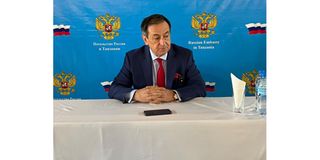
Russian Ambassador to Tanzania, Andrey Avetisyan, briefs journalists in Dar es Salaam on Tuesday, December 23, 2025, on bilateral cooperation in 2025 and outlines priorities for the year ahead. PHOTO|COURTERSY
The assurance was given on Tuesday, December 23, 2025, by the Russian Ambassador to Tanzania, Mr Andrey Avetisyan, while reviewing bilateral cooperation in 2025 and outlining priorities for the year ahead.
Dar es Salaam. Russia has reaffirmed its commitment to supporting Tanzania’s drive for economic self-reliance, including cooperation in communications infrastructure such as satellite technology when required.
The assurance was given on Tuesday, December 23, 2025, by the Russian Ambassador to Tanzania, Mr Andrey Avetisyan, while reviewing bilateral cooperation in 2025 and outlining priorities for the year ahead.
Addressing journalists, Ambassador Avetisyan said genuine self-reliance is built through trade, investment, and value addition, which he described as the most practical and sustainable routes to development.
He linked this approach to what he called Africa’s “second liberation” economic independence following political independence in the 1960s.
“Foreign aid cannot be a permanent solution because it depends on the decisions of donors. Investment, trade, and adding value to domestic resources are the path to real development,” he said.
The envoy emphasised that Russia’s engagement with Tanzania is based on mutually beneficial trade and investment rather than aid.
“That kind of cooperation is the most reliable because both sides have direct interests. This is Russia’s philosophy in its relations with Africa,” he said.
He added that Russia aims to promote direct trade between the two countries, particularly in agricultural products such as coffee, cashew nuts, avocados, and other fruits.
Currently, he noted, some Tanzanian products are exported to Europe for processing and then sold to Russia under European brand names, depriving Tanzania of added value.
“The solution lies in investing in processing, packaging, and value addition within the country, which requires direct commercial cooperation,” he said.
Beyond trade, the ambassador said Russia is ready to expand cooperation in technology, health, energy, ICT, and space-related fields.
“Tanzania is interested in developing its aerospace sector, and Russia is prepared to provide technical assistance in satellite construction and related infrastructure. As partners, we are advanced in this area and have no intention of withholding expertise,” he said.
Mr Avetisyan observed that while Tanzania and Russia have long-standing political and historical ties, economic cooperation has not yet matched that level of friendship.
“The current goal is to balance our historical relations with genuine economic and commercial cooperation. However, specific business and investment projects must be carefully assessed,” he said.
Trade figures highlight the imbalance between the two countries.
Tanzania imports goods from Russia worth an average of $2.26 billion (Sh5.93 trillion) annually, primarily wheat, chemicals, and machinery, while its exports to Russia amount to just about $5.8 million.
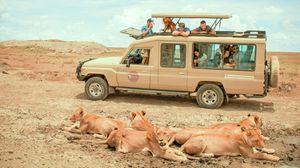
In tourism, Mr Avetisyan said efforts are underway to restore direct flights between Russia and Tanzania to boost visitor numbers.
Russian tourism companies have already visited Tanzania and are collaborating with the Tanzania Tourist Board (TTB) to develop travel packages centred on national parks and Zanzibar.
“The aim is not only to increase Russian tourists coming to Tanzania, but also to encourage Tanzanians to visit Russia,” he said.
He described 2025 as a year of significant progress, marked by meetings of joint intergovernmental commissions and strategic projects.
Plans for 2026 include further strengthening of ties, notably through the third meeting of the Joint Trade and Economic Commission, expected to be held in Tanzania.
Commenting on the developments, spice trader Yahya Mzamilu urged authorities to make the Russian market more accessible to Tanzanian businesspeople.
“Building economic relations should also involve helping traders understand and access those markets. If possible, dedicated offices should be established to support Tanzanian products entering the Russian market,” he said.