SPECIAL REPORT: Women launch drive as road accidents rattle Tanzania
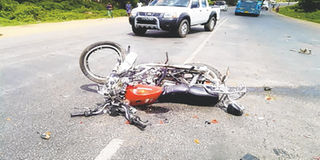
The Road Traffic Act (TRA) stipulates that it is mandatory for motorcycle riders to wear helmets although serious injuries and even death are often the result of people ignoring the law.
What you need to know:
An expert in disasters says though accidents kill a larger number of people than those killed in robberies or from some diseases, people go to great lengths to address other factors than road safety.
Dar es Salaam. It is amazing how people tend to value their safety and security. Typically, a person who builds a house, puts around it a fence and in most cases with a heavy gate. It is not surprising if the fence will also be electrified.
All this is done in the name of preventing oneself from armed robbers and other types of thugs. But, the same person become careless once he leaves the gate of his house. Though he will be driving an expensive car, he will not be fastening his safety belt.
When he is stopped by a traffic police officer and asked why he has not fastened a safety belt, most probably he will give baseless excuses. After being educated on the importance of the safety belt by the traffic police, he will put it on only to unfasten a few metres after leaving the spot where he was stopped.
What such people don’t comprehend is the fact that while robbers focus on property, road accidents result in fatalities. Such people are also unaware that many people are killed in road crashes than in robberies in homes.
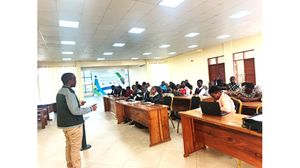
That is why the Tanzania Media Women’s Association (Tamwa) has embarked on a project to educating the public on road safety.
The project coordinator, Ms Gladness Munuo, says though Tamwa focuses on educating women and children, the entire public will benefit from results of the campaign.
“For instance, if a woman who has been educated by Tamwa persuades a reckless driver to check his speeding and avert a possible accident, not only women who will be saved but all people in that vehicle,” she says.
Ms Munuo said in Dar es Salaam during the launch of the project that deaths and injuries resulting from road accidents are preventable. Therefore, it is possible to save thousands of lives which are lost each year from road accidents.
“We only need to recognise the need for an evidence based approach to road safety. This will ensure that all road users and vehicles are safe.”
Complacency
Dr Godfrey Sansa from the Tanzania Centre of Disaster and Risk Mitigation, notes that many people have been taking their safety when on roads for granted.
He says it is amazing that though accidents kill a larger number of people than those killed in robberies or from some diseases, people go to great lengths to address other factors than road safety.
“The problem is not only on the end users. The problem is, in fact, widespread along the entire road safety channel. If you look carefully you will realise that most efforts to address road accidents are being done at the end of the road safety chain,” he said when presenting a paper during the launch of the Tamwa project.
Dr Sansa, who is a lecturer in political science at the University of Dar es Salaam, said although many people are bitter on road accidents but they don’t act.
But he noted that the launch of the Tamwa campaign shows that the public has started to realise the enormity of the problem.
“Most of us know Tamwa as an institution which specialises in gender and children issues. If they have seen the importance of having gender perspective in road safety that is a very positive development and we should all support it,” he says.
He praised Tamwa for the initiative, saying women were the most affected in road accidents.
Although data shows that most people dying or being injured in road accidents are men, they have many dependants.
“Most women are left as widows with children to take care of after a man dies in an accident. Therefore, road accidents are indeed a gender issue,” he insisted.
Dr Sansa said time had come for road safety to be made a national agenda because accidents had become one of major sources of loss of lives and property.
Challenges
According to Dr Sansa, the absence of proper governance approach to road safety support initiative was a major setback.
Besides, there was no clear link between human rights protection and road safety.
He noted that life is the basic right to any human being. But since road accidents have been claiming a lot of innocent lives, they should be advocated by human right defenders.
“But we have not seen that happening. What has been done is to produce reports about the number of people killed in accidents. They don’t go beyond that in management of road safety and I think this is a serious omission.”
“That doesn’t mean that there are no strategies. The problem is that are not well coordinated.”
As a result, he noted there was no effective community involvement in tackling road carnage.
According to Dr Sansa, there was a lack of a proper financing mechanism in curbing road accidents.
“Traffic police collect a lot of money in terms of fines to violators of traffic laws and regulations, but all of the money goes to the Central Government and the Traffic Police Department gets nothing to enable it improve road safety,” he said.
“I think time has come now to establish the National Road Safety Fund to serve as a central kit through which road safety issues will be financed. We can’t improve road safety if we don’t have a reliable source of funding.”
The national traffic commander Mohammed Mpinga agrees.
He also said police had done a lot to improve road safety.
Responsibility for all
He criticised some people for thinking that road safety is the responsibility of traffic police rather than all the people.
He believes that notion had negatively impacted on the efforts to improve road safety.
“But it is encouraging that people have started to be aware of this issue. For instance, now we have a group of volunteers called Road safety Ambassadors or RSA, who have been doing a good job.”
He praised Tamwa, saying its campaign is testimony that the agenda has started to attract attention of many stakeholders.
“People should not be amazed that Tamwa, which is a gender-based organisation has decided to take part in road safety. Road safety is also a gender issue because women and children are the major victims of road accidents.”
Bigger picture
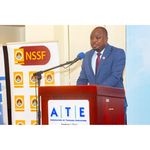
Mr Jones John, from Bloomberg Initiative for Global Road Safety believes that Tamwa efforts would enable the government to attain some of the targets of the United Nations Sustainable Development Goals (SDGs).
Goal 3 of SGDs centres on ensuring healthy lives and the promotion of well-being for all people. Specifically, this goal seeks to halve the number of global deaths and injuries from road traffic accidents by 2020.
On the other hand, SGD goal 11 wants to make cities and human settlements inclusive, safe, resilient and sustainable. Under this goal, the world aspired to provide access to safe, affordable, accessible and sustainable transport systems for all, improving road safety, notably by expanding public transport by 2030.
“You can easily see here that improving road safety will go a long way in assisting the country meet these goals,” points our Mr John.
Legal weakness
Though there are laws on road safety, they do not meet international standards thus compromising safety of road users.
Mr John notes specifically that the Road Traffic Act (RTA), Cap 168 R.E 2002 that does not meet the absolute international standards across the board on a range of issues.
Though traffic police have been issuing data on accidents, the figures are not comprehensive.
He says Tanzania lacks disaggregated data on the injuries and deaths caused by accidents.
But what is troubling the country most is a weak enforcement mechanism and clear gaps in regulations.
According to Mr John, legal deficiency is among a number of factors which contribute to the road accidents. The major setback is the lack of one coherent law to govern road safety issues.
But Mr John noted further that even the ‘scattered’ pieces of legislation, lack comprehensible rationale in controlling accidents.
“This can easily be seen on how the existing laws address the risk factors to road safety. In my opinion, there are strengths in these laws but there are also glaring gaps and weaknesses which should be addressed if we want to improve safety in our roads.”
He notes for instance that the legislation which puts control on speed limit gives the minister uninhibited powers to pass regulations controlling speed. This assures the country of regulations which can be used to control accidents, ensure road safety and reduction in accident risks.
But, on the other hand, experience shows that the minister has not exercised these powers effectively. Few regulations which the minister has put in place have not been enforced effectively and strictly. As a result, the regulations are as good as nothing.
“It is one thing to have powers to make regulations and it is another thing to actually make them. But, even if the regulations are put in place, it is quite another thing to enforce them. And if they are not enforced, our ability to deal with road accidents is reduced.”
But, Mr John points out also that the law is implemented more on urban roads compared with rural roads. This might be because of poor standard of roads in rural areas.
On law which prohibits driving while under influence of alcohol, Mr John says while some people regard the law as comprehensive but it is still questionable if it meets minimum international standards.
There is also some serious omission in the law. For instance, he points out that driving while drunk is not an offence which is subject to notification pursuant to operation of section 95 and its attendant Regulations; the Road Traffic (Notification of Offences) Regulations G.N 249/2000.
According to him, the enforcement of the law is problematic as there is confusion on the set of alternative punishments provided by the law.
Motorcycles
The Road Traffic Act (TRA) stipulates that it is mandatory for motorcycle riders to wear helmets under section 39(11). However, though these days traffic police have started to enforce the same on passengers, the law does not specifically compel motorcycle passengers to wear helmets.
But Mr John also notes that there is problem also on the quality of helmets. There are people who have been seriously injured and others have died despite wearing helmets. This is because the helmets they used were substandard.
Moreover, the Tanzania Bureau of Standards (TBS) standard code 1478 falls short of providing standards for child helmets.
Journalist Lilian Timbuka argued that many people were avoiding to wear helmets because they might be contaminated.
“But we can emulate our neighbours in Rwanda where the authorities have sensitised the public on the importance of wearing. In fact every bodaboda operator has two helmets. The operators also have disposable plastic caps which passengers cover their heads before putting on the helmet. This way, the danger of infections is reduced.”
But Dr Sansa argues that hair fashion, especially among women, can be an issue.
“Women cannot be forced to put on helmets while they have done their hair in certain fashions. In fact, in some hair fashions there is no way a woman can wear a helmet.”
Describing another traffic law, Mr John points out that law stipulates that the fastening of seat belts in mandatory for passengers.
“Failure to fasten a seat belt is a notifiable offence under the Road Traffic (Notification of Offences) Regulations, First Schedule. Transport Licensing Act, Cap 317 may have changed requirement for the public services vehicles, especially buses.”
But, he notes that the Road Traffic Act does not meet the global standards on seat belt fastening because the law stipulates the seat-belt requirement only for the driver and front seat passenger.
One area where the traffic laws are so weak is on safeguarding minors. Mr John notes that neither current main legislation nor regulations for the RTA addresses child restraints.
“But there is relief in the draft amendments to the RTA as they address the matter.”
In his recommendation, Mr John says there is urgent need to strengthen mechanism for law enforcement.
Mr John urges the government to harmonise the traffic laws and institutional mandates so as to have one comprehensive law which will be easy to monitor its applications and implementation.
On May 22, Parliament was told that Dar es Salaam was leading with the highest number of motor accidents and casualties.
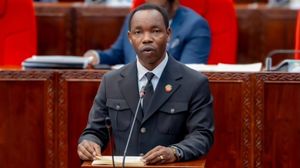
The deputy minister for Home Affairs, Mr Hamad Masauni, said that motor vehicle accidents data for the past three years show that Dar es Salaam and Simiyu region had the highest amount of accidents.
However, Mr Masauni noted that the number of accidents generally been decreasing in the country over the past several years due to efforts by various stakeholders, mainly the Police Force.
Elaborating, Mr Masauni said that 2013 had total of 23,842 accidents across the country which recorded 4,002 deaths and 20,689 injuries. He named regions which lead in accidents as Kinondoni with 6,589 accidents and Ilala with 3,464 accidents. Simiyu and Tanga recorded least accidents at 67 and 96 respectively.
In 2014 a total of 14,360 accidents occurred causing 3,760 deaths and injuring 14,530 people. 3,086 accidents Kinondoni topped the list followed by Ilala with 2.516 accidents. Kagera recorded 29 accidents and Simiyu 55.
Last year a total of 8,337 accidents occurred across the country leading to 3,468 deaths and 9,383 injuries. Some 1,431 accidents occurred in Ilala while in Temeke 1,420 accidents were recorded. He named Regions which has the least number of accidents as Rukwa (53) and Arusha (53).