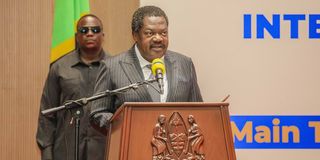
Dar es Salaam. Tanzania’s Vice President, Dr Emmanuel Nchimbi, has announced his decision to resign from office and retire from politics and public service, effective September 4, 2026, drawing renewed attention to several controversial remarks he made during his tenure.
Dr Nchimbi announced on Tuesday, August 25, through his Instagram account, which had not been active since March 8, 2023.
He said he had written to President Samia Suluhu Hassan informing her of his decision, citing Article 50(2)(c), read together with Article 149(2) of the Constitution.
“Today, August 25, 2026, I wrote a letter to the President of the United Republic of Tanzania, Samia Suluhu Hassan, informing her that I have decided to retire from politics and public service,” he said.
Dr Nchimbi linked his decision to a commitment he made to President Hassan on August 27, 2025, when he pledged to serve her and the country faithfully.
“I also assured her that whenever she sees the need for another Vice President, I will vacate the position. I am fully satisfied, without any doubt, that Her Excellency the President desires change, and thus I have decided to fulfil my promise,” he said.
His announcement has brought renewed focus to remarks he made on the October 29, 2025 election violence, judicial independence, leadership conduct, political tolerance and constitutional reform.
October 29 and public debate
One of his notable interventions came on February 2, 2026, during national Law Day celebrations in Dodoma.
Representing President Hassan, Dr Nchimbi backed a call by Tanganyika Law Society President Boniface Mwabukusi for political leaders and other groups to stop publicly revisiting the events of October 29, 2025.
He said he agreed with the call ‘100 percent,’ arguing that continued discussion of the events could reopen wounds and undermine reconciliation.
“Continuing to discuss those events publicly is contrary to the legal framework and does not do justice to the country,” he said.
He said the appeal should apply to government leaders, political parties, civil society organisations and activists.
At the same event, Dr Nchimbi warned judges against using judicial independence to avoid responsibility.
“Judicial independence is a mandate to deliver justice with integrity and in accordance with the Constitution,” he said.
‘Keep wrongdoers out of State House’
Four days later, on February 6, Dr Nchimbi made another statement that attracted attention.
Speaking at the installation of the fifth national leadership of the Tanzania Council of Pentecostal Churches in Dar es Salaam, he urged Tanzanians to pray for President Hassan and for protection from people who could mislead her.
He called for prayers that the President would identify troublemakers, schemers, liars, thieves and untrustworthy individuals.
“Let us also pray that God shuts the gates of State House to wrongdoers,” he said.
He added that people harbouring intentions of theft, embezzlement, intrigue or bloodshed should not gain access to State House.
Leaders using power for personal gain
On April 11, 2026, while addressing a youth symposium organised by the Mwalimu Nyerere Foundation in Dodoma, Dr Nchimbi again spoke about leadership conduct.
“Many leaders are using their powers for personal gain instead of serving the interests of the nation and its citizens,” he said.
He said authority given to leaders by citizens was intended to serve the public rather than provide personal benefits.
He urged leaders to emulate the late Mwalimu Julius Nyerere’s integrity and patriotism and his opposition to corruption and abuse of power.
He also warned against religious and ethnic discrimination, saying failure to uphold equality and allowing some people to deny others their rights could create divisions.
The new Constitution
His strongest intervention came on July 24, 2026, when he addressed the Tanzania Human Rights Defenders Coalition’s annual general meeting in Dar es Salaam.
“If I were asked as the Vice President to tell Tanzanians only one thing, I would say: fight for a new constitution,” he said.
Dr Nchimbi called for a Constitution based on agreement among stakeholders and national consensus, saying it could provide a foundation for Tanzania’s future.
“When you listen to many people's demands, you must choose the single major thing that can carry everything in the country. It is the Constitution,” he said.
He urged the country to take advantage of what he described as President Hassan’s political will to pursue constitutional reform, warning that a future president might not share the same commitment.
“So, President Samia wants this process to move forward. We should seize this opportunity while the President is committed to it,” he said, adding that Tanzania had ‘a genuine opportunity to secure a new Constitution before 2030.’
He also said the new Constitution should guide Tanzania for the next 50 years and make citizens proud to identify themselves as Tanzanians.
A different tone towards critics
In the same July speech, Dr Nchimbi called for political and social differences to be handled without hostility.
“For gentlemen, there is agreeing to disagree. We can reach a point where we do not agree and have completely different views on how to lead the country or manage affairs, but that is not a sin and should not be treated as betrayal,” he said.
He cited activist Maria Sarungi Tsehai as an example of someone with whom he could discuss national issues despite their differences.
Dr Nchimbi also returned to the issue of justice, saying Tanzania could not achieve lasting peace without it.
“The President said justice is the foundation of peace,” Dr Nchimbi, whose resignation takes effect on September 4, 2026, said.
Analysts weigh in
Political analysts said Dr Nchimbi’s remarks had in different ways, signalled major political decisions, including his possible departure from office, could not be ruled out.
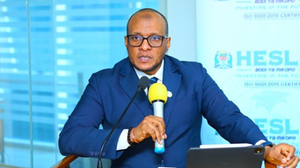
A political analyst at the University of Dar es Salaam, Mr Salbinus David, said some of Dr Nchimbi’s statements created the impression that he was prepared to make a significant political decision if circumstances required it.
“Some of his statements made people believe that a decision of this nature was possible from someone in his position. He was speaking in a way that suggested he was ready to put the country and political circumstances ahead of his personal position,” he said.
Political analyst, Dr Baraka Mfinanga, said the remarks should not necessarily be interpreted as direct indications of resignation, but reflected a willingness to confront difficult political questions.
“He was talking about what people want in different areas of governance. What made his statements appear unusual was the political environment in which they were made and the fact that people were already looking for signs of change,” he said.
A governance lecturer at Tumaini University Dar es Salaam, Dr Lazaro Swai, said the statements also reflected the country’s search for reconciliation.
“People are not together nationally in the same way, especially after the events of October 29, 2025. There is now a search for reconciliation, justice and a way forward, so statements on these issues naturally attract attention,” he said.
A political analyst at the State University of Zanzibar, Prof Ali Makame Ussi, said the remarks had contributed to speculation about possible political changes.
“His statements touched on governance, accountability, constitutional reform and reconciliation. In that environment, they could be interpreted as signs that significant decisions were possible,” he said.
Register to begin your journey to our premium contentSubscribe for full access to premium content