Digital Audio Broadcasting will address the shortage of FM spectrum, which is congested in most urban areas, and, as a result, deny investors opportunities to start radio broadcasting stations
Dar es Salaam. The government is in the final stages of completing the review of broadcasting regulations to allow the use of digital radio broadcasting technology, popularly known as Digital Sound Broadcasting (DSB). It is also known as Digital Audio Broadcasting (DAB).
The technology will address the shortage of FM spectrum, which is congested in most urban areas, and, as a result, deny investors opportunities to start radio broadcasting stations.
DSB would thus increase the wider scope of delivering radio content to more citizens, including border areas.
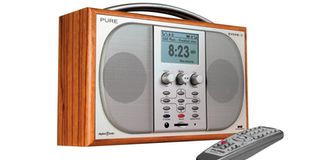
DSB would require specific radio receivers. These receivers enable a wider range of features, such as programme information and track listings.
DSB is an upgrade from analogue sound broadcasting technologies, amplitude modulation (AM) and frequency modulation (FM), which have been the only broadcasting standards for a number of years.
The world has already migrated from terrestrial analogue to digital TV terrestrial broadcasting. Tanzania completed migration to digital TV broadcasting in 2014.
But the migration to digital radio broadcasting is only starting. Norway is the only country to have fully switched on to DAB.
Other country in are expected to follow suit, with the European Union making DAB radio receivers a requirement in new vehicles.
The deputy minister of Information, Communications and Information Technology, Mr Kundo Mathew urged the Tanzania Communications Regulatory Authority (TCRA) to conduct a feasibility study of the entire broadcasting sector to allow the accommodation of other technologies.
Mr Mathew was speaking in Dodoma when he officially opened a two-day annual broadcasting conference.
His statement was made available to the media in Dar es Salaam on February 14.
He said the existing radio broadcasts have reached 55 percent of Tanzania's geographical area, excluding wildlife areas and forests.
“Therefore, stakeholders in the broadcasting sector are requested to participate fully in the process of improving the industry and give their opinions in cooperation with the international consultant who will be carrying out his duties under the supervision of TCRA,” he said.
The consultant, he said, will examine the challenges facing the industry, focusing on technological evolution, sources of income and operating costs, among others.
The aim will be to explore the possibility of solving the challenges of broadcasting, including those related to the ability of broadcasting stations to operate profitably.
Reacting to the development, the manager for the Makambako-based Ice Broadcasting Centre, Mr Jacob Mwenga, said DSB would usher in great progress in the broadcasting sector in Tanzania.
According to the broadcasting services section manager from TCRA, Mr Andrew Kisaka, the technology will enable more service providers to broadcast and increase the possibility of reaching more citizens.
With DSB, listeners can enjoy crystal-clear sound without the hiss and crackle that can be present in analogue radio broadcasts.