Tanzania aims to have 80 percent of its population using clean cooking energy by 2034 to reduce environmental damage and improve public health.
Arusha. The Tanzanian government has set an ambitious target to ensure that at least 80 percent of its population uses clean cooking energy by 2034, in a move aimed at reducing environmental degradation and improving public health.
The strategy brings together efforts from the government, private sector and development partners to accelerate the transition away from traditional fuels such as firewood and charcoal.
Speaking on Wednesday, April 8, 2026, Tanzania Clean Cooking Programme (TCCP) Programme Manager, Fredrick Tunutu, said the initiative is part of broader efforts to address climate change challenges, including global warming, deforestation and air pollution.
“The use of clean cooking energy is not only environmentally friendly but also essential for protecting human health and ecosystems,” he said during a visit to a modern clean cooking technology plant in Arusha.
The TCCP programme, funded by the Swedish International Development Cooperation Agency (Sida) and implemented by AECF Tanzania, supports clean energy companies to expand access, build capacity and access subsidies to boost production and distribution.
Tunutu noted that the programme is currently working with 13 companies dealing in various clean cooking technologies, including liquefied petroleum gas (LPG), as part of efforts to meet national targets.
“Clean energy reduces reliance on firewood and charcoal, cuts harmful emissions and creates economic opportunities through innovation and job creation,” he said.
He added that the transition to clean cooking solutions is particularly important for women and children, who are most affected by indoor air pollution.
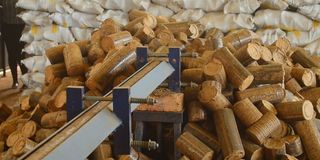
Meanwhile, Hanny G Investment Ltd Managing Director, Hanny Mbaria, said her company focuses on producing alternative biomass fuel known as “kuni poa” and improved cookstoves.
She explained that the fuel is made from agricultural and wood waste such as sugarcane residues and sawdust, processed into efficient and environmentally friendly briquettes.
“Our initiative addresses two challenges waste management and access to affordable clean energy, especially for institutions like schools,” she said.
The factory currently produces between 120 and 150 tonnes of clean fuel per day and employs over 145 workers, the majority being youth and women.
Beneficiaries of the project say it has significantly improved their livelihoods.
Nomi Mollel, who started as a casual labourer and is now a production supervisor, said the job has transformed her life. “I can now support my family and stand on my own,” she said.
Another worker, Martha Mwashinga, who operates cookstove-making machinery, highlighted the empowerment of women in the sector. “I learned on the job and now earn a stable income while supporting my family,” she said.
Emanuel Charles, a youth from Manyara Region, said the programme equipped him with technical skills to manufacture cookstoves and related products, enabling him to become self-employed.
“I encourage fellow youth to seize such opportunities instead of waiting for formal employment,” he said.
The initiative underscores Tanzania’s commitment to sustainable energy solutions as part of global climate action efforts.