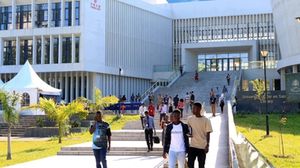
UDSM secures Sh6 billion grant to strengthen Africa’s food security

Dar es Salaam. The University of Dar es Salaam (UDSM) has secured nearly Sh6 billion (€1.98 million) to strengthen research, innovation and human capital development in sustainable supply chains, logistics and food systems across Africa.

The financial support come at a time Africa is facing rising food insecurity, climate change, rapid population growth and disruptions in global trade, therefore, prioritising efficient movement of food from farms to consumers.

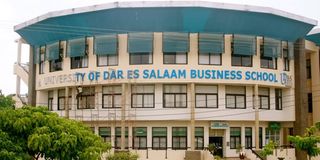
The funding, awarded to the African Centre of Excellence for Sustainable Operations in Resource Management and Food Supply (CSO), housed at the University of Dar es Salaam Business School (UDBS), will support the Centre’s activities between 2026 and 2030.

The investment is expected to enhance postgraduate training, research, international collaboration and industry engagement at a time when African countries are searching for solutions to food losses, inefficient transport systems and weak agricultural value chains.

According to the United Nations Food and Agriculture Organisation (FAO), nearly one-third of food produced globally is either lost or wasted.

In Africa, inadequate storage, transport and logistics infrastructure remains among the leading causes of post-harvest losses, affecting food availability, farmers’ incomes and national economic growth.

For Tanzania, where agriculture employs about 65 percent of the workforce and contributes significantly to the economy, experts say strengthening supply chain systems is critical to improving food security, increasing exports and supporting industrialisation.

Speaking about the significance of the grant on Saturday, May 23, 2026, CSO coordinator and UDSM project manager, Prof Tumsifu Elly, said the Centre was established to develop local expertise capable of addressing Africa’s sustainability and food systems challenges.

“The Centre represents a strategic investment in Africa’s future through strengthening local expertise in sustainable operations, logistics, agribusiness and food supply systems,” he said.

“Through international collaboration, research excellence and practical industry engagement, we are building a new generation of professionals and scholars capable of addressing complex development challenges across the continent,” added Prof Elly.

The Centre is a partnership involving UDBS, Kühne Logistics University in Germany and the University of Nairobi in Kenya.

It focuses on sustainable operations, logistics management, agribusiness, rural entrepreneurship and food supply systems.

Beyond the financial value of the grant, education experts view the development as another milestone in UDSM’s growing reputation as a research-intensive university capable of attracting international funding and partnerships.

Over the past five years, the Centre has recorded notable academic achievements.

Between 2021 and 2026, it supported four doctoral scholarships, with three PhD candidates graduating during the 2025/26 academic year.

The Centre also facilitated the establishment of a Bachelor of Commerce in Procurement and Supply Chain Management programme, which has already enrolled more than 120 students. Its first cohort graduated in 2025.

In addition, two new master’s degree programmes have been developed and accredited, with student enrolment expected to begin in 2026.

CSO academic leader, Prof Ulingeta Mbamba, said the initiative is helping position UDSM among Africa’s leading institutions in sustainability and supply chain studies.

“The Centre has significantly strengthened academic capacity through curriculum innovation, faculty development, international partnerships, student exchange programmes, summer schools, staff mobility and multidisciplinary research,” he said.

“We are witnessing the emergence of a strong ecosystem that connects academia, industry, policymakers and communities in addressing sustainability challenges through evidence-based solutions,” he added.

Records show that about 40 students participated in international summer and autumn schools in Germany, Kenya, Ghana and Tanzania.

Another 45 students benefited from fully funded industrial internships between 2024 and 2026.

More than 20 academic staff members also participated in international exchange and professional development programmes involving institutions in Germany, South Africa, Ethiopia, Ghana, Kenya and China.

Research has remained at the core of the Centre’s activities.

Over the past five years, the Centre has supported around 10 major research projects covering food security, logistics, sustainability, agribusiness, alternative energy and natural resource management.

“Researchers have also undertaken community-based projects across Tanzania, including studies on agricultural value chains, logistics capacity, alternative cooking energy and sustainability awareness,” said Prof Mbamba.

The Centre has further enhanced UDSM’s global research visibility by supporting participation in five international conferences, where scholars presented more than 60 research papers.

For the UDSM leadership, the Centre demonstrates how universities can directly contribute to national development.

Deputy Vice Chancellor for Research, Prof Nelson Boniface, said the initiative reflects the growing role of higher learning institutions in generating practical solutions to societal challenges.

“This Centre demonstrates how universities can effectively contribute to national development priorities by generating practical knowledge, supporting innovation and building institutional partnerships that create measurable societal impact,” he said.