Dar es Salaam. In the global maritime industry, the term “Class One” is not merely a label; it is a certificate of industrial sovereignty.
For Tanzania, a nation defined by its 3,500km coastline and the Great Lakes, the recent international recognition of the Dar es Salaam Merchant Group (DMG) signals the dawn of a new era in which “Made in Tanzania” is no longer a slogan, but a benchmark of global engineering excellence.
The June–July 2026 edition of Forbes Africa, titled “Africa’s New Blueprint for Growth: Tanzania,” dedicated two pages to profiling DMG’s transformation into a Class One shipbuilding powerhouse.
The recognition marks a historic shift, with Tanzania entering an elite shipbuilding league previously dominated by only a few African nations.
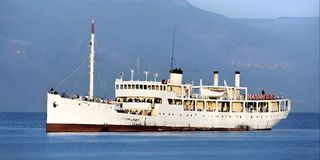
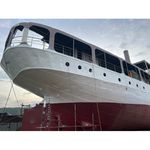
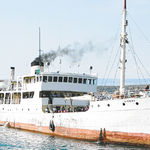
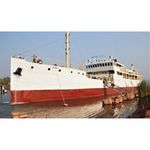
For DMG, the journey to this global stage was anchored in the reconstruction of MV Liemba.
At more than 115 years old, the world’s oldest operating passenger vessel became a flagship example of how Tanzania can restore heritage ships to modern safety and performance standards through a $1.3 million project.
However, the feature went beyond a single vessel, highlighting the emergence of a homegrown, multi-sector conglomerate capable of managing national maritime strategy and delivering multi-million-dollar contracts.
Defining “Class One” excellence
In naval architecture, achieving Class One status means a shipyard can independently design, fabricate, and deliver complex marine vessels to international classification standards without outsourcing core engineering.
The distinction is considered critical for Tanzania’s industrial independence.
Maritime safety and ship design expert, Mr William Kennedy, noted that the achievement separates a repair yard from a true shipbuilder.
“Most African yards stop at fabrication. DMG has moved into naval architecture and systems integration, which is why they can deliver a 1,200-passenger vessel with 400 tonnes of cargo capacity without outsourcing core design,” Mr Kennedy told Forbes.
This capability allows DMG to control the full design lifecycle, from hull design and stability calculations to sea trials, keeping skills and capital within the country.
Transferring skill, not just steel
Perhaps the most significant impact of the recognition lies in the “human blueprint” established by DMG.
Managing director, Mr Rayton Kwembe, highlighted a model that prioritises knowledge transfer over transactional output.
“We recruited about 100 local workers with limited shipbuilding experience. We now run the yard with only nine Korean personnel,” he told Forbes.
The approach includes recruiting Tanzanian graduates from institutions such as the University of Dar es Salaam (UDSM) and Ardhi University, and training them under international experts, noting that results have been rapid.
A senior member of the Korean engineering team noted that Tanzanian engineers progressed from apprentices to managers within 24 months, absorbing complex structural design skills at a pace rarely seen globally.
Economic and local impact
The economic ripple effects of Class One recognition are already evident. With a $58 million contract to construct a new passenger vessel in Kigoma and additional contracts for tugboats in Mwanza and Lake Nyasa, more value is retained within the domestic economy.
“When you build ships here, you also build steel supply chains, welding skills, marine engineering courses, and pride in our youth,” said Tanzania Shipping Company Limited (Tashico) managing director, Mr Eric Hamissi.
He praised DMG for reversing the long-standing pattern of importing expertise while exporting capital.
“DMG has set the benchmark. Class One is no longer a dream. It is a Tanzanian reality,” he said.
On the shores of Lake Tanganyika, the impact is also felt at the community level.
Kigoma boat operator, Mr Juma Bakari, said local involvement in shipbuilding has transformed perceptions.
“For years, we watched ships come from outside. Now we hear the vessel was designed and built here by our children,” he said, adding that national pride is “worth more than the ticket.”
A blueprint for the future
DMG’s strategy extends beyond shipbuilding into broader maritime planning. The company is involved in developing Tanzania’s maritime policy, linking ports, rail, and shipping operations.
Mr Kwembe said the vision is to ensure that “trading is linked with manufacturing” to break dependence on imports.
By investing in infrastructure in Dar es Salaam, Kigoma, and Zanzibar, DMG has promoted a localisation-driven development model that positions it not only as a contractor but also as a strategic partner in national development.