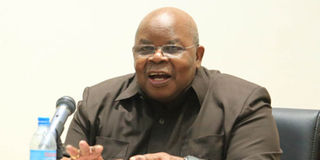
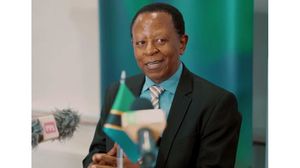
Retired President Benjamin Mkapa. He said Africans were taken for a ride during the Berlin Conference and that should serve as an important lesson when they negotiate trade partnerships with developed nations.PHOTO|FILE
What you need to know:
Mkapa has been an ardent critic of the Economic Partnership Agreements (EPAs) that seek to significantly open up the regional domestic markets to finished products from the EU. He used every opportunity and platform to poke holes in the agreement.
Dar es Salaam. Former President Benjamin Mkapa must be very happy and proud today –now that the government has delivered the single most result that he has vigorously campaigned for over the last five years –rejection of a free trade agreement with Europe.
Mkapa has been an ardent critic of the Economic Partnership Agreements (EPAs) that seek to significantly open up the regional domestic markets to finished products from the EU. He used every opportunity and platform to poke holes in the agreement.
On Friday, he must have let out a huge sigh of relief following the announcement in Dar es Salaam that Tanzania has finally backed down of an earlier commitment with other member countries of the East African Community (EAC) to ink the deal in a week’s time in Nairobi.
Even though the former President who led Tanzania from 1995-2005 would have liked the whole of EAC to reject the deal, he will be pleased that his political student, now President John Magufuli, at least granted him that wish.
The permanent secretary in the Ministry of Foreign Affairs and East African Cooperation, Dr Aziz Mlima, announded at a press conference that Tanzania had pulled out of the agreement owing to the current crisis in the EU following the vote by UK to leave membership of the bloc. Dr Mlima also said the EPA would jeopardise the country’s nascent economic base.
The PS did not say if Tanzania will consider the deal in the future or how it intended to sustain its trade arrangement with the EU, given that EU countries may slap import tax on products from the region currently freely accessing its markets should the EPA not fall through. But the EU threat would be the least of concerns for Mr Mkapa who was visibly heartbroken in recent times when EAC countries, including Tanzania, inched closer on EPA.
The former President cut an image of a lone crusader at some point, telling The Citizen in one interview that he was acutely aware that Tanzania may accept the deal after all, but insisted he would not tire to express his opposition. Sources close to Mkapa said he was downcast that those in government during his successor Jakaya Kikwete’s time did not give serious consideration to his view point. “He therefore took his campaign to many international forums where he spoke out against EPAs and also wrote scathing editorials both in the local press and in international media,” a senior official in government told The Citizen.
While it is too early to know what role, if any, that Mkapa may have played to have Tanzania rescind its decision, what is apparent is that he has the ear of President Magufuli whom he has held talks with severally at the State House since assuming office as Tanzania’s fifth President.
It may also be a pure coincidence but Dr Mlima who delivered the news on the EPA turn-around, served as Mr Mkapa’s personal secretary for many years before he was tapped to join Dr Magufuli’s government and landed the foreign docket that put him in the centre of the EPA matter.
Things will clear up in the coming days, including whether Kenya, Rwanda, Uganda, Burundi and South Sudan will proceed to sign the deal with EU and if Tanzania will continue enjoying the All But Arms free access of the EU market by Least Developed Countries . The EU Commission in Dar es Salaam is yet to issue a statement following the development that has however triggered a fresh round of disquiet at the EAC seat of power in Arusha.
It is not very clear how Mkapa who is credited with firmly positioning Tanzania for liberalisation and acknowledged widely as the leader who increased the country’s exposure to international trade and investment, developed cold feet on the free trade deal with the EU. Only that he is an active player in regional economic cooperation within the EAC, and the Southern African Development Community which he served as chairman for one year from August 2003.
The EPA negotiations apparently started in 2002, three years into the sunset of his presidency. Since then, he has sat on international bodies like co-chairing with President Tarja Hallonen of Finland to the Commission on the Social-dimension of Globalisation from 2003 to 2004 and also a member of the Commission for Africa initiated by former British Prime Minister Tony Blair.
After handing over power to Mr Kikwete in 2005, Mr Mkapa has engaged in a number of prominent global initiatives aimed at reducing abject poverty in Africa, equal economic opportunity for all and combating HIV/Aids. He has served as a panellist in the Panel of Eminent Persons appointed by the UNCTAD Secretary-General and in 2006 he served as a member of the High-level panel on UN System-wide Coherence in areas of Development, Humanitarian Assistance and Environment, appointed by the UN Secretary-General. He also served as a Commissioner on a UN High Level Commission on the Legal Empowerment of the Poor (2006-2008). Since 1996 Mr Mkapa is a co-chair of the Investment Climate Facility for Africa, an off-shoot of the Blair Commission for Africa. He is also a member of the prestigious Madrid Club of Former Heads of States and Government. He is currently the Chair of The South Centre –an intergovernmental organisation of developing countries that helps them to combine their efforts and expertise to promote common interests in the international arena. Mr Mkapa has thus used this platforms to build his standpoint, printing in 2011, a more than 2000 word editorial enumerating the reasons he has so fervently opposed the EPAs and why EAC was better off without it. Signing it, he argues, would compromise the future development of the EAC region, as well as jeopardise the potential of regional trade and integration.
He has compared the agreement to the 1884 Berlin Conference when the western powers scrambled for Africa boarders. EPA, he has said is “the new scramble for Africa.
“If you fool me once, shame is on you, fool me twice shame is on me,” he told an international media conference in Nairobi in 2013.
He said Africans were taken for a ride during the Berlin Conference and that should serve as an important lesson when they negotiate trading partnerships with developed nations. He said Africa should not be cajoled into EPA because there was no way underdogs could do fair business with developed nations. He warned Africa will not emancipate itself from poverty and chains of colonialism until it chooses to reconsider its position in the world today through regional integration towards a United States of Africa.
“I am a realist optimist, now that regional blocs exist throughout Africa, the goal must now be to strengthen them towards a single African State,” he said. Mr Mkapa said Africa must embrace self reliance and denounce charity while civil societies must hold accountable both the rulers and the society in order to be able to take Africa forward.
He says EU was not EAC’s predominant trade partner and that exports to the bloc were on the decline while EAC’s exports to other African countries were more than double those going to EU by up to $2.5 billion.
He said for a realistic goal to industrialise the region, countries should stop exporting raw material to EU countries.
“Opening the bulk of our fragile manufacturing and agricultural sectors to EU imports will mean that EU products will easily out-compete many of our local firms and farms.”
“The EU will be able to monopolise our local markets in certain products, both within the EAC, and also in other African markets (if they also sign EPAs). The current rise in production and exports we are witnessing in East Africa, will inevitably take a hard beating.” Mkapa argues that not only will regional employment be affected as imports from Europe increase and displace domestic farms, the opportunity locally to transform, develop and industrialise the economies will be put jeopardy. He said in addition to the elimination of tariffs, EU also wants the EAC to halt any introduction of new export taxes which they used themselves to develop their economies to the current levels.