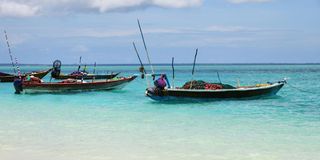
Arusha. For generations, Zanzibar’s blue economy has been built around small fishing boats venturing a few miles from shore and women harvesting seaweed along the islands’ coastline.
Today, however, the islands are positioning themselves to capture a share of a global seaweed market projected to reach $11.8 billion by 2030 while simultaneously seeking investment in fisheries infrastructure, aquaculture, and marine exports.
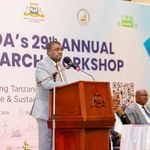
As government officials, financiers, and development partners gathered at the Tanzania Investment Summit 2026 in Arusha on Tuesday, the conversation was no longer centred on livelihoods alone.
Instead, it focused on a broader question: how to transform Zanzibar’s marine resources into large-scale commercial ventures capable of attracting private investment, creating jobs, expanding exports, and driving economic growth.
The discussions revealed an ambitious push to move beyond traditional fishing and seaweed farming towards modern fishing ports, industrial seafood processing, aquaculture, and export-oriented value chains.
For Zanzibar’s leaders, the opportunity lies not in creating a blue economy sector from scratch, but in unlocking the value of resources that have long existed but remain underutilised.
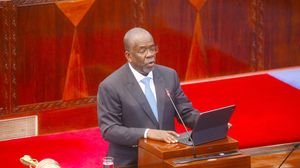
The Zanzibar’s Ministry of Blue Economy and Fisheries Permanent Secretary, Mr Hamad Bakari Hamad, told investors that the government is actively seeking private sector participation to accelerate growth in the sector.
To achieve that goal, he said Zanzibar is opening the door to a range of investment models, including public-private partnerships, joint ventures, concession agreements, build-operate-transfer arrangements, lease agreements, and strategic investment partnerships.
The government recognises that while marine resources are abundant, he said transforming them into sustainable economic opportunities requires capital, technology, and expertise.
“We are open to several kinds of partnerships,” he said, inviting investors to explore opportunities in fisheries and the wider blue economy, noting that one of the clearest examples of the shift underway can be seen in fisheries.
Zanzibar Fisheries Company Limited (Zafico) director general, Dr Ameir Haidar Mshenga, said much of the islands’ fishing activity remains concentrated close to shore, limiting access to deeper waters where significant resources remain largely untapped.
He said most local fishers rarely venture beyond six nautical miles, creating opportunities for investors willing to bring modern fishing technology, vessels, and infrastructure into the sector.
“With investing in fisheries, especially the sea, we will maximise the catch,” he told participants.
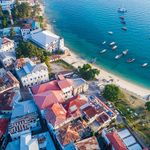
Dr Mshenga said Zanzibar’s strategic location also strengthens the commercial case for investment. Furthermore, he said the islands already possess transport infrastructure that can support exports of fresh fish to international markets, while growing tourism investments are creating increasing demand for seafood products.
“Many hotels continue to source fish from outside the country despite the availability of local resources, creating opportunities to strengthen domestic supply chains while expanding exports,” he said.
Yet, one message repeatedly emerged throughout the discussion: having promising projects is not enough.
A significant challenge lies in turning those projects into investments that financiers are willing to fund.
“Having the potential is not enough, but completing the project development journey is just as critical,” he said.
Climate Finance and Private Sector Specialist at the UNDP Rome Centre, Mr Rohith Subramania, said many projects fail to attract financing because they stop at the feasibility study stage without adequately addressing broader investor concerns.
“Having potential is not enough; completing the project development journey is just as critical,” he said.
He said financiers increasingly want assurance that environmental, social, and climate-related risks have been identified and properly managed before committing capital.
In many cases, He said, feasibility studies focus primarily on engineering aspects while overlooking factors such as environmental impacts, community livelihoods, climate risks, and long-term operational requirements.
For Zanzibar, these issues carry particular significance. As an island economy, it faces growing exposure to climate-related threats, including flooding and rising sea levels, both of which can affect major infrastructure investments.
To help bridge that gap, UNDP’s Platform for Investment Support and Technical Assistance (PISTA) has committed $500,000 in technical assistance grants to support Zanzibar’s blue economy projects.
The support will focus on strengthening environmental and social assessments, climate-risk analysis, and other studies aimed at making projects more attractive to investors.
Mr Subramania said the goal is to ensure projects are presented to financiers with realistic cost estimates, clearly allocated risks, and financing structures that match their commercial realities.
While fisheries infrastructure attracted considerable attention, seaweed farming emerged as another sector transforming.
Head of the Resident Coordinator’s Office at the United Nations, Ms Shabnam Mallick, described seaweed as one of Zanzibar’s strongest economic assets despite often being overlooked in investment discussions.
The crop is Zanzibar’s second-largest export after cloves and supports approximately 15,000 households, with women accounting for around 80 percent of those involved in the industry.
Yet despite its economic importance, much of the sector remains characterised by small-scale production, limited processing capacity, and restricted access to finance.
Ms Mallick said the focus is now shifting towards transforming seaweed from a subsistence activity into a structured and commercially viable industry.
“We are transforming the seaweed sector from a subsistence economy to a more industrial-level discussion,” she said.
Register to begin your journey to our premium contentSubscribe for full access to premium content