Zoya-Fatimah Dewji: The 14-year-old fighting to keep girls in the classroom
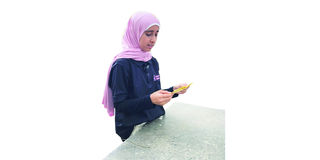
Zoya-Fatimah Dewji (Zoya), a 14-year-old girl who has decided to take bold steps to address one of the challenges preventing many girls in Tanzania from fully attending school-menstruation
Dar es Salaam. Where there is a will, there is a way. This saying perfectly captures the story of Zoya-Fatimah Dewji (Zoya), a 14-year-old girl who has decided to take bold steps to address one of the challenges preventing many girls in Tanzania from fully attending school-menstruation.
Although she is still a student herself, Zoya has launched a campaign called “Stay in School”-a translation to a Kiswahili word ‘Abaki Shuleni’, aimed at educating girls about menstrual health, providing them with period kits containing reusable sanitary pads, exploring essential life skills with them to help in their academic and personal lives, all so they can continue with their studies without disruption.
Reports from education stakeholders show that menstrual challenges in schools are far more serious than many people realise. For many girls, they have become a silent barrier to education.
Across Tanzania, thousands of girls miss school every month simply because they lack safe menstrual products or feel ashamed and unprepared during their periods.
According to Unicef and research conducted by education partners in the country, some girls miss between three and five days of school every month when they are menstruating.
Over the course of an academic year, this can translate to 30 to 40 days of missed classes, a loss that can affect academic performance and even push some girls to drop out of school altogether.
A 2023 study by the National Institute for Medical Research (NIMR) further shows that about 60 percent of girls in Tanzania struggle to afford sanitary pads regularly, making menstrual hygiene a serious challenge for many families.
The problem is more visible in economically disadvantaged areas such as parts of Tabora, Shinyanga, Simiyu, Dodoma and Kigoma, where many households struggle to meet basic needs.
In such situations, girls are sometimes forced to use unsafe materials such as pieces of cloth or paper, while others choose to remain at home during their periods to avoid embarrassment at school.
Turning concern into action
It was this reality that moved Zoya to take action.
“After speaking with some of my fellow students and visiting several schools, I realised that many girls miss classes because they do not have sanitary pads or they fear being embarrassed,” Zoya said in an interview.
She added: “I felt there was a need to help girls understand menstrual health and support them so they can continue learning without fear.”
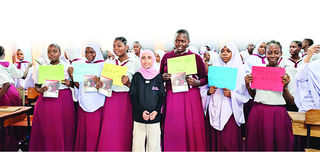
Through the ‘Stay in School’ campaign, more than 200 girls from Kisutu and Jangwani secondary schools in Dar es Salaam have already benefited from menstrual hygiene education and interactive life skills workshops, as well as specially designed resouces made just for them.
The programme has also succeeded through collaboration with organisations such as Raising Up Friendship Foundation and Hope 4 Young Girls, which have supported workshops for students.
Zoya hopes that the campaign will eventually expand across the country and help address the challenge at a wider scale, complementing efforts already being made by the government and other stakeholders.
Education and public health experts say initiatives like Zoya’s play a crucial role in protecting girls’ right to education.
A public health researcher at the University of Dar es Salaam, Dr Emmanuel Msuya, says menstrual challenges remain one of the hidden causes of absenteeism among schoolgirls, particularly in poor communities.
“We need to understand that menstruation is not only a health issue, but also an education rights issue,” he said.
“A girl who lacks basic menstrual products may miss classes frequently, and over time she can fall behind academically and lose confidence in school.”
Dr Msuya adds that Zoya’s initiative demonstrates how young people themselves can become part of the solution to social challenges.
“This is a strong example of youth leadership. Government institutions, civil society organisations and the private sector should support initiatives like this by ensuring sanitary pads are accessible in schools,” he said.
On her part, former executive director of Msichana Initiative, Ms Rebeca Gyumi, says awareness about menstrual health remains limited in many communities in Tanzania, which often leads to stigma and lack of support for girls.
“Many girls experience their first menstruation without understanding what is happening to their bodies,” she explained.
“The lack of information and safe menstrual products makes them feel ashamed or forces them to stay at home instead of attending school.”
She added that Zoya’s efforts demonstrate that even young people can inspire meaningful change.
“We need policies and programmes that ensure every school provides a girl-friendly environment, including safe toilets, clean water and access to sanitary pads,” Ms Gyumi said.
For Zoya, the journey is only beginning. Her dream is to see the campaign reach many more schools across Tanzania so that no girl is forced to miss education because of menstruation.
“I believe every girl deserves the opportunity to learn and achieve her dreams,” she said.
“If communities work together, we can make sure no girl is left behind.”
The initiative is now planning to expand its activities to reach more schools while also introducing programmes in arts and confidence-building to help girls understand their abilities and develop their talents.
At a time when many families across the country continue to face economic challenges, the determination of this young girl is a reminder that meaningful change can begin with small steps- so long as there is a commitment to ensure every girl remains in school.