Technology has made communication easy, dynamic, and convenient in ways that would have been unimaginable 50 years ago. In both text and audio-visual communication, researchers are finding a continuously exponential information and communication overload, as technology advances faster than we can meaningfully process it and still remain healthy (Leila Shahrzadi et al. “Causes, Consequences, and Strategies to Deal with Information Overload,” IJIMDI Journal, Vol. 4: 2024).
Young people today, who make up a significant portion of the global population, grow up exposed to the internet and social media. According to data published by the International Telecommunication Union (ITU) in 2024 and 2025, approximately 79 percent of the global population aged 15 to 24 were online in 2024. In 2025, the figure rose to 82 percent, with Africa having the lowest reach at 32 percent.
This exposure continually shapes young people’s worldviews and sets them apart from past generations. As such, the reality that today’s youth have a different frame of thinking cannot be ignored. This entails a different perspective and desire regarding all aspects of life, including social norms, culture, careers, politics, media, and education.
However, numerous emerging issues significantly affect young people, many of which are connected to today’s complex, fast-paced, instantaneous, and globally interactive digital culture. The digital world operates through multimedia, that is, text, audio, images, and video, as well as immersive environments such as virtual and augmented reality, animation, motion graphics, and haptic media, all working together in complementary ways.
It is also fascinating that much of this content is created by users, a phenomenon Axel Bruns termed “Produsage.” Beyond content creation, users also produce their own online personas and identities, leaving behind digital footprints that eventually influence what the digital world pushes across to them through what experts call “algorithms.”
While digital culture is one of the clearest expressions of contemporary human progress, it is also ambivalent, as it advances connectivity while creating room for complication of truth and formation of genuine human community. It impacts young people’s sense of being, perspectives, morality, safety, privacy, and even their physical, cognitive, and psychological well-being.
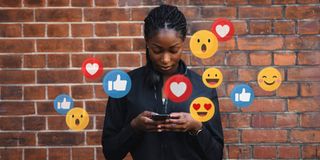
Many young people suffer mental health challenges triggered by digital culture and its interactive environments. Researchers associate young people’s immersion in digitally mediated social spaces, whether social, chat, video-centric, or games, with the rise in anxiety, depression, attachment, dependence, and emotional instability. This results from the pressure to maintain online personas, constant comparison with idealised images, the need to stay updated and the desire for validation through comments and likes.
The maladaptive habit of compulsively scrolling, often referred to as “doomscrolling,” is alarming and leads to cognitive harms such as reduced attention span and weakened critical thinking. It also has psychological and behavioural effects that negatively impact social life.
Many young people also experience identity fragmentation, a kind of estrangement from their real personhood, because of having multiple self-presentations as performing personas for different audiences across different digital platforms, which are in tension with their reality. The multiplicity of selves is not easily reconciled with having one consistent real identity. This causes internal confusion in the development of one’s personal identity. (Kate Davis, “Tensions of Identity in a Networked Era,” New Media and Society Journal, 14: 2012).
With regard to socialisation, many young people manifest a reduced capacity for sustained and meaningful social interaction. Reading social cues becomes difficult, anxiety comes in when one is offline, and there is a feeling of loneliness, despite the constant online connectivity. Family bonds suffer too, as young people create deeper affinity with those far away while ignoring deepening family bonds as well as true friendships. (Semra Tetik, “Social Media Addiction and Social Skills,” Systems Journal, 13: 2025).
With regard to the formation of an informed moral conscience, today’s young people are digitally exposed to an avalanche of violence, cruelty, warfare, explicit content, and misinformation across movies, TV, games, and social media. All these contribute to the confusion about social values and the boundaries of freedom. In the worst case, young people become desensitised to immorality and vices like injustice, apathy, deceit, and cruelty, a trend which can lead them to do similar things as they no longer feel the push to avoid wrong things.
Finally, an important concern related to overall well-being is the reduction in sleep time, the increase in screen time and the rise of sedentary lifestyles among young people due to digital culture. It is time we made individual efforts to notice how young people are affected by digital culture, and to help where possible, so that their real lives and talents become more meaningful to them and to others.
Shimbo Pastory is a Tanzanian advocate for positive social transformation and a student at the Loyola School of Theology, Ateneo de Manila University, Philippines.