There is growing concern from many parts of the country that many public open spaces are being privatised.
A representative from Moshi complained recently in Parliament that there were plans to convert a public open space in Shanty Town into an entertainment hall.
The mayor however, argued that the area was not an open space, but it belonged to the Municipality and was earmarked to commercial uses.
Replying to this claim, the Prime Minister said that the law must be followed. This, unfortunately, is not good news for open spaces.
The law is, many times followed, by officials using their powers of authorising change of use. A firmer stand would be the total banning of conversion of open spaces from their ordained public uses.
From Buyombe Ward, Ilemela Mwanza, it was claimed in the media that a ward leader was selling public open spaces.
From Morogoro, it was reported that the municipality was getting an investor to build an entertainment centre on a public space.
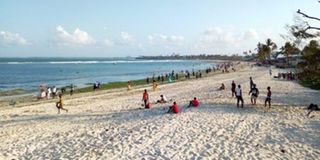
From Dar es Salaam concern has been aired before about the passing of Coco Beach to investors, a claim which the Prime Minister said was not true.
However, there is concern that part of the Gymkhana Golf Course was being incised off.
The famous Biafra Grounds, in Kinondoni Municipality, Dar es Salaam, is a centre of controversy, the general public complaining that this place is no longer available to the public; and was being turned into commercial uses.
The response of the Municipality is vague; claiming that they had passed it on to the ruling party which was behaving in an unexpected way. In short, Biafra is gone.
A week ago, I visited Kijitonyama Block 47, my home of 40 years. We were facing a large open space and we used to play or watch football there. The space was also good for jogging and exercising.
It is no more, being all enclosed in a corrugated iron fence with engineering works going on inside. Investors at work, the public just not knowing what was going on.
One person in the know, hinted to me recently, that many open spaces in planned areas were having their uses changed to accommodate the private interests of “late”, or, “new comers”.
The “late comer syndrome” means that those coming now, were not there when the area was planned and, now want land in those mature places.
They are scouting and identifying public open spaces and then set in motion a process of changing their use (to residential uses, for example).
Where the concerned open spaces are large, the conversion could be to commercial uses, whereby a wealthy investor is invited to develop the area.
The places that get changed into non-public uses are in the original plans identified as public open places or children’s playgrounds, markets, schools, health centres, hazard land, district centres, and so on.
The very same officials who planned them, come around years later to kill them. This is tantamount to committing filicide, the deliberate act of a parent or guardian murdering their own child.
One problem befalling public open spaces is that of governance. These places seem to be owned by the public in theory, but this same public is disempowered to own and protect them.
Information about such places is usually opaque or hidden. Ownership may be ping ponged between various offices and institutions: local government authorities, political parties or individuals.
A high-ranking official, a mayor, a director, a councilor may all have powers over a valuable public open space. Representatives may be part of the chain to change uses from public to something else, much as they are supposed to be the protectors.
The dreaded killers of public open spaces are named “change of use” and “investors”. The least concerned are the general public.
Much as we enjoy butchering public open spaces, they are good for our well-being. Open spaces, like roads enhance land values.
In the current world where humanity is required to focus on health and greening of the environment, open spaces help us to exercise, be we young or aged. Open spaces redistribute income and benefit us all, rich and poor, young and old.
In this era of dealing with global warming, urban public places are more important than ever, since they can contribute to the greening and cooling of the hotting urban areas.
Big cities, especially in developed countries, are proud of their public open spaces; they do not butcher them or privatise them.
Most public open spaces are within the custody of local government authorities. They are therefore under custody of the Office of the Prime Minister.
The latter is enjoined to mount a concerted campaign to identify and protect public open spaces, countrywide.
They should be renamed into community use spaces and should be vested in local communities.
The UN recently reminded us: “to build sustainable cities let us prioritise more green spaces and water and less concrete”. We need to heed that call.
Lusugga Kironde is Professor of Land and Urban Economics and lead consultant at TKA Company Ltd.