The hidden cost of the US-Iran war on Tanzania’s economy
By Shamsan Tamimi
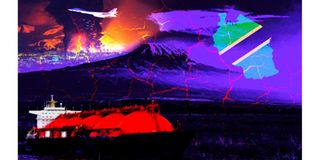
The military conflict between the United States and Iran, which began on February 28, 2026, with a joint US-Israel attack on Iran, triggered a surge in global oil prices and disrupted international shipping routes.
The conflict has continued to push up fuel prices and the cost of transport and food in Tanzania, according to official data from the National Bureau of Statistics (NBS) and the Energy and Water Utilities Regulatory Authority (EWURA).
In August, a litre of petrol in Dar es Salaam costs Sh3,898, down from Sh3,990 in July, but remains significantly above pre-conflict levels.
Shipping disruptions have added further pressure on businesses. Major shipping lines rerouted vessels around the Cape of Good Hope, adding weeks to transit times and significantly increasing freight costs.
For Tanzania’s micro, small and medium enterprises (MSMEs), which contribute 35 per cent of national GDP and employ roughly half of the working population, the effects have been severe. Small importers operating on limited working capital have struggled to absorb prolonged delays and higher costs.
Effective April 1, 2026, EWURA set new fuel cap prices, pushing the price of a litre of petrol in Dar es Salaam from Sh2,864 in March to Sh3,820 in April, an increase of 33.4 per cent. In inland regions, including Mwanza, Mara and Kagera, prices exceeded Sh4,000 per litre.
Higher fuel prices quickly fed into broader inflation. NBS reported that the country’s inflation rate rose to 4.0 per cent in April, while transport inflation surged, pushing up bus, taxi and bodaboda fares. Food prices also increased, with staples such as cooking bananas, fruits and dry cassava registering higher prices.
In August, EWURA reduced fuel prices, attributing the decline to lower global oil prices. However, the regulator warned that volatility linked to geopolitical tensions in the Middle East remained a risk.
Subsidies add pressure to government finances
To shield consumers from rising fuel costs, the Government introduced a diesel subsidy, which was increased in June. A rapid assessment conducted by the National Planning Commission and UNDP in May 2026 warned that fuel subsidy requirements could reach “astronomical” levels under worsening scenarios.
Tanzania exposed to prolonged shocks
Economics and trade expert Dr Donath Olomi said the conflict was unlikely to end soon.
“The US-Iran conflict will not end today or tomorrow. Even if they temporarily halt, they will resume later, so the pain regarding fuel for developing countries like us will remain,” he said.
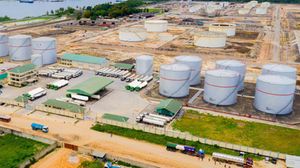
Economic analyst Prof Abel Kinyondo said Tanzania’s fuel storage capacity, estimated to cover about three months of demand, was insufficient to withstand a major global shock. He called for the country to build storage capacity capable of covering up to a year’s demand.
The impact is not confined to Tanzania. SADC foreign ministers meeting in South Africa in May 2026 concluded that rising geopolitical tensions, the US war on Iran and disruptions to global trade had contributed to higher food and fuel prices, increased currency volatility and greater risks to food and energy security across the region.
South African Minister Ronald Lamola warned that the conflict was already sending shock waves through regional societies and that “our people will bear the cost”.
Time for a regional response
The United States’ decision to attack Iran has set in motion economic pressures that Tanzania and the wider region are now struggling to absorb. It has also highlighted the vulnerability of African economies to geopolitical decisions made far beyond the continent.
The episode underscores a recurring challenge: while Washington seeks strategic partnerships with African countries, its foreign policy decisions can simultaneously destabilise the global markets on which those economies depend.
For Tanzania, the immediate concern is the growing pressure on households, businesses and public finances. Higher fuel and freight costs, supply-chain disruptions and increased subsidy requirements could constrain resources available for development priorities.
The upcoming SADC forum, scheduled for August 16-17, 2026, in Durban, therefore offers an important opportunity for member states to coordinate their response to the instability generated by the conflict.
The forum should produce a practical roadmap for reducing the region’s exposure to volatile global markets and external shocks. Priorities could include joint energy security measures, stronger regional payment systems and financial structures designed to serve African economic interests.
SADC must move towards greater regional resilience so that crises originating elsewhere do not automatically translate into higher costs for African households, businesses and governments.
For Tanzania and its neighbours, the lesson is clear: reducing dependence on volatile external markets is no longer simply a long-term development ambition. It is an urgent economic necessity.