Why fibre expansion in Dar must not be allowed to become another mess

By Ibrahim Kyaruzi

Dar es Salaam is in the middle of an important digital expansion. Fibre internet companies are racing to roll out infrastructure across the city, promising faster connectivity, wider access and the kind of digital backbone a modern economy needs. That part is welcome.

Better internet is no longer a luxury. It is essential for business, education, communication and growth.

But there is a serious problem emerging in the way this expansion is taking place.

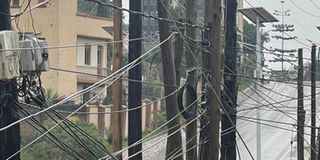
Company after company is installing its own poles, often in the same areas where other firms have already erected theirs.

In some places, different poles now stand side by side, competing for the same urban space as if the city itself were an afterthought.

If this continues without urgent regulation, Dar es Salaam risks turning a necessary technological upgrade into yet another layer of urban chaos.

The issue is not fibre internet itself. The issue is uncoordinated infrastructure.

A city cannot modernise by allowing every operator to build in isolation, each one planting its own poles wherever it finds room. That may be convenient for individual companies in the short term, but it is costly and disorderly for the city as a whole. It creates duplication, visual clutter and a growing sense that public space is open to whoever arrives first with equipment and speed.

Dar already suffers from too many poles, cables and scattered infrastructure that weaken the appearance and order of the city.

Anyone who moves through many parts of Dar can see it.

The streetscape is often crowded with improvised utility structures that make neighbourhoods look neglected even where there is investment and growth. Now fibre rollout threatens to deepen that same problem unless the authorities intervene early.

This should concern us for reasons that go far beyond aesthetics. Yes, a city full of duplicated poles looks untidy and poorly managed. But the bigger problem is governance. When each company builds its own parallel infrastructure, the city inherits a long-term coordination burden. Imagine what happens when roads are widened, drainage systems are redesigned, or new transport corridors are introduced.

Authorities will not be dealing with one shared system. They will be dealing with a patchwork of separate assets owned by multiple private firms, each one needing notice, relocation, coordination and possibly compensation.

What looks like a simple installation decision today can become a major public planning headache tomorrow.

That is why this issue demands urgent regulation now, not later. Dar still has a narrow window to put rules in place before this pattern becomes entrenched. Once poles are everywhere and investments are locked in, reform becomes more difficult, more expensive and more politically complicated.

The obvious answer is infrastructure sharing. Where fibre companies are serving the same areas, there should be a clear framework requiring shared poles or shared corridors wherever feasible.

Public space is too valuable to be carved up company by company. Roadsides, verges and utility corridors are not private real estate.

They are part of the city’s common infrastructure and should be managed in the public interest.

Government should also establish strict permitting standards for where telecom poles can be placed, how many can be allowed in a given stretch, and what obligations companies will carry when public works require relocation.

A citywide asset map would also help authorities know exactly who owns what and where. Without that kind of planning discipline, Dar will keep absorbing infrastructure in an ad hoc way and then paying the price later.

In some areas, especially high density and high value urban zones, underground fibre should be the standard rather than the exception.

It may be more expensive at the start, but that cost needs to be weighed against the long-term damage caused by visual pollution, duplicated poles and repeated relocation conflicts.

Cheap infrastructure is not always efficient infrastructure. Sometimes it is simply deferred cost.

Well-planned cities do not leave these matters to chance.

They recognise that digital infrastructure is part of urban design, not separate from it. A city that wants to be modern must think not only about speed and access, but also about order, beauty and long-term manageability. Digital growth should improve the city, not make it more cluttered.

Dar has often paid the price for allowing growth to outrun planning. Roads become crowded before they are upgraded.

Neighbourhoods expand before services are coordinated. Infrastructure is added in layers, often with little regard for how one system will affect another. The current fibre rush is repeating that same pattern in real time.

This is not an argument against private investment. It is an argument for public rules. Private companies should invest, innovate and expand. But they should do so within a framework that protects the city from duplication, disorder and future cost.

That is what serious urban governance requires.

Dar needs better internet. No one should argue otherwise. But it does not need a pole by pole scramble that leaves the city uglier, harder to manage and more expensive to fix in the years ahead. If we are serious about building a modern city, then we must stop treating every new layer of infrastructure as a race without rules.

Faster internet is progress. Unplanned infrastructure is not.

Ibrahim Kyaruzi is a Strategic Communications Consultant based in Dar es Salaam