Why the DIST project is a timely investment in the future of Dodoma
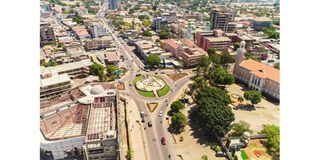
Improved road connectivity will reduce travel time, ease congestion and facilitate the movement of people, goods and public services within Dodoma. PHOTO | FILE
By Mohamed Besta
The government of the United Republic of Tanzania through Ministry of Works and TANROADS has on May 18, 2026 signed the Works Contract for the implementation of the Dodoma Integrated and Sustainable Transport (DIST) Project, marking an important milestone in the continued development of the nation’s capital city.
The signing of the contract signifies the commencement of one of the most strategic urban transport infrastructure programmes currently being undertaken in the country.
The DIST Project comes at a time when Dodoma is experiencing rapid expansion arising from increased government activities, population growth, commercial development and rising mobility demands.
Over recent years, pressure on the city’s transport infrastructure has become increasingly evident, particularly along major corridors connecting residential areas, Government institutions and business centres.
Recognising these challenges, the government, with support from the International Development Association (IDA), secured financing amounting to $200 million for the implementation of the project.
The project aims at improving safe, sustainable and inclusive accessibility within Dodoma through the upgrading and rehabilitation of strategic roads and supporting urban transport infrastructure.
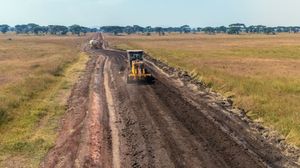
Among the principal works to be undertaken is the upgrading of the Dodoma–Chamwino corridor, where sections of the road will be expanded from two lanes to four and six lanes respectively.
The improvements will facilitate comfortable access towards Msalato Airport, the Standard Gauge Railway (SGR) station and important roads within the Central Business District.
The significance of these investments cannot be overstated. Efficient transport infrastructure is indispensable to the orderly functioning of a capital city.
Improved road connectivity will reduce travel time, ease congestion and facilitate the movement of people, goods and public services within the city. In practical terms, the project will enhance productivity and improve the general efficiency of urban mobility.
Particularly commendable is the integrated nature of the DIST Project. In addition to road widening, the project incorporates service roads, pedestrian walkways, cycling infrastructure and provisions for future bus rapid transit (BRT) development.
Such an approach reflects sound and forward-looking urban planning principles.
In many developing cities, infrastructure development has often concentrated primarily on vehicular traffic while neglecting pedestrians and users of public transport.
The DIST Project, however, seeks to address mobility in a more comprehensive manner by recognising the needs of all categories of road users, including persons with disabilities and ordinary commuters.
The project is also expected to generate important economic and social benefits. During implementation, employment opportunities will arise for local citizens, contractors and service providers.
Upon completion, improved accessibility is expected to stimulate commercial activities, strengthen public transport operations and reinforce Dodoma’s role as Tanzania’s administrative and political capital.
Equally important are the proposed beautification measures, including installation of street lighting and roadside greening. These elements contribute not only to safety and environmental improvement, but also to the overall appearance and dignity of the capital city.
Nevertheless, projects of this magnitude demand careful management, professional supervision and strict adherence to engineering standards.
Timely execution and prudent utilisation of public resources will be essential in ensuring that the intended benefits are fully realised and sustained for future generations.
Dodoma occupies a special place in the future development of Tanzania. Infrastructure investments undertaken today will define the city’s efficiency, character and functionality for decades to come.
The DIST Project should therefore be viewed not merely as a road construction undertaking, but as a long-term investment in the future growth, mobility and stature of Tanzania’s capital city.
Mohamed Besta is Chief Executive of Tanzania National Roads Agency (TANROADS)