As India prepares to celebrate its 80th Independence Day this Saturday, Indian School-Dar es Salaam (ISD) reflects the enduring friendship between India and Tanzania.
Established in 1978 in rented premises at Kisutu, the school has evolved into a modern and progressive institution functioning under the aegis of the High Commission of India and managed by a democratically elected Parent body, the School Managing Committee.
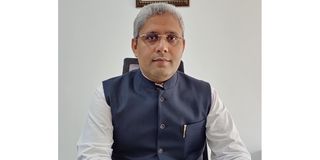
Today, it proudly serves students from diverse nationalities, fostering a vibrant environment that seamlessly blends academic excellence, technological advancement, cultural diversity, and holistic development. As the school looks ahead to its Golden Jubilee in 2028, Principal of the School, Mr Kunal Kohli, reflects on its journey and vision. The excerpts…
QUESTION: As India marks its 80th Independence Day, what does ISD represent in India’s progress and relationship with Tanzania?
ANSWER: ISD reflects India’s own journey. When established in 1978, we operated from rented premises at Kisutu with modest facilities. Today, we have advanced science laboratories, a comprehensive library, recreational facilities and technology-enabled classrooms.
India has transformed into one of the world’s leading economic and technological powers. Education has always been central to that progress. Our former students now hold important positions in global companies and institutions. Therefore, celebrating India’s Independence Day also means celebrating education, innovation and nation-building.
What has been the biggest transformation in the school’s journey? The transformation has been remarkable. A major milestone came in 2004 when our current campus was inaugurated by former President of India, Dr APJ Abdul Kalam, who strongly believed in education and young people.
Today, students learn in smart classrooms and soon have access to STEM laboratories and AI-supported learning. We are preparing children for a changing world.
What is behind ISD’s strong academic performance?
Everything begins with discipline. Even excellent resources cannot guarantee success without it. We invest in trained teachers and modern teaching methods. Our classrooms, serving students aged 3 to 18, are equipped with smart classroom technology and connected through Wi-Fi.
The Celebration of World Environment day in presence of High Commissioner of India to Tanzania H.E Shri Bishwadip Dey and school managing committee.
We are also incorporating artificial intelligence into learning. Year after year, our students achieve a 100 per cent pass rate in examinations conducted by the Central Board of Secondary Education, New Delhi, India.
Success, however, is not only about results. We want students to leave with confidence, discipline, creativity and problem-solving abilities.
How does the school’s multicultural environment strengthen India-Tanzania relations?
This multiculturalism makes our school special. We exist because of the deep relationship between India and Tanzania and welcome students regardless of race, religion or nationality. Students learn multiple languages. We also incorporate Tanzanian culture into school life.
Every Monday, assemblies are conducted in Swahili and we sing the Tanzanian national anthem. This is unity in diversity. A child can learn Indian culture while becoming deeply connected to Tanzanian society. Cultures do not have to compete; they can grow together.
What role does ISD play in the wider Tanzanian community?
Education cannot end at the classroom. We are recognised among the boards accepted by the Ministry of Education, Republic of Tanzania, and work with the government and education partners to share best practices.
Our students also learn responsibility by engaging themselves in different social services like visiting orphanage, sharing meals, books and time with children. Supporting nearby schools. Such activities teach that privilege comes with responsibility.
How is the school preparing students for business and the world of work?
Entrepreneurship is deeply rooted in Indian culture, and we want students to experience business. We organise visits to companies and factories where students see how businesses operate. Some undertake holiday internships. The idea is to bridge the gap between the classroom and the real world. Wherever they work, we want them to leave with an entrepreneurial mindset.
How is ISD preparing students for AI and STEM?
Technology is central to learning. We are investing in STEM laboratories, and we already have smart boards, Wi-Fi connectivity and AI-supported learning. But technology should empower teachers, not replace them. Teachers understand children and provide guidance. We combine technology with teaching, discipline and values. We want students to become technology creators and innovators.
What does the school’s 50th anniversary in 2028 mean to you?
Fifty years is significant. Teachers, students, parents and communities have contributed to this institution. The anniversary should also make us think about the next 50 years. What will education look like? What skills will children need? These are the questions we must answer.
What is your Independence Day message to Indians and Tanzanians?
To Indians, we are the torchbearers of our nation in Tanzania. We must reflect India’s values through our behaviour and contribution. To Tanzanians, we are blessed to be among you. India and Tanzania share a relationship that goes beyond governments—it is a relationship between people, communities and generations. We must continue to stand together and progress together.
Indian School-Dar es Salaam premises located at Saba Saba, Temeke District.
As Robert Frost wrote, we have “miles to go before we sleep.” For ISD, those miles represent the next generation we must educate, the communities we must serve and the stronger relationship between India and Tanzania that we must continue to build. Our journey began in 1978, and the best chapters are still ahead.