Lawmakers say outsourced hospitals are failing patients in Zanzibar

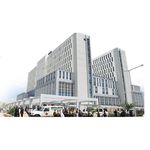
Unguja. Members of the House of Representatives have criticised the quality of services in Zanzibar’s government hospitals operated under private management arrangements, despite major investments in modern infrastructure, and called on the government to review the outsourcing policy.

The legislators said the arrangement has not only failed to improve healthcare delivery but has also undermined employment opportunities for local professionals, who are reportedly paid significantly lower salaries than foreign specialists employed by contracted companies.
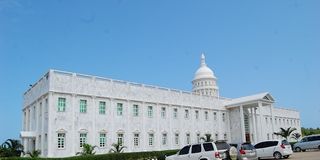
Contributing to debate on the Health Ministry’s revenue and expenditure estimates in the House on Wednesday, May 20, 2026, several representatives accused firms managing public hospitals of poor service delivery and lack of accountability.

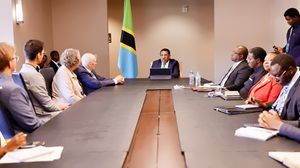
Pandani Representative, Professor Omar Fakih Hamad

Chambani Representative, Mr Mahmoud Shineni Ali, said the quality of healthcare services had deteriorated despite improvements in hospital buildings and facilities.

“Although service delivery in these hospitals has been privatised, patients still spend more than four hours waiting for treatment. The speed and efficiency of services remain poor,” he said.

Women’s Representative, Ms Moza Mohamed Khamis, said the outsourcing policy was expected to improve healthcare delivery through transparency and efficiency, but the reality on the ground was different.

Referring to countries such as Ghana, where similar systems operate, she said governments there closely supervise contracted companies, inspect medicines, and follow up on patient welfare, including compensation where negligence occurs.

“Citizens are suffering instead of receiving relief. A patient can go to the hospital in the morning and return home at night without treatment. These companies are not delivering services properly,” she said.

Ms Khamis urged the government to conduct thorough inspections into the management of the hospitals, saying many weaknesses would be uncovered through proper investigations.

She also said the arrangement lacked transparency and accountability, arguing that companies failing to deliver quality services should have their contracts terminated.

According to her, salary disparities between local and foreign professionals are discouraging Tanzanian specialists from remaining in public facilities.

“You find local specialists earning Sh1.7 million per month, while specialists employed by the companies receive up to Sh7 million. This discourages our professionals,” she said.

She further criticised the competence of some foreign doctors employed under the system, claiming some lacked basic professional standards despite receiving high salaries.

“There are doctors who cannot even write proper reports, yet they are paid huge salaries while local professionals are mistreated,” she said.

Furthermore, Ms Khamis also raised concerns about health insurance services, saying employees continue to contribute through salary deductions but still face difficulties accessing treatment when they visit hospitals.

She called for amendments to the 2021 insurance law, arguing that the current system disadvantages ordinary citizens.

Amani Representative, Mr Masoud Amour Masoud, CCM, said health insurance schemes remain ineffective in some hospitals, while many facilities still lack adequate capacity to serve patients.

Ole Representative, Mr Seif Hamad Suleiman, ACT-Wazalendo, said that although the government may have introduced outsourcing with good intentions, the arrangement has created numerous unresolved problems.

“Instead of improving services, some of these companies have turned district hospitals into places of frustration. We need a strategy to protect our local professionals before they all leave,” he said.

He added that companies managing the hospitals had been granted powers to recruit workers, but local professionals continued to receive benefits far lower than their foreign counterparts.

Chumbuni Representative, Mr Makame Mohamed Sufiani, CCM, said while the hospital buildings themselves were impressive, the behaviour of some healthcare providers was discouraging patients from seeking services.

“The hospitals are good, but some of those providing services are not. Patients are forced to wait unnecessarily and are sometimes spoken to harshly,” he said.

Women’s Representative, Dr Nasra Nassor Omar, ACT-Wazalendo, also criticised the outsourcing arrangement, saying local doctors employed under the system are underpaid compared to foreign professionals brought in by private firms.

“This does not help the government. We educate professionals, but then pay them poorly until they leave. We are wasting our own expertise under this outsourcing system,” she said.

Dr Omar further raised concerns about unpaid debts owed by the ministry to public institutions, saying the liabilities were affecting service delivery.

According to her, the ministry owes Sh20 billion to the Medical Stores Department (MSD), and another Sh1.8 billion to Muhimbili National Hospital (MNH), and the Government Chemist Laboratory Authority (GCLA).

“We continue hearing that institutions such as the Medical Stores Department should become self-reliant, but that cannot happen when such large debts remain unpaid,” she said.

Ziwani Representative, Mr Mohamed Ali Salim, ACT-Wazalendo, said the government was investing heavily in infrastructure while neglecting the welfare and dignity of patients.

“This investment risks turning patients into sources of profit. How will citizens trust the government if they arrive at hospitals and fail to receive proper services?” he asked.