Uproar as it emerges that private hospitals are to start paying fees to the National Blood Transfusions Services to access services which users fear will raise the cost of accessing the critical service and put off blood donors
Dar es Salaam. The government has ignited a public backlash over a plan to levy blood supply services in private hospitals.
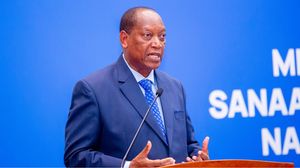
Deputy Minister for health, Dr Faustine Ndugulile, was the centre of the attack for directing that the hospitals be charged for the service.
Members of the public took to social media to criticise the apparent surprise announcement, which they warned is likely to undermine free blood donations across the country.
Mr Ndugulile was quoted on Thursday as directing the National Blood Transfusion Services (NBTS) to start charging private health institutions for their services.
The minister said public hospitals would be spared the decision in the meantime as a proper mechanism for them was being worked on. No reasons for the decision were attributed on Dr Ndugulile who was also not available for clarification yesterday.
But it was clear the idea would not sit well, even with private hospital owners who expressed surprise at the directive. A health advocacy group also called the minister’s order “rushed” and advised that the idea to introduce a fee for blood transfusion services be shelved.
Social media users reacted angrily with some saying they would now stop donating blood freely should the government start charging hospitals for donated blood. A medical practitioner Mwamba Lutego said on his twitter handle that the government should not attempt to impose a user fee on blood services as it will be counterproductive. He instead suggested that the government subsidize the cost of the special blood bags.
Most commentators agreed that charging fees on donated blood will discourage volunteer blood donors. Frank Seven (@frankkisenge) said he will no longer donate blood he gave for free to save the lives of the needy only for the government to seem to want to sell it. Yet others said patients will carry the cross as the cost will simply be shifted to them.
In an interview with The Citizen yesterday, Sikika’s Programme director, Dr Patrick Kinemo, urged the government to re-think the move and proposed that it would be better if it was a collective decision.
“The society knows that blood donation is for free. The government might want to carter for expenses incurred in packaging blood but it would be better if it first consulted widely on the approach,” he said.
He said the government should have initiated a mandatory health insurance where it would get some money to carter for expensive facilities associated with blood services.
“The government should come up with a better way of collecting money for blood services, not this sudden decision,” he said.
For his side, Dr Samwel Ogillo, the chief executive officer (CEO) of the Association of Private Health Facilities in Tanzania (APHFTA) said that he hoped that the minister’s announcement was just an advice and that he didn’t mean that the charges will be for blood but associated facilities. “What I see as a problem is giving an order to private hospitals only instead of all hospitals including public ones as if the former was treating different patients, “he said.
Mr Ogillo said there is need for proper procedures to be followed, including consultations with the private and public health stakeholders on a common fund to carter for the expenses.
“Through consultations we will be able to come up with a special fund which will make it easier for both hospital to contribute for blood services,” he said.
NBTS said that it was preparing to give out a statement to clarify to the public what the deputy minster meant when giving the order.
“The charges have not come to effect yet and it doesn’t mean that its blood that will be charged, but rather the special facilities that carry the blood,” said NBTS’s communication and marketing manager who declined to give her name.
The NBTS has run on a shoestring budget in recent times as donor funds dried out. The move to charge a fee will be seen as an attempt to cover the gap by the government.