Dodoma commuter rail plan moves to funding stage after assessment

The TRC is now seeking financing to implement the project under a public-private partnership (PPP).


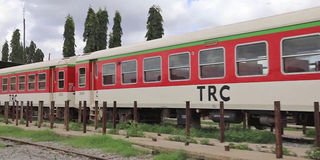
Dodoma. The planned commuter rail network in Dodoma has entered a funding stage after the Tanzania Railways Corporation (TRC) completed a feasibility study for the 107-kilometre line.

The TRC is now seeking financing to implement the project under a public-private partnership (PPP), according to its Director General, Mr Machibya Shiwa.

The proposed network is intended to ease movement in the rapidly expanding capital by providing faster and more reliable connections between residential areas, government offices, the airport and other major destinations.

He told The Citizen that several potential partners had expressed interest in the project as the corporation works to secure the required financing.

“We are currently in talks with several interested partners as we work to secure the financing required to implement the project,” he said.

The network will be centred on the Central Dodoma Station at Jamatini, which is planned as a major interchange linking commuter rail with the Standard Gauge Railway (SGR) and other public transport services.

Under the master plan, the first phase will comprise three lines: a 52.9-kilometre Red Line with 41 stations, a 28.6-kilometre Purple Line with 23 stations and a 23.1-kilometre Green Line with 18 stations.

The second phase will add a 13.3-kilometre extension of the Purple Line, with seven stations, and a 62.9-kilometre extension of the Green Line, with 22 stations.

A key corridor will run along Arusha Road, linking Central Dodoma Station with the planned Msalato International Airport.

The Red Line will connect the central hub with major suburbs, including Ihumwa and Nala, while also providing a link between Msalato Airport and the planned Government City in Mtumba.

“The corridor will run along Arusha Road, directly connecting the Central Dodoma Station to the upcoming Msalato International Airport,” Mr Shiwa said.

The project comes as Dodoma experiences rapid urban expansion following the relocation of government activities to the capital, increasing demand for efficient public transport.

TRC says the success of the system will depend on integrating rail with existing and planned transport services.

Mr Shiwa said the corporation was ready to work with other transport operators, provided their services were integrated into the existing land-use and master plan.

“We already have a completed land use and master plan for this area, and we cannot change it,” he said.

“However, we warmly welcome other stakeholders, including municipal buses (daladalas), taxis, bajajs and bodabodas, to integrate with our system so we can create a highly connected multi-modal transit hub.”

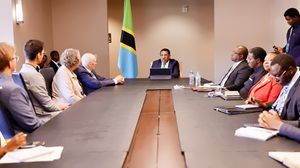
The integration plan has featured in discussions involving TRC, the Tanzania Rural and Urban Roads Agency (TARURA), SGR officials and the Swedish Embassy on improving connections around the Dodoma SGR station.

Speaking during a recent workshop on the development of the SGR station and its surroundings, Team Leader and International Director of Europe's leading architecture and engineering consultancy company Sweco International, Mr Alex Cochran, said the central station could eventually develop beyond a railway facility into an integrated urban centre.

“The Central Station could evolve beyond a railway facility into an integrated urban hub linking trains with buses, daladalas, taxis, bajajis, bodabodas and pedestrians,” he said.

The work forms part of the Dodoma SGR Project Preparation Facility (PPF) and Special Purpose Vehicle (SPV) Pilot, led by TRC with financing from Sweden through the Swedish International Development Cooperation Agency (Sida) and technical support from Sweco.

Plans for the station area include a regional bus and transport exchange, parking facilities, electric mobility infrastructure and potentially an integrated ticketing system.

The approximately

300,000-square-metre site could also accommodate commercial, residential, institutional, hospitality and office developments alongside transport infrastructure.

“The proposed mixed-use approach is intended to create a place where passengers can access businesses, services and public spaces instead of simply passing through the station,” Mr Cochran said.

The plans are being coordinated with wider urban development initiatives, including the World Bank-supported Dodoma Integrated and Sustainable Transport Project (DIST) and Transforming and Accelerating the Implementation of the Dodoma Concept (TACTIC).

The broader plans include urban greening, climate resilience, improved drainage, tree planting, universal accessibility and electric vehicle charging infrastructure.

Mr Cochran said the next stage would involve developing the spatial concept and assessing possible SPV structures before implementation decisions are made.

“The process will now move towards developing the spatial concept and assessing possible SPV structures before implementation decisions are made,” he said.