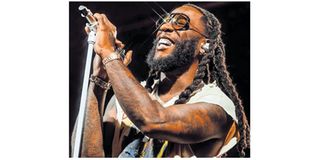
When Burna Boy stepped onto the legendary Red Rocks Amphitheatre stage in mid-November, the night was expected to mark a triumphant opening to his No Sign of Weakness North American tour.
Instead, a brief but tense moment during the performance would ignite a global conversation, reshaping the early narrative of the tour and raising questions about the delicate balance between artistes, audiences and online scrutiny.
Midway through the set, Burna Boy paused, pointed toward a couple in the front section, and instructed security to remove them.
“Please take her the f*ck home. Fast, fast. Take her home. I’m not doing no more songs until you take her home,” he said.
The woman appeared to be asleep, and Burna Boy interpreted it as disrespect. As security approached, sections of the audience booed, while others looked on in confusion.
Within hours, video clips circulated widely across TikTok, X and Instagram, garnering millions of views. What could have remained an isolated stage moment instead became the centre of a global debate.
Among the earliest responses were emotional posts from fans who felt the ejection was unnecessarily harsh. One user commented under a viral clip: “B calmly down, always be friendly to your customers. You’re nothing without us. That’s my advice.”
Another viewer wrote, “Poor woman… kicked her out for sleeping, not knowing she was grieving, hurting and exhausted.”
Others argued that the situation could have been handled more gently: “All he had to say was, ‘Bro, your girl is sleeping. Wake her up, we’re about to party.’ That’s all.”
The woman at the centre of the incident did not immediately make a public appearance, but screenshots shared online suggested she had recently experienced personal loss. Many fans said this context made the moment feel more uncomfortable.
Still, a minority defended Burna Boy’s reaction, noting that performers rely heavily on crowd energy. “It’s his show, his vibe,” wrote one supporter. “Artistes need engagement. Sleeping in the front row sends the wrong message.”
Compounding the backlash was a resurfaced clip from a separate livestream, circulated with the caption: “Did I ask you all to be my fans? I’m only looking for fans with money these days.”
The context of the remark remains debated, but its timing deepened the criticism.
Commentators such as DJ Akademiks and Joe Budden amplified the conversation, framing the episode within Burna Boy’s broader history of tense interactions with audiences.
Online users revisited older controversies, from his late arrival at a 2022 Lagos concert to previous sharp exchanges with fans, reinforcing a narrative of unpredictability.
Soon after the Denver incident, updates appeared on ticketing platforms announcing the cancellation of Burna Boy’s scheduled shows in Minneapolis (November 28) and Chicago (December 1).
Promoters did not publicly attribute the decision to the Red Rocks controversy, and Burna Boy’s camp did not offer a detailed explanation.
However, online trackers noted softening demand for certain US dates, while videos from later shows suggested smaller crowds than expected. Even a slight dip in attendance can affect promoter confidence, tour logistics, and venue scheduling.
A music promoter familiar with US touring economics, speaking anonymously, suggested that controversies can have rapid commercial consequences.
“When an artiste is trending for the wrong reasons,” he says, “people hesitate. Even fans who love the music may decide to wait and see.”
In the days following the backlash, Burna Boy addresses the situation through several posts. Initially defending his reaction, he compared the role of a performer to that of a pilot, “If you make the pilot uncomfortable in a plane you bought a ticket for, you will be deboarded or arrested once you land.”
The analogy was criticised as dismissive, but his tone shifted soon afterward.
In a later post, he writes, “I sincerely apologise if I’m wrong. I’m not always right, but I felt right about this. Anyway, I’m just human.”
During an Instagram livestream, Burna Boy elaborated further, acknowledging that the controversy had influenced public perception and possibly ticket sales. He also referenced personal challenges, saying the pressure of being a global figure sometimes intersects with mental strain.
Fan responses to the apology were mixed. Some accepted the explanation as a moment of vulnerability. Others felt the apology was hedged and failed to fully acknowledge the emotional impact on the ejected fan.
The incident also reignites discussion about the evolving economics of Afrobeats. Given his repeated seven-figure grosses at arenas in the US and Europe, it appears that international markets now represent a major source of touring income, though precise revenue breakdowns by region are not publicly disclosed.
Burna Boy’s international concerts have regularly smashed records. For instance, in March 2024, his show at Capital One Arena in Washington DC grossed roughly USD 1.72 million, among the highest single-show revenues by any African artiste in the US.
Across eight major international concerts between 2022 and 2023, industry tracking data reports earnings totalling around USD12.3 million.
What is clear is that his global touring success underscores how international markets, fuelled by overseas fans, have become key to the financial engine of top Afrobeats artistes.
While Nigerian fans remain core to his identity, their purchasing power is not as decisive in determining tour viability. As of publicly available tour listings, there is no record of a paid concert by Burna Boy in Nigeria since 2022, reflecting a shift toward global stages.
This means that when American and European fans voice displeasure, the financial effects can be immediate. Ticket cancellations, even in the hundreds, can influence promoter decisions, and online sentiment increasingly informs venue expectations.
Music journalist Joey Akan noted that trust is essential to the touring business. “The artist–fan relationship is financial as well as emotional,” he writes. “When fans feel disrespected, even momentarily, their response affects real-world outcomes.”
A larger conversation about African artists abroad
As Afrobeats continues its expansion, African artistes navigating global stages face heightened expectations. Performers carry not only their personal brand but also, at times, the symbolic weight of a continent’s rising influence in global pop culture.
In this context, a moment of misjudgment can quickly magnify. Critics argue this creates unfair pressure; others say it comes with global visibility.
In Burna Boy’s case, the Denver moment has become more than an isolated incident, it sits at the intersection of cultural expectation, artist responsibility and the realities of global touring economics.
For now, Burna Boy continues the North American leg of his tour while working to restore momentum. Industry insiders say the coming weeks will be critical in determining whether the controversy fades or becomes a defining feature of this tour cycle.
What is clear is that the incident underscores how quickly narratives shift in the age of viral media and how deeply fans’ voices now shape an artist’s trajectory.
As one Denver concertgoer put it after the show: “I still love his music. But this was a moment where he misread the room. Artists have power, but so do fans.”