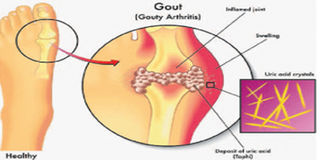
An illustration explaining the formation of gout. PHOTO|CENTER FOR SPORTS MEDICNE
What you need to know:
It is important to understand that our body produces uric acid when it breaks down substances known as purines, which are found mostly in meats and seafood.
Other foods that also increase the levels of uric acid are alcoholic beverages and sugary drinks.
It is very common to hear medical practitioners advising a gout patient to consume less meat. But have you ever thought of the correlation between meat and gout?
It is important to understand that our body produces uric acid when it breaks down substances known as purines, which are found mostly in meats and seafood.
Other foods that also increase the levels of uric acid are alcoholic beverages and sugary drinks.
Gout is a complex form of arthritis, which affects adults. Statistics show that men are more likely to get gout than women.
An attack of gout can occur suddenly, often waking you up in the middle of the night with the sensation that your big toe is on fire.
The affected joint is hot, swollen and tender. Fortunately, gout is treatable, and there are ways to reduce the risk that gout will recur.
Signs and symptoms of gout
•Intense joint pain: Gout usually affects the large joint of your big toe but it can occur in your feet, ankles, knees, hands and wrists
• Lingering discomfort: After the most severe pain subsides, some joint discomfort may last up to a few weeks.
Later attacks are likely to last longer and affect more joints.
• Inflammation and redness: The affected joint or joints become swollen, tender, warm and red.
• Limited range of motion: Decreased joint mobility may occur as gout progresses.
Gout occurs when chemical substances biologically known as urate crystals, accumulate in your joint, causing the inflammation and intense pain. Urate crystals can form when you have high levels of uric acid in your blood.
Normally, uric acid dissolves in your blood and passes through your kidneys into your urine.
But sometimes your body either produces too much uric acid or your kidneys excrete too little uric acid.
When this happens, uric acid can build up, forming sharp, needle-like urate crystals in a joint or surrounding tissue that cause pain, inflammation and swelling.
Factors that increase the uric acid level in your body
Diet: Eating a diet that’s high in meat and seafood and high in beverages sweetened with fruit sugar (fructose) promotes higher levels of uric acid, which increases your risk of gout. Alcohol consumption, especially of beer, also increases the risk of gout.
Obesity: If you are overweight, your body produces more uric acid and your kidneys have a more difficult time eliminating uric acid, which greatly increases your risk of gout.
Medical conditions: Certain diseases and conditions make it more likely that you’ll develop gout. These include untreated high blood pressure and chronic conditions such as diabetes, heart and kidney diseases.
Certain medications: The use of medications known as thiazide diuretics — commonly used to treat high blood pressure — and low-dose aspirin also can increase uric acid levels.
Family history of gout: If other members of your family have had gout, you’re more likely to develop the disease.
Recent surgery or trauma: Experiencing recent surgery or trauma has been associated with an increased risk of developing gout.
Limiting the risk of gout
Medications are the most proven and effective way to treat gout symptoms. However, making certain lifestyle changes also may help, such as:
• Limiting alcoholic beverages and drinks sweetened with fruit sugar (fructose). Instead, drink plenty of non-alcoholic beverages, especially water.
• Limit intake of foods high in purines, such as red meat, organ meats and seafood.
• Exercising regularly and losing weight. Keeping your body at a healthy weight reduces your risk of gout.
• Eat fruits, vegetables, whole grains and fat-free or low-fat milk products. Get your protein mainly from low-fat dairy products because they may protect against gout.