Kilimo Kwanza idea good but only lacks in implementation
What you need to know:
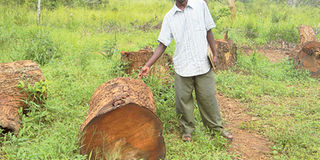
The negative side has arguably been an increase in environmental destruction perpetuated by large-scale farmers when clearing large pieces of land for establishing plantations, whereby forests are cleared and trees are burnt.
Kibaha. When the government came up with the Kilimo Kwanza Initiative in 2009, it aimed at accelerating agricultural transformation and there were many expectations, one of them being to make the country self-sufficient in terms of food production.
Whereas there is notable progress in large-scale agriculture in some parts of the country, investment in food production has not taken root. Instead, what we see is large-scale agro-fuel production.
The Kilimo Kwanza Resolution says much about enhanced financing for agriculture, institutional reorganisation and management of agriculture and a paradigm shift to strategic agricultural production.
It also calls for land availability for agriculture, increased incentives to stimulate investments in agriculture and science, technology and human resources to support agricultural transformation. However, it says very little about environmental conservation in the production process.
The negative side has arguably been an increase in environmental destruction perpetuated by large-scale farmers when clearing large pieces of land for establishing plantations, whereby forests are cleared and trees are burnt.
This is so despite the fact that Tanzania’s agriculture depends largely on rainfall, so environmental destruction equals to self-destruction.
In Kibaha District, one of the areas endowed with enormous natural resources especially forests, local leaders decry how the so-called investors take land, almost at will for agricultural purposes only to be cleared in such a way that there is the likelihood of desertification in the near future.
According to officials, the village by-laws that allow investors to own up to 50 hectares of land do not say about protection of natural forests.
Tanzania Forest Service Agency (TFS) for Eastern Zone acting manager Bakari Mohamed told this reporter that investors bought land for agricultural investment, but ended up just clearing it carelessly and leaving it idle, causing more environmental degradation.
“There needs be periodic monitoring to ensure investors are doing what was agreed upon when they were given land for investment,” he said, adding that the participation of the private sector was essential for the realisation of agricultural goals, but environment protection shouldn’t be ignored.
Mr Mohamed was speaking to members of the Journalists Environmental Association of Tanzania (JET), who had paid a visit to Kibaha District to see how residents were involved in forest conservation and whether they benefited anything from it. He also said it was weird for the government to give to farmers land extending to forests, while there was land elsewhere that could be used for agriculture.
The JET members are in support of Mama Misitu Campaign, a programme, which seeks to raise public awareness on the value of forests and their sustainable management. This is done through JET at national level with its members raising awareness on the importance of environmental conservation.
“Farmers say land close to forests is fertile and attracts heavy rainfall…Let them employ irrigation farming to avoid desertification,” the official said.
Mr Mohamed noted that the most affected areas were in Ruvu North Forest, where pastoralists had settled.
According to the official, there seems to be lack of cooperation among leaders at different levels as most of the people, who encroach on preserved areas seem to have documents that allow them to settle in them.
“Even when some of them are arrested and taken to court…it is most likely that you will find them walking in the streets the following day freely.”
Moreover, politicians and big businesspeople are allegedly engaging in grabbing large pieces of land.
At Kipangege Village in Soga Ward and Mpiji Station Village in Boko Mnemela Ward, villagers say they have seen rich people coming to their villages and presenting documents showing they own some large pieces of land.
At Kipangege, about 300 hectares have been sold to outsiders who have failed to develop the land as they expressed when intending to buy it.
At Mpiji Station Village, one famous company presented some documents indicating that it owned about 9,000 acres of forest. “We planned to reserve the forest, but it is only last year that we were told it belongs to that company,” said Mr Ali Said, one of Mpiji Village elders.
He said they had since protested the decision at district level and were promised to resolve the matter amicably by ordering the company to stop any activities in the area.
Mpiji Station Village chairman Said Mwenyegoha said villagers had presented their complaints to the relevant authorities, but the measures taken by the district authorities were not helping them either.
“Yes, they have asked the company not to do anything in the area, but does it help us in any way?” he asked. He noted that villagers needed land on which to grow crops and keep bees, but it was becoming almost impossible with the government order.
Kibaha District executive director Tatu Selemani admitted that she was aware of the problem and said the issue was now being handled by the Prime Minister’s Office in Dar es Salaam. She said it was true there was an influx of businesspeople and politicians especially from Dar es Salaam who were entering the district taking large pieces of land for agricultural purposes.
“Some of them just keep it idle without developing it,” she said.