As human beings, we become attached to things we cannot control. We want other people to behave the way we think they should. But their actions have never belonged to us, which is why we are so often disappointed when they choose differently.
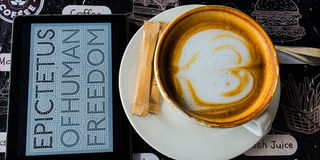
Throughout my life, I have approached almost everything with questions. It is through curiosity that I have come to understand the world and the people in it. I may not ask those questions out loud, but I do in my mind and, sometimes, in my writing. The books I read tend to ask the same questions I grapple with, and that is often how I choose what to read. And I have recently realised that I collect more questions than I answer. So I picked up Of Human Freedom by Epictetus.
In Of Human Freedom, Epictetus explores what it really means to be free. Through a series of arguments, he challenges many of the assumptions we make about freedom.
It is a question I have grappled with for a long time. I have always wondered what it means to be free, or whether I am free. According to Epictetus, I couldn't have been further from being truly free.
For Epictetus, freedom is not the absence of physical chains. It is knowing what is within our power, acting on it, and leaving the rest to nature. Only when I recognise what is mine to control and what is not can I begin to find freedom.
As human beings, we become attached to things we cannot control. We want other people to behave the way we think they should. But their actions have never belonged to us, which is why we are so often disappointed when they choose differently.
I am still thinking about his reflection on death. Death has always been a topic many of us are afraid to talk about openly because we believe that, when we do, we are somehow inviting it into our lives. The fear of death is one of the biggest things that controls many of us. We are threatened by it. Those with power to make it happen against God’s will use it to coerce us into acting a certain way. We are not all free from death because it will eventually happen, but sadly, we are also not free from the fear of it even though we know none of us will come out of this earth alive.
To be free is to come to terms with the fact that we will die. When asked what one should do if threatened with death, Epictetus replies, “If it is now, well then I die now; if later, then now I will take my lunch, since the hour for lunch has arrived - and dying I will tend to later.”
I did pause and laugh out loud when I read this because, to me, this level of freedom sounds unattainable. I worry about things I shouldn’t be worried about. A lot of things have to stop when I have a major presentation to do at work. Or an interview. Everything else stops until that thing I have made myself believe is significant is done. Now imagine if I know I am going to be killed. The horror!
It made me realise that freedom is no small achievement. It begins by questioning the beliefs we have carried for so long, especially the belief that we control external circumstances. The truth is, we don’t. Freedom begins with recognising that the only thing we truly have power over is our own actions. The rest is not ours to worry about because worrying will never make external things work in our favour; if they do, well and good. If they don't, well and good.
Perhaps that is where I realised how much of my peace I have handed over to things outside my control.
We live in a world where we are made to believe that those with power or wealth are free. But Epictetus has a different way of thinking. We are all, in a way, chained by the things we are attached to. Our loved ones. Power. Pleasure, you name it. Anything that threatens what you believe you can't live without begins to control you. And everything that controls us requires us to give up something, especially our integrity.
“Consider at what price you sell your integrity; but please for God’s sake, do not sell it cheap.”
Perhaps that is why so many of us feel exhausted. We spend so much of our lives trying to control outcomes that were never ours to control in the first place.
I closed the book wondering whether freedom has less to do with changing our circumstances and more to do with changing our relationship to them. If Epictetus is right, perhaps freedom is not something we spend our lives searching for, but something we begin to experience the moment we stop trying to control what was never ours to control in the first place.
Jane Shussa is a digital communication specialist with a love for books, coffee, nature, and travel. She can be reached at [email protected].