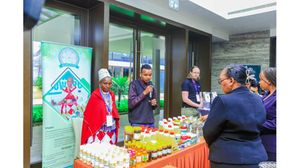
According to a 2015 report from the ministry responsible for health, new cases of TB remained relatively higher last year at 781,936 people up from 83,227 detected in 2014.PHOTO I COURTESY
What you need to know:
According to report from the Commission for Science and Technology Tanzania (COSTECH), he is the only Tanzanian researcher who has successfully carried out study on behaviour of captive rats for using them to detect landmines and TB infections in human beings.
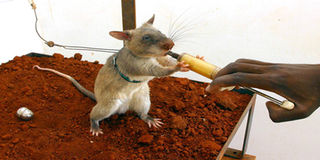
Dar es Salaam. Meet the only Tanzanian who has been trained to specialise in caring for Hero rats at Sokoine University (Sua), which can sniff landmines to detect bombs and people’s mucous substances to detect infectious human disease, Tuberculosis (TB).
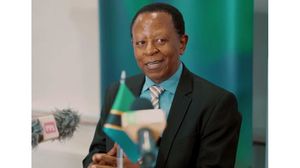
Dr Georgies Mgode (46), who holds a PhD in TB detection using rats at Max Planck Institute for Biology based in Germany & Technical University of Berlin, received a special award, the medal for invention and research on TB detection by the former President Jakaya Kikwete on 9th December 2012.
According to report from the Commission for Science and Technology Tanzania (COSTECH), he is the only Tanzanian researcher who has successfully carried out study on behaviour of captive rats for using them to detect landmines and TB infections in human beings.
Speaking to The Citizen –Success edition recently, Dr Mgode said that following a successful implementation of the technology, named SUA-APOPO Rodent -- to sniff out and diagnose the disease, the demand for spreading such rat-technology is rising within and outside the country.
“We need more scientific laboratories for using the Hero rats that can detect TB from thousands of people who are living with TB without identification by Doctors,” says Dr Mgode who is the programme manager at Sua pest management centre.
Already such effective and faster than conventional diagnostic methods have benefitted at least 8000 TB patients in Tanzania and Mozambique in a year, he says.
Established in 2000 with the support from Belgium NGO known as APOPO, the Sua centre for training Hero rats is now targeting to establish modern Laboratories for carrying out studies on TB detection, according to him.
He says the centre which has limited funds demands at least $400,000 (about Sh800million) in one city to construct modern laboratory for detecting TB through the use of trained rats known as SUA-Apopo rodents.
According to him, a new laboratory for testing potential TB patients is in the final stage of construction in Dar es Salaam with support of $400,000 from the UK Human Innovation Development Fund (HDIF).
Two weeks ago the HDIF had supported $30 million (Sh60Billion) for financing a programme to attract young innovators in the country, known as Mawazo Challenge.
“This important laboratory for using SUA-Apopo Rodents to detect TB will be officially launched by next month at the head office of the Ministry of Agriculture, Livestock and Fisheries in Dar es Salaam,” said Dr Mgode who is also a research fellow at the SUA-pest management centre.
“The government has been spending between $160 and $200 for testing a TB patient. Since we are carrying out aptitude test for unidentified TB patients with the use of trained rats, we are saving a lot of funds that could be used to test TB patients who already have complications,” says Dr Mgode.
Clarifying on how cost of detection is being minimised by Apopo rodents, he says apart from aptitude detection that encourages pro-active medication before TB complications, it reduces the pace of spreading TB among people.
“Mind you one person with TB can spread it to between 10 to 15 people in a year. Our TB detection rats have detected 7,000 persons with TB. This means that the it could potentially spread to almost 100,000 people,” he says.
According to him, currently there are 40 trained rats that are being used for the same purpose in Tanzania and Mozambique.
“The Apopo rodents are cost effective in detecting TB. Their level of efficiency in terms of sensitivity is around 80 per cent and specificity 90 per cent depending on cut-off point; that is number of rats used in the calculation. They are normally useful in crowded areas such as in the mines and big hospitals with many outpatients,” he says.
According to a 2015 report from the ministry responsible for health, new cases of TB remained relatively higher last year at 781,936 people up from 83,227 detected in 2014.
This implies that the government last year spent about $156 million (Sh341 billion) for detecting 781,936 people who were infected with TB.