In a bid to cling to power, the Pakistani government is increasingly weaponizing the judiciary to stifle dissent both at home and abroad. The new year opened in Pakistan with a court trying and convicting, in absentia, several journalists and political commentators to life imprisonment, some of whom were former army officers.
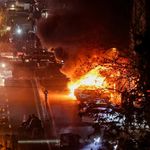
Their charges related to the 2023 riots that had swept through the country following the arrest of former Prime Minister Imran Khan.
Khan’s widespread and enduring popularity has posed a constant threat to the country’s military-backed government since his ouster in 2022. The ensuing crackdown on both Khan himself and his supporters has transcended borders and demonstrated the extent to which the Pakistani state and its powerful military establishment will go to retain control.
This campaign of transnational repression, ranging from intimidation and coercion campaigns to extrajudicial killings, point to a regime descending ever deeper into authoritarianism.
The Pakistani state regards dissidents as posing an existential threat to its survival. Domestically, it has mobilized anti-terror legislation and military trials to fiercely quash dissent, which includes those who speak out publicly in support of Khan or are members of his party, the Pakistan Tehreek-e-Insaf (PTI). Islamabad has also experimented with censorship and online firewalls, in an attempt to control the ever-valuable information space.
This may help to increase the government’s power at home, but further afield it is less effective, particularly for a country like Pakistan with such a sizable diaspora community in the West. Aware of these challenges, Pakistan has resorted to increasingly drastic measures to deter critics from voicing their opposition, wherever they may be in the world.
At the end of December, Adil Raja, one of the journalists tried in absentia at the start of 2026, reported on X that his house in London had been broken into and ransacked by “unknown assailants.”
As a former major in the Pakistani army, Raja’s commentaries are particularly sensitive for the military.
Just days later Moeed Pirzada, another high-profile journalist convicted by the Pakistani court, posted to his 3.2 million followers about a potential arson attack on his own home in the United States, although he was less eager than Raja to draw a link between the incident and what Raja described as Pakistan’s “despotic regime.”
A third raid, this time on the London residence of Mirza Shahzad Akbar, Khan’s former adviser and a vocal critic of Pakistani Army Chief Asim Munir, was also reported around the same time.
Whether Pakistan is responsible for these attacks or not is unconfirmed; however, the timing of these incidents – coming so soon after each of these men were tried in absentia – is damning.
These men each pose a significant public relations challenge for the Pakistani military and collectively are capable of shaping the narrative about the corruption, repression, and human rights abuses committed by the Pakistani state.
Significantly, such overseas intimidation tactics would not be without precedent. The Pakistani state has previously engaged in coercive operations beyond its borders, even demonstrating a willingness to engage in political assassination when deemed necessary.
It is worth noting that even during Khan’s tenure as prime minister, Pakistan’s complicity in foreign abduction and assassination attempts was uncovered on several occasions.
In 2022, for example, a British “hitman” was offered 100,000 British pounds to assassinate outspoken critic of the Pakistani military Waqass Goraya, who was based in Rotterdam, Netherlands. So serious was the threat facing Goraya that he was moved to a secure location on the recommendation of Dutch intelligence.
That same year, prominent academic Ayesha Siddiqa was one of several political commentators of Pakistani heritage to be warned of credible threats to their lives by British Counter Terrorism Policing.
Months after Khan’s removal from office in April 2022, Pakistani journalist Arshad Sharif was killed in Kenya, where he had been living in hiding to avoid arrest for criticizing the Pakistani military.
Sharif had once enjoyed close relationships with senior army officers, but these ties had soured once he began openly challenging the military’s role in Khan’s ouster.
Kenyan police claimed Sharif had been shot after failing to stop at a roadblock, but the inconsistencies and contradictions in their accounts quickly pointed to more sinister motives.
Officers first insisted the killing was an unfortunate case of mistaken identity, before later alleging that Sharif’s car had shot at police first. Pakistani investigators eventually concluded that the most credible explanation for Sharif’s death was a targeted assassination.
Transnational repression endured the political changes in Pakistan, a strong indication that the country’s military establishment is the driving force behind such operations.
This is consistent with the way the Pakistan Army operates within the country’s political landscape. The army’s principal interest is maintaining its position of primacy over all other institutions in the country.
Most recently, this desire manifested with the country’s new constitutional amendment, which afforded new powers to the army and its chief, Field Marshal Asim Munir.
In order to maintain this position, however, the army must limit vocal criticism of its actions, which is why this strategy of transnational repression has endured irrespective of which civilian puppet government is installed in Islamabad at the time.
But in the most recent incidents, the army’s shortsightedness could land its government in hot water with the United Kingdom. Just weeks before the homes of Pakistani dissidents were raided, almost burned down, and said dissidents were tried in absentia, Islamabad sought cooperation from London on their extradition.
In early December, Pakistan’s Interior Minister Mohsin Naqvi directly brought up both Adil Raja’s and Shahzad Akbar’s names in conversation with British High Commissioner Jane Marriot.
Naqvi, almost certainly under the instruction of the Pakistani military, had requested that Raja and Akbar be returned to Pakistan to face charges related to “spreading propaganda” against the country.
If, as the two men in question suggest, the Pakistani state then sent thugs to intimidate – or even kill – the very people Naqvi had requested Britain hand over, it would be unfathomably reckless and risk significantly damaging bilateral relations between Islamabad and London. No formal extradition treaty currently exists between Britain and Pakistan.
However, conducting hostile acts on British soil against British residents is hardly an effective strategy for a country with such flawed democratic credentials to convince its counterparts to establish one.
The Pakistan Army may be less attuned to the growing skepticism within the United Kingdom toward the country’s relationship with Pakistan. Throughout 2025, increased attention has been afforded to the fact that many of the organized groups of men responsible for the systematic grooming and sexual exploitation of children across the U.K. were predominantly of Pakistani heritage.
This prompted the British government to examine more closely the roles of ethnicity, religion, and culture as contributing factors in the proliferation of these grooming gangs, and led Foreign Office ministers to raise the issue of deporting those convicted of these crimes. Pakistan has reportedly been receptive to these requests; however, its cooperation has been made contingent, unsurprisingly, on Britain deporting Akbar and Raja.
That Islamabad is willing to jeopardize a productive relationship with London over a handful of dissidents points toward just how threatened the military is by these figures.
Ironically, by targeting these dissidents abroad, Pakistan risks drawing even greater international attention to its accelerating authoritarian turn and erosion of civil society. These are developments long obvious to those living within the country.
Despite the bonhomie with the Trump administration, by extending its repression into the U.K. and the U.S., Islamabad could court diplomatic consequences that far outweigh the threat posed by a handful of exiled critics.
The plight of Imran Khan is already being amplified by his allies to all Western lawmakers willing to listen, and these latest actions by the Pakistani state will only serve to bolster the claims being made by the former prime minister’s close associates.
For a country that seems perpetually on the brink, Pakistan should think twice before pushing itself further toward pariah status.