CCM, Chadema, ACT differ on Chande commission report

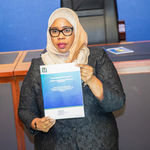
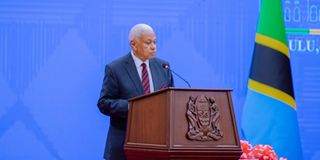
Chairperson of the Presidential Commission of Inquiry into incidents during and after the October 2025 General Election, Retired Justice Mohamed Chande Othman, presents the report at State House in Dar es Salaam on Thursday, April 23, 2026, during the official handover of the findings on post-election violence following the October 29, 2025 General Election. PHOTO | COURTESY
Dar es Salaam. Tanzania’s main political parties—Chama Cha Mapinduzi (CCM), Chadema and ACT-Wazalendo—have taken sharply divergent positions on the Chande Commission report into the October 2025 election-related killings, exposing both areas of convergence and deep political divisions.

While CCM has endorsed the report and its recommendations, Chadema and ACT-Wazalendo have rejected its conclusions and are pushing for broader political reforms, accountability and a new constitutional order.

Speaking in Dodoma yesterday, CCM Secretary for Ideology, Publicity and Training Kenani Kihongosi said the ruling party supports the findings of the commission formed by President Samia Suluhu Hassan.

He said the commission worked independently and professionally, and that its report is aimed at promoting national healing.

“CCM supports all the recommendations and is ready to cooperate fully in their implementation,” he said, adding that the party will mobilise citizens to support reconciliation efforts.

Mr Kihongosi also backed the proposed formation of a follow-up investigative body, saying further inquiry is necessary to establish the full facts and ensure accountability.

On the question of a new constitution, he said the matter remains part of CCM’s 2025–2030 election manifesto and is expected to be implemented before 2030, stressing that the process must involve all stakeholders.

In contrast, ACT Wazalendo rejected the report, arguing that it fails to hold those responsible accountable and instead shields security agencies.

In a statement issued after its Central Committee meeting, the party said it does not recognise the commission’s findings, accusing it of “sanitising” those behind the killings despite citing more than 518 deaths.

“It is inconceivable that such a high number of deaths is acknowledged without accountability,” the party said.

The party further accused the commission of shifting blame onto citizens while overlooking alleged electoral injustices said to have triggered the violence.

ACT-Wazalendo called for an independent international investigation under bodies such as the UN, AU or SADC, as well as the release of political detainees, including Chadema chairman Tundu Lissu, who is facing treason charges in court.

It also demanded accountability from senior officials, including leaders of security agencies and the electoral commission, alongside wide-ranging reforms to electoral laws, public institutions and security organs.

For its part, Chadema has taken a more mobilisation-driven approach, announcing a nationwide campaign under the banner of “New Constitution” and “Free Tundu Lissu,” signalling rejection of the current political and institutional framework.

The party’s Central Committee resolved to launch public rallies across the country aimed at pushing for constitutional reforms, political freedoms and the release of its leaders, particularly Mr Lissu.

Chadema has also aligned with other opposition parties, including ACT Wazalendo, on key demands—namely the need for a new constitution, genuine political reconciliation and the release of political detainees.

Together, the opposition parties argue that reconciliation cannot be achieved without justice and accountability, positioning themselves against CCM’s approach, which emphasises implementation of the commission’s recommendations and a state-led reconciliation process.

While CCM maintains that the report provides a pathway to national unity and healing, the opposition insists it falls short of addressing the root causes of the crisis.

The differing positions underscore a widening political divide over how Tanzania should respond to the aftermath of the 2025 elections—whether through institutional processes anchored on the commission’s findings or through deeper structural and political reforms.

The debate is expected to shape the country’s political landscape in the months ahead.