Clergymen caution against divisions, erosion of values
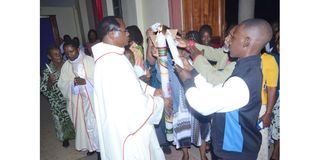
Father Edward Mwanjamila leads the faithful in lighting candles during the Easter Vigil Mass at the Catholic Church of the Outstation of Saint Pope John Paul II in Moshi, Kilimanjaro Region. PHOTO | CORESPONDENT
Dar es Salaam/Upcountry. Top religious leaders across Tanzania have used their Easter messages to deliver a stark critique of the nation’s moral health, warning that a growing trend of citizens celebrating the deaths of public figures signals a society in deep decay.
From pulpits in Dar es Salaam to Zanzibar and Mbeya, clerics expressed alarm over the erosion of humanity, a lack of accountability and the silencing of truth, while calling for urgent national prayers amid intensifying conflict in the Middle East.
The spiritual leaders said such behaviour threatens social cohesion and urged those in positions of power to engage in deep self-reflection.
Their warnings come as some citizens have been observed rejoicing whenever a public figure or ruling party leader dies, a trend increasingly visible on social media.
Some users have even posted comments wishing harm on specific leaders or predicting events that could end their lives.
Government officials, including Prime Minister Mwigulu Nchemba, have criticised such conduct, noting that people misuse digital platforms to write about death as if it does not concern them.
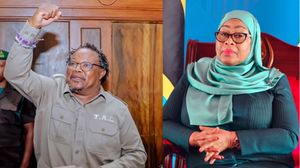
Leading the nation in this year’s Easter celebrations, President Samia Suluhu Hassan wished Tanzanians a joyful and blessed Easter.
In her 2026 message, she urged citizens to reflect on the resurrection of Jesus Christ and uphold His teachings of mercy, love, forgiveness and selflessness.
The President highlighted that these values are crucial for nurturing moral integrity and harmonious relationships within families and communities.
President Hassan called on Tanzanians to use the Easter season to strengthen peace, unity and national cohesion.
“This Easter should remind us of the need to uphold peace, foster unity and national cohesion and continue building a nation that provides opportunities for all, ensuring prosperity and sustainable development for both present and future generations,” said President Hassan in her message.
A serious social problem
Preaching during Good Friday services at the Parish of Our Lady of Mount Carmel in Bunju, Dar es Salaam, Bishop Stephano Musomba of the Bagamoyo Catholic Diocese said celebrating deaths reflects a serious social problem requiring national dialogue to find lasting solutions.
“African traditions have always valued solidarity and mourning in times of loss rather than celebration,” Bishop Musomba told his congregation.
“Our customs do not accept celebrating when someone dies. Normally, we mourn and provide support to the bereaved. But today, people celebrate,” he added, expressing frustration.
He observed that both leaders and citizens complain about this shift without reflecting on how the nation reached this point.
“Why have we come to celebrate the deaths of our fellow humans? We need to sit together and discuss where we went wrong,” he added, calling on citizens to engage in dialogue as a means to resolve political and social differences.
Bishop Dickson Kaganga of the Zanzibar International Christian Centre echoed this call, saying rejoicing over deaths is not part of Tanzanian culture.
“Browsing online today reveals unrest that was absent in the past, when people were saddened by death regardless of political affiliation, tribe, or religion,” he said, urging the nation to examine its failures and seek communal solutions.
Supporting this view, the Anglican Diocese of Dar es Salaam Bishop Jackson Sostheness stated that Easter is a festival of liberation and a time to value human life as God does.
He said issues causing public pain or anger should be addressed through proper channels, rather than undermining cultural values and mutual respect.
Accountability gap and fear of truth
Clerics did not reserve criticism for the public alone, pointing to a lack of accountability and a lust for power as key drivers of national discontent.
The Zanzibar Catholic Diocese Bishop Augustino Shao told the faithful at St Joseph Minara Miwili Church that the nation is enduring a period marked by widespread fear and lack of accountability, leaving citizens without hope.
“Selfishness and lust for power lead many leaders to protect their positions, fearing that speaking the truth could cost them their posts,” said Bishop Shao.
“This situation endangers the nation and demoralises citizens. The resurrection of Jesus Christ represents victory over falsehood, oppression and cruelty. Yet Easter joy is meaningless unless we act to remove the darkness of evil from society,” he added.
He questioned the government’s economic narratives, asking how the state can claim a six percent growth rate while the national debt rises by 13 percent.
Referring to reports from the Controller and Auditor General (CAG), Bishop Shao highlighted massive waste and lack of accountability, citing significant losses at the national airline and medicines worth Sh18 billion rendered unusable.
“Who will pay for these losses while citizens die from lack of medicine?” he asked.
The Karagwe Diocese Bishop, Dr Benson Bagonza, echoed calls for integrity, urging society to return to the foundation of truth.
He observed that whereas people once feared telling lies to avoid death, many today fear telling the truth just to survive.
Dr Bagonza reminded the faithful that Jesus’ resurrection testifies to truth ultimately triumphing over falsehood.
He added that while the habit of avoiding truth is not new, those who persecute it must eventually recognise that it cannot be hidden forever.
Global turmoil and the Middle East
Amid domestic concerns, clergy also addressed international conflicts. Bishop of the Konde Diocese, Reverend Dr Geoffrey Mwakihaba, urged citizens to pray for global peace in light of the ongoing war in the Middle East.
Reflecting on Christ’s victory, he prayed for a world beset by calamities, particularly for harmony to be restored in the region.
He called on Christians to live as examples of Christ’s love, grace and peace and to bless and serve others faithfully without discrimination.
To heal internal divisions, religious leaders emphasised reconciliation and the family’s role. Retired Bishop Dr Solomon Masangwa of the Central North Diocese highlighted national reconciliation and letting go of past grievances, noting that Easter signifies new life in Christ.
Bishop Rabbi Mwakanani of Mbeya encouraged Tanzanians to embrace new beginnings to rebuild the nation.
Archbishop Isaac Amani of Arusha urged parents and guardians to supervise their children closely, noting some exhibit disrespect.
“Some children reject guidance and act overconfidently simply because they attend English-medium schools. Parenting principles remain unchanged and parents must set good examples to ensure children understand why they should obey. When you stand firm in faith, your corrections are understood as guidance,” he said.
In Dodoma, the Pentecostal Bible Fellowship Church Archbishop Japheth Mapogo reminded Christians that forgiveness is central to their faith.
Citing Jesus forgiving the criminal on the cross despite His own suffering, he urged Tanzanians to release past grievances to live peacefully.
Bishop Lazarus Vitalis Msimbe of the Morogoro Diocese added that true transformation begins with the individual, urging the public to abandon hatred, jealousy, selfishness and greed to foster unity.
Economic self-reliance
Some leaders encouraged followers to seek economic independence. Pastor Zakayo Mputi of St Gabriel Anglican Church in Kibaha, Coast Region, urged his members to move beyond reliance on church contributions and pursue ventures such as goat farming.
“I want to see progress, not just tithes. Within a year, there should be visible change in the economy and development,” he said, suggesting a competitive system would encourage wider participation.
As Easter celebrations concluded, clergy emphasised urgent self-correction and a return to core values.
The Shinyanga Catholic Diocese Bishop Liberatus Sangu urged believers to be a light to others, guiding them to do good as a way to share in the resurrection.
The resurrection of Christ, leaders concluded, must serve as a pillar of hope and societal renewal for a nation grapplin