Dar es Salaam. Rising plastic waste is emerging as both an environmental challenge and an economic opportunity in Tanzania, with local innovators developing new ways to convert discarded materials into valuable industrial products.
One such innovation at the Dar es Salaam Institute of Technology (DIT) is giving plastic waste a second life by transforming it into high-quality motorcycle and Bajaj three-wheeler spare parts, helping to reduce pollution while advancing the country's circular economy.
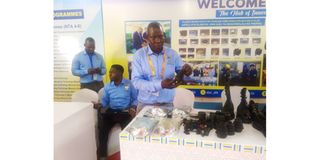
Speaking during the 50th Dar es Salaam International Trade Fair on July 3, 2026 Production Manager Abdul Lwangisa said DIT engineers had developed technology that converts plastic waste into durable spare parts for motorcycles and Bajaj three-wheelers, providing locally manufactured alternatives to imported products.
He said the factory recycles plastic waste into a range of products used in everyday life, including motorcycle and Bajaj spare parts, industrial rubber pads and other industrial components.
"We recycle plastic waste to add value by manufacturing products that are already in everyday use. Instead of ending up in dumpsites, the plastic is transformed into quality spare parts that serve the transport and industrial sectors," said Mr Lwangisa.
He explained that the factory also manufactures plastic recycling machines and has developed a specialised formula that converts recycled plastic into PVC rubber, enabling the production of durable spare parts.
According to Mr Lwangisa, the recycling process begins with collecting plastic waste from various stakeholders before it is shredded into pieces measuring about 10 millimetres.
The material is then thoroughly washed to remove dirt and other impurities before being dried and processed into plastic pellets. Using the proprietary formula, the recycled plastic is converted into PVC rubber, which is fed into injection moulding machines to produce a wide range of spare parts.
Mr Lwangisa said the finished products are sold through retail outlets and directly to motorcycle and three-wheeler owners, offering consumers affordable, locally manufactured alternatives.
He noted that plastic recycling is increasingly recognised as one of the most effective ways of reducing environmental pollution while conserving natural resources.
"By converting waste into industrial raw materials, manufacturers reduce the volume of plastic ending up in landfills and waterways, lower demand for virgin plastics and create new economic opportunities through value addition," he said.
Mr Lwangisa added that innovations such as those developed at the DIT Spare Parts Factory demonstrate how research and technology can support Tanzania's industrialisation agenda by promoting local manufacturing, creating employment and advancing a circular economy in which waste is transformed into valuable products.
Register to begin your journey to our premium contentSubscribe for full access to premium content