Hope for rural learners as Tanzania backs Councils to tackle school distance crisis

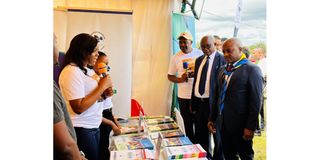
Deputy Permanent Secretary (Education) in the Prime Minister’s Office (PO-RALG), Mr Atupele Mwambene, visits TEN/MET's pavilion at the GAWE 2026, event at Chiwanda Primary School grounds in Momba District council. PHOTO | JACOB MOSENDA.
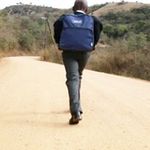
Songwe. Thousands of children across Tanzania, have had their school day start with a long walk, sometimes several kilometres through rough terrain, crossing rivers, forests or busy roads, before they even reach a classroom.

For years, education experts have warned that the burden of distance remains one of the country’s toughest barriers to learning, contributing to absenteeism, poor performance, school dropouts and heightened risks for girls.

Now, leaders and stakeholders say municipal and district councils may hold one of the most practical solutions: investing in hostels and dormitories for students who live far from school.

That message took centre stage on April 20, 2026, during the official opening of the Global Action Week for Education (GAWE) 2026, held nationally in Songwe Region, where government officials, civil society groups and education partners gathered to chart new strategies for inclusive learning.

Speaking at the event in Momba District, Deputy Permanent Secretary for Education in the Prime Minister’s Office (PO-RALG), Mr Atupele Mwambene, said councils should begin setting aside budgets specifically for hostel construction in secondary schools.

“Councils must place hostel construction as a standing agenda item in their meetings,” he said. “Reducing the distance students walk from home to school will improve attendance, strengthen safety for girls and create a better environment for learning.”

His remarks come against the backdrop of recurring reports from rural Tanzania where pupils walk between five and 10 kilometres daily, with some travelling even farther during the rainy season when roads become impassable.

In several studies by education campaigners, long distances have been linked to lateness, fatigue in class and increased dropout rates, especially among girls who face harassment or early pregnancy while travelling.

For girls, the issue is particularly urgent.

“We must invest heavily in protecting girls,” Mr Mwambene said. “Many are exposed to temptations and dangers that interrupt their education when they are forced to walk long distances to school.”

He added that schools with hostels often record stronger academic performance than those without such facilities, as students gain more study time, better supervision and reliable attendance.

The debate comes at a crucial moment for Tanzania, which is preparing to implement 10 years of compulsory education by 2028.

Under the policy, all children will be expected to progress to Form Four, increasing pressure on councils to expand infrastructure and remove barriers that keep children out of school.

In Songwe, officials say preparations are already under way. Regional leaders reported a surplus of 622 secondary school classrooms, built in anticipation of increased enrolment under the new policy. However, challenges remain in primary education, where thousands of classrooms are still needed.

Representing the Songwe Regional Commissioner, Assistant Administrative Secretary for Education and Vocational Training, Mr Majuto Njanga, said the region requires 6,906 primary school classrooms, but only 3,992 are available, leaving a shortfall of 2,914 rooms.

“At secondary level, the need is 1,460 classrooms, while 2,076 are available, creating a surplus of 622,” he said. “This gives us hope, but we must now mobilise communities to close the gap in primary schools.”

The National Coordinator of the Tanzania Education Network (TEN/MET), Ms Martha Makala, said the annual event has for more than 18 years served as a platform bringing together local and international actors committed to equitable education.

This year’s theme: Mobilising Domestic Resources for Inclusive, Quality and Special Needs Responsive Education, especially significant as international aid to education declines, forcing countries to rely more on internal solutions.

“GAWE 2026 is about accountability and stronger management of domestic resources,” she said. “We must ensure every child enters school, stays in school and completes their learning journey.”

Experts say the same community-driven approach could be used to build hostels.

Education analyst, Dr Steven Tweve, said councils should not view hostels as a luxury project but as an essential investment in equal opportunity.

“A child’s postcode should not determine their future,” he said. “When students spend hours walking, they arrive exhausted. Some stop attending altogether. A modest hostel can save time, protect vulnerable learners and raise completion rates.”

He said councils could combine local revenues, central government grants and contributions from businesses, faith groups and alumni associations to fund construction and maintenance.

Another researcher, Dr Hemed Mvula, said hostel investment would also deliver economic benefits.

“When students stay in school and complete their education, the return to society is enormous,” he said. “We reduce child marriage, improve productivity and build a stronger workforce. The cost of inaction is far greater than the cost of building dormitories.”