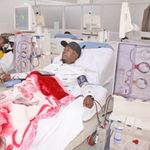
The proposed legislation is expected to address key issues such as donor consent, organ allocation systems, medical standards, and oversight mechanisms
Dodoma. Tanzania has intensified efforts to establish a comprehensive legal and policy framework to regulate organ transplant services.
Addressing the country’s first-ever scientific symposium on organ transplantation here in the city yesterday, Chief Medical Officer, Dr Grace Magembe, said the drafting process is well underway and is expected to be completed by September 2026.
The historic gathering, jointly hosted by Benjamin Mkapa Hospital (BMH), the ministry of Health, and the University of Dodoma (UDOM), brought together local experts and international delegates to chart the future of transplant medicine in Tanzania.
The symposium comes at a critical moment as the nation advances toward universal health coverage.
The health coverage is described as a milestone in aligning Tanzania’s medical ambitions with global standards in specialized healthcare.
Dr Magembe said the development of a legal framework is essential to ensure ethical practices, patient safety, and sustainable service delivery in organ transplantation.
She noted that while Tanzania has made commendable progress in building capacity, the absence of a dedicated law has limited the full potential of transplant services.
“This symposium is timely as Tanzania pushes forward with its universal health coverage agenda,” she said.
“We must ensure that organ transplant services are guided by strong policies that guarantee quality, affordability, and accessibility for all citizens.”
She commended the government under President Samia Suluhu Hassan for demonstrating strong political will and prioritizing investment in advanced medical services, including organ transplantation.
According to her, such commitment has already begun to transform the landscape of specialized healthcare in the country.
Dr Magembe highlighted that Benjamin Mkapa Hospital has emerged as a centre of excellence in transplant services, positioning Tanzania strategically within both the East African Community and the Southern African Development Community regions.
She stressed the need to build on this progress by ensuring long-term sustainability through policy support, skilled workforce development, and research.
“Tanzania is well positioned regionally, but sustaining these services requires deliberate planning and collaboration,” she noted.
Statistics shared at the symposium revealed that Tanzania has so far conducted 146 organ transplant procedures locally.
This achievement has significantly reduced the need for patients to seek treatment abroad, saving the country billions of shillings that would otherwise be spent on foreign medical referrals.
Experts at the meeting agreed that a clear legal framework will further boost public confidence in organ donation and transplantation, areas that often face cultural, ethical, and regulatory challenges.
The proposed legislation is expected to address key issues such as donor consent, organ allocation systems, medical standards, and oversight mechanisms.
Speaking at the same event, BMH Executive Director Professor Abel Makubi paid tribute to President Hassan for what he described as unprecedented investment in the health sector.
He noted that the expansion of transplant services is a direct result of sustained government support, improved infrastructure, and increased funding for specialized care.
Professor Makubi added that Tanzania is gradually building the capacity required to handle complex medical procedures locally, reducing dependency on external healthcare systems and improving patient outcomes.
Meanwhile, University of Dodoma Deputy Vice Chancellor Professor Razack Lokina underscored the importance of academic collaboration in advancing transplant medicine.
He said the university is committed to working closely with the ministry of Health and BMH in research, training, and capacity building.
“We see this as an opportunity to strengthen our role in producing skilled professionals and conducting research that will support the growth of organ transplant services in Tanzania,” he said.