This has prompted regulators and industry players to push for urgent de-risking measures to unlock financing in the fast-growing sector
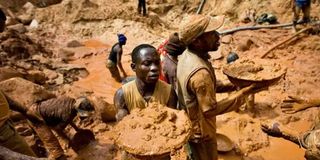
Dar es Salaam. Banks in Tanzania are holding back from lending to small and medium-sized mining ventures due to high and poorly understood risks, lack of reliable data and weak financial structures, it was stated yesterday.
This has prompted regulators and industry players to push for urgent de-risking measures to unlock financing in the fast-growing sector.
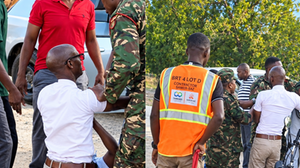
This emerged at a stakeholders’ workshop convened by the ASNL Advisory Limited, bringing together bankers, regulators and miners to address the widening financing gap.
Key actors include the Ministry of Minerals, the Tanzania Bankers Association (TBA), financial institutions, and mining stakeholders, particularly artisanal and small-scale miners (ASM), whose role in the sector has expanded significantly.
Commissioner for Minerals, Dr Abdulrahman Mwanga, said the government is prioritising solutions that will make small mining projects viable for financing.
Banks are reluctant to finance small and medium mining projects due to high risk, limited collateral, and lack of structured financial and geological data.
“One of the biggest challenges facing small gold miners is access to finance. The capital required is large and comes with high risk,” Dr Mwanga said.
Unlike large-scale projects, small mining ventures often operate with uncertain deposits and irregular cash flows, making it difficult for banks to assess their ability to repay loans.
The financing gap is most evident in mining regions such as Chunya and other gold-rich areas, where informal lending systems dominate due to limited access to formal credit.
The challenge has persisted for years but has become more urgent in 2025/2026 as the mining sector expands rapidly, with small-scale miners now accounting for about 40 percent of sector revenue, up from five percent before 2017.
Between July 2025 and March 2026, the government issued 8,878 small-scale mining licences, while mineral trading rose to Sh4.9 trillion from Sh2.82 trillion in previous years, highlighting the sector’s growing economic weight.
According to TBA Chief Executive Officer, Ms Tuse Joune, the risks in the sector are not only high but also poorly managed and understood.
“Risks are there, but they are unmanaged, misunderstood and unshared,” she said.
She noted that many small miners lack compliance documents, audited financial records and geological data, making it difficult for banks to evaluate projects.
Additionally, the sector has long been informal and fragmented. “Small miners have been scattered. It is only recently that we are seeing coordination. That is one of the reasons banks have stayed away,” she added.
Banks also face regulatory pressure to protect depositors’ funds, limiting their ability to lend to high-risk ventures without clear repayment structures. In the absence of bank financing, small miners rely heavily on informal credit systems.
“They borrow in faith, someone gives money expecting that one day they will strike gold and repay,” Ms Joune explained, citing experiences from Chunya.
Such informal arrangements, however, cannot be adopted by formal banking institutions, which require structured and predictable repayment mechanisms.
How can the sector be de-risked?
Stakeholders say the solution lies in making mining projects “bankable” by addressing structural risks. Executive Director of ASNL Advisory Limited, Mr Humphrey Simba, said efforts are underway to bridge the gap between banks and miners.
“We want to remove risks in financing mining projects and create bankable opportunities for small-scale miners,” he said.
Key interventions include improving access to geological data, strengthening compliance, and enhancing financial literacy among miners.
Dr Mwanga added that the government is investing in geological surveys to reduce uncertainty in mineral exploration.
“Mining should not be guesswork. Providing reliable data will help investors and banks make informed decisions,” he said.
Banks are also beginning to adapt, with some conducting on-site project assessments in mining areas to better understand risks and align financing with project timelines.
The stakes are high. Tanzania’s ASM workforce has grown to an estimated two million people, supporting over six million livelihoods across the value chain.
Experts say unlocking finance for this segment could significantly boost productivity, increase exports and expand the country’s economic base.
The workshop concluded that collaboration between banks, regulators and miners is critical to developing tailored financing models, including blended finance and risk-sharing mechanisms.
“If we remove these risks, more Tanzanians will participate and benefit from the mining sector,” Dr Mwanga said.