Ukerewe. More than 20,000 households and 400 business enterprises in the Lake Zone’s Ukerewe islands are set to begin enjoying solar-powered energy this year, a development expected to ease daily life and unlock new economic opportunities.
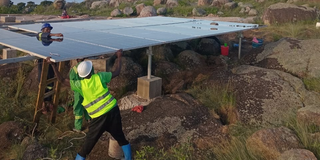
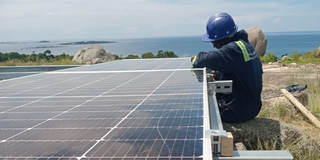
Rex Energy, an engineering, procurement and construction (EPC) and turnkey solar solutions company with over 25 years of experience in expanding energy access, has been undertaking the development of a solar mini-grid designed to serve communities that have remained beyond the reach of the national grid due to their remote island locations.
Rex Energy Managing Director Francis Kibhisa, said the implementation of the project commenced after the company won an innovation and business challenge under the Lighting Rural Tanzania Competition initiative, which promotes off-grid solar solutions across Sub-Saharan Africa.
“We have been working against time and across very challenging terrain to ensure this project is delivered within schedule and in line with the government’s commitment to expanding access to clean and affordable energy,” he says.
“We are now at the final stages, and it is extremely rewarding to see that communities in these islands will finally begin to enjoy reliable power, just like other parts of the country. This is about restoring dignity, improving livelihoods, and opening up real opportunities for growth,” added Mr Kibhisa.
Rex Energy secured the project under a competitive Rural Energy Agency (REA) programme aimed at accelerating rural electrification through renewable energy.
Since then, the company has steadily advanced works across multiple islands, navigating logistical constraints while maintaining quality and sustainability at every phase of implementation.
According to the company’s management, the project has been structured in phases to ensure careful rollout and system stability.
Residents and businesses in the islands of Gana, Kamasi, Bwiro and Bulubi are expected to begin accessing power by the end of May 2026, while those in Kweru Kuu, Kweru Mto, Izinga, Zeru, Bushengere and Sizu are scheduled to come on stream by December 2026 as final customer connections are completed.
“This project has been a journey of precision, patience and purpose,” explains Mr Kibhisa.
“We deliberately adopted a phased approach to ensure that each island receives a fully functional and reliable system. From generation to distribution, every element has been designed to meet the specific needs of these communities while guaranteeing long-term sustainability,” he added.
For many years, these islands have had limited or no access to electricity due to their distance from the national grid, leaving residents dependent on costly and inefficient alternatives such as diesel generators and kerosene.
This situation has constrained economic activity, limited service delivery in schools and health facilities, and contributed to persistently high energy costs and low productivity.
Completion of the project is therefore expected to transform livelihoods across the islands.
With reliable power, businesses will be able to operate for longer hours, while fishers will have the opportunity to invest in cold storage facilities, reduce post-harvest losses and improve the quality of their catch.
Households will transition to safer and cleaner energy sources, schools will extend learning hours, and health centres will better preserve vaccines and operate essential equipment.
Mr Kibhisa notes that substantial investment has been committed to the project, covering all critical components required to deliver a complete and sustainable energy solution across the 10 islands.
These include the installation of solar power plants, battery storage systems, distribution networks, civil works, electric poles and smart metering systems, as well as compliance with environmental requirements overseen by relevant authorities such as the National Environment Management Council (NEMC).
Alongside the development of the solar mini-grid, Rex Energy has also engaged with the local community by supporting the upgrading of water, sanitation and hygiene (WASH) facilities at Kamasi Island Primary School as part of its corporate social responsibility initiatives.
The islands, which are central to the Lake Zone’s fishing economy, are expected to leverage this development to enhance value addition, improve storage and processing, and expand access to wider markets.
Reliable energy is also anticipated to attract new investment into the islands by removing a longstanding barrier created by the absence of dependable power infrastructure.
Beyond economic benefits, the project aligns closely with the government’s broader policy direction on clean energy and rural electrification, which seeks to expand access to affordable and sustainable power while reducing reliance on traditional energy sources such as charcoal and diesel.