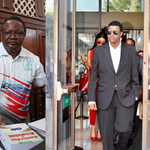
Dar es Salaam. Testimony delivered by Augustino Lissu, son of Chadema national chairman Tundu Lissu, before officials of the United States Senate and Congress has sparked a wide public debate in Tanzania.
While some view the move as a means of presenting citizens’ concerns on global platforms, others have raised concerns about its impact on Tanzania’s image and relations with global development partners.

In his testimony, the young Lissu described how his family had been split, leaving him unable to spend time with his family again.
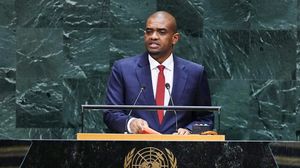
Augustino addressed officials on Friday, June 5, 2026, in Washington, D.C., not as a politician but as a son who has spent much of his life observing his father suffer due to political struggles and the pursuit of justice today and beyond.
He said much of his life has been shaped by memories of injuries his father suffered after being shot multiple times in 2017, noting how family life has repeatedly been disrupted by relocations, separation, and repeated absences due to his father’s ongoing political struggles.
The development has triggered debate, with some political analysts on Sunday, June 7, 2026, saying the testimony by Mr Lissu’s son increases pressure and amplifies personal and family experiences linked to the politician’s situation.
They said this could have negative consequences for the country, with some suggesting that the case be concluded or that Mr Lissu be released immediately.
A political science analyst from the University of Dar es Salaam (UDSM), Prof Mohammed Bakari, said that the testimony by Mr Lissu’s son has adverse implications for the government.
“This matter has already been widely discussed, and there is a bill tabled by Democratic and Republican members. However, a child of an opposition leader speaking not only politically but also as a family member increases momentum and intensifies pressure,” he said.
He said that although Tanzania has faced democratic shortcomings, it had never received such global attention as now, except for past incidents in Zanzibar in earlier years.
“Right now, Tanzania is being discussed. What Mr Lissu’s son has done may even strengthen the case filed at the international human rights court,” he said.
He added that resolving requires the country to accept reality and seek genuine solutions, as the causes of the situation are well known.
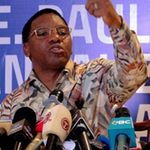
Another analyst from the University of Dodoma (Udom), Dr Paul Loisulie, said the Mr Liss issue will continue to resurface in different forms because it attracts strong emotions and has now become a global issue.
“What the government must understand is that this issue cannot be ignored. The testimony by his son has created new emotions,” he said.
“Its image is not good; it appears as if Tanzania is a country of suffering, that Mr Lissu’s children and relatives are suffering,” he added.
He said there are two possible solutions: either the case should proceed and reach its conclusion, or Mr Lissu should be released, arguing it is not fair for him to remain in remand.
Dr Loisulie referred to similar historical cases, mentioning that of former Chadema chairman, Freeman Mbowe.
“He spent eight months in remand; it was a case that drew widespread attention, but once he was released, everything calmed down,” he said, adding that Tanzania’s politics has not fully embraced multiparty democracy in practice, but only in theory.
He suggested that once Mr Lissu’s matter is resolved, the country should reform its political system to reflect genuine multiparty democracy and allow leaders to freely criticise each other.
Another commentator, Mr Lugete Mussa, said what Mr Lissu’s son has done shows that the family had already concluded that relations with the government were not favourable, and that they are now building social diplomacy abroad.
“It has already succeeded in the European Union. What his son did recently continues to build networks beyond borders and push the argument that their father is not guilty,” he said.
He added that they likely believe Mr Lissu is not being treated fairly, noting that opposition politicians across Africa often face similar challenges.
“However, we should allow the judiciary to remain an independent arm of the state and do its work,” he said.
He noted that pressure has been building since 2017 when Mr Lissu survived an assassination attempt, and warned that the current situation could strain diplomatic relations.
On September 7, 2017, Mr Lissu survived an assassination attempt after being shot multiple times.
Seven years later, on April 9, 2025, he was arrested in Mbinga District, Ruvuma Region, while addressing a public rally promoting Chadema’s 'No reforms, No election' campaign, aimed to advocate electoral reforms.
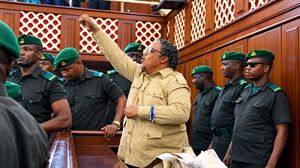
He was charged with treason and has remained in custody since then, as his case continues to be heard at the High Court, Dar es Salaam Sub-Registry in Tanzania.
Register to begin your journey to our premium contentSubscribe for full access to premium content